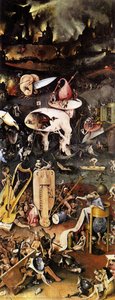
Introduction
To step into the world of Hieronymus Bosch is to leave the familiar shores of reality behind and drift into a sea of dreams, nightmares, and profound spiritual inquiry. Imagine walking through a gallery where the air feels thick with mystery, and every corner reveals a creature or a landscape that defies the laws of nature. As we prepare to journey through his top twenty-five masterpieces, we are not merely looking at paint on wood; we are peering into the very soul of the late Middle Ages—a time when the boundaries between the divine, the demonic, and the earthly were as thin as a veil.
Born in the bustling Dutch town of ’s-Hertogenbosch around 1450, Bosch lived in an era of intense religious devotion and deep-seated societal anxiety. His work emerged from the rich tradition of Netherlandish painting, yet he quickly transcended the quiet realism of his contemporaries to create something entirely singular. He was a master of the allegorical, using meticulous oil techniques to weave intricate tapestries of symbolism. In his hands, a simple bird or a strange, hybrid beast becomes a vessel for complex moral lessons regarding sin, temptation, and the fragility of human virtue.
Why do these haunting visions continue to captivate us centuries later? Perhaps it is because Bosch touched upon the universal architecture of the human psyche. Long before the birth of modern psychology, he captured the chaotic imagery of our subconscious—the fears, the desires, and the surreal distortions that haunt our deepest thoughts. His landscapes are not mere scenery; they are emotional terrains where every grotesque figure tells a story of human frailty and divine judgment.
In the following selection, we will explore twenty-five of his most profound works. From his sprawling, panoramic depictions of heaven and hell to his more intimate, enigmatic studies, each piece serves as a window into a brilliant, feverish imagination. We invite you to linger on the details, to let your eyes wander through his crowded, bustling heavens and his dark, teeming underworlds, and to rediscover the enduring magic of a painter who dared to paint the invisible.
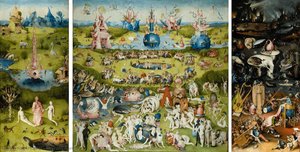
The Garden of Earthly Delights - Hieronymus Bosch
 The Garden of Earthly Delights - Hieronymus Bosch
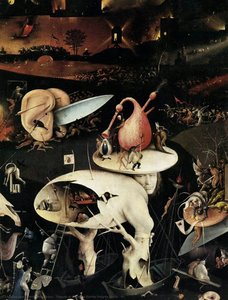
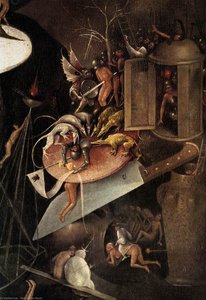
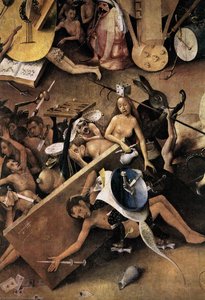
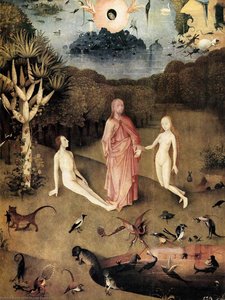
To stand before The Garden of Earthly Delights by Hieronymus Bosch is to step directly into the fever dream of the Northern Renaissance. This monumental triptych remains perhaps the most enigmatic masterpiece in our collection, a sprawling visual odyssey that navigates the delicate transition from divine innocence to the terrifying depths of perdition. As your eyes wander across the panels, you encounter a world where light and shadow perform a haunting dance; the lush, luminous greens of Eden give way to a central landscape teeming with translucent, sun-drenched figures, before finally dissolving into the jagged, obsidian darkness of a nightmarish Hell.
Bosch’s technical brilliance lies in his meticulous glazing, creating a depth of color that feels almost tactile, as if the very fruits and strange creatures possess a pulse. Every brushstroke serves a symbolic purpose, weaving a complex tapestry of temptation and judgment. It is this profound psychological depth—the ability to evoke both wonder and existential dread—that secures its place among the top 25 artworks of Hieronymus Bosch, offering a timeless window into the complexities of the human soul that continues to captivate and transform any space it inhabits.
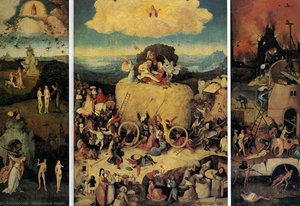
The Haywain Triptych - Hieronymus Bosch
 The Haywain Triptych - Hieronymus Bosch
To gaze upon The Haywain Triptych is to witness the very pulse of human frailty and the dizzying chaos of earthly desire. Bosch invites us into a world where a simple wagon of hay—a symbol of fleeting, worldly temptation—becomes the centerpiece of a grand, turbulent pilgrimage. There is something deeply moving, even haunting, in how he captures the frantic energy of humanity, caught between the serene promise of paradise and the inevitable shadows of judgment.
This masterpiece earns its place among the top 25 works of Hieronymus Bosch due to its unparalleled narrative complexity and its ability to evoke a visceral, emotional response that has endured for centuries. The vibrant, warm tones of the central panel clash with the terrifying textures of the right wing, creating a sensory experience that is as overwhelming as it is beautiful. At Mus3ums.com, we strive to preserve this profound emotional depth. Our hand-painted oil reproductions meticulously recreate Bosch’s intricate brushwork and symbolic layers, allowing you to bring the magnificent, unsettling spirit of the Northern Renaissance into your own private sanctuary.
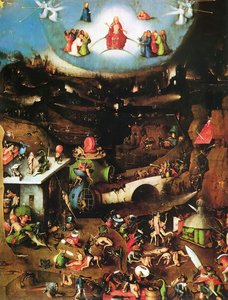
The Last Judgement (detail) - Hieronymus Bosch
 The Last Judgement (detail) - Hieronymus Bosch
To gaze upon the The Last Judgement (detail) is to step directly into a fever dream of the Northern Renaissance. In this breathtaking fragment from 1505, Hieronymus Bosch invites us into a world where the divine and the demonic collide with startling intensity. The composition is a masterclass in duality; above, a serene, luminous heaven radiates a soft, celestial light, while below, a dark, cavernous inferno teems with the chaotic energy of human despair.
The sensory experience is overwhelming. One can almost feel the heat of the fiery reds and deep, earthy browns that define this nightmarish landscape. Bosch’s meticulous brushwork brings to life grotesque hybrid creatures and symbolic instruments of torment, each meticulously rendered to evoke a sense of profound moral weight. Owning such a vision isn't merely a purchase; it is an inheritance of the artist's most haunting legacy. At Mus3ums, we believe this lineage of taste belongs on your walls, allowing you to host a permanent dialogue with the sublime and the unsettling in the comfort of your own home.
Triptych of Temptation of St Anthony - Hieronymus Bosch
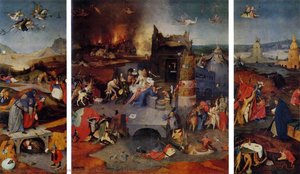 Triptych of Temptation of St Anthony - Hieronymus Bosch
To gaze upon the Triptych of the Temptation of St. Anthony by Hieronymus Bosch is to step directly into a fever dream where the boundaries between the sacred and the grotesque dissolve. This masterpiece earns its place in our Top 25 not merely for its technical brilliance, but for its profound ability to externalize the internal battle of the human soul. Within its three panels, Bosch orchestrates a chaotic symphony of ochre, deep crimson, and unsettling shadows, populating a landscape with hybrid beasts and symbolic terrors that prefigure surrealism by centuries.
The work is a visceral exploration of virtue under siege, capturing Saint Anthony amidst a whirlwind of worldly vices. It is this very intensity—the way the jagged lines and crowded compositions command absolute attention—that makes it such a powerful presence in a modern collection. At Mus3ums.com, we believe art should be a living dialogue; bringing this Boschian vision into your sanctuary transforms a mere wall into a window onto the infinite, turning your personal space into a profound statement of intellectual and emotional depth.
Christ Carrying the Cross (10) - Hieronymus Bosch
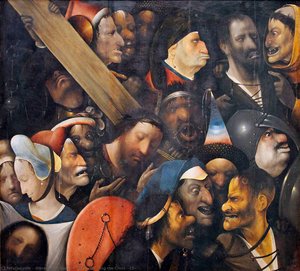 Christ Carrying the Cross (10) - Hieronymus Bosch
In Christ Carrying the Cross (10) , Hieronymus Bosch orchestrates a profound tension between chaotic movement and structural gravity. The composition is anchored by the heavy, diagonal weight of the cross, which cuts through a sea of swirling, crowded figures to create a focal point of somber stability. This geometric intersection—where the linear burden of the wood meets the circular, restless energy of the mob—creates a sense of timeless perfection that has captivated collectors for centuries.
As you gaze upon this masterpiece from 1515, notice how the dark, velvety tones and the rhythmic placement of faces provide an internal balance. Much like the principles of modern minimalist design, where strength is found in essential forms, Bosch uses this structural harmony to ground the viewer amidst the surrounding spiritual turmoil. The subtle splashes of crimson and deep blue emerge from the shadows like soft, glowing embers, offering a sensory reprieve. It is this delicate equilibrium between the grotesque and the divine that secures its place among the top 25 artworks of Hieronymus Bosch , making it an enduring icon of emotional depth and Renaissance mastery.
Ecce Homo - Hieronymus Bosch
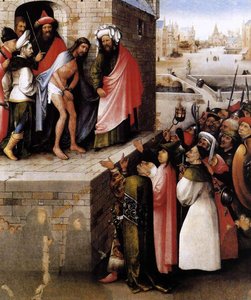 Ecce Homo - Hieronymus Bosch
In Bosch’s Ecce Homo , a somber, earthy terracotta hue dominates the scene, cast from the weathered brick wall that serves as a stark backdrop to Christ's suffering. This heavy, grounded palette evokes a profound sense of gravity and historical weight, anchoring the viewer in the visceral reality of the crucifixion. As one of the most significant works among the top 25 artworks of Hieronymus Bosch , this piece earns its place through its masterful use of light and shadow to highlight the psychological tension within the crowd—from the glint of soldierly armor to the muted, grieving tones of the religious figures.
For the discerning collector, integrating the atmosphere of Ecce Homo into a modern interior offers a way to introduce dramatic, contemplative lighting. The painting’s deep, autumnal undertones and dramatic chiaroscuro can inspire a dining room or study with a sense of timelessness and intellectual depth. By echoing these rich, earthen pigments through textured fabrics or dark wood accents, one can curate a space that feels as emotionally resonant and storied as a gallery hall.
Christ Mocked (The Crowning with Thorns) - Hieronymus Bosch
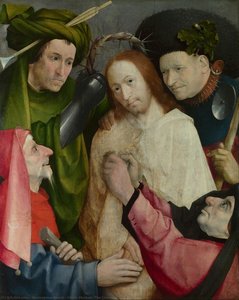 Christ Mocked (The Crowning with Thorns) - Hieronymus Bosch
In Christ Mocked (The Crowning with Thorns) by Hieronymus Bosch, a piercing, sickly shade of green dominates the composition, casting an atmosphere of profound unease and envy. This verdant hue, worn by the tormentors, does more than merely clothe the figures; it breathes life into the themes of malice and corruption that define this masterpiece. As one of the top 25 artworks of Hieronymus Bosch , this piece earns its place through a masterful command of color that transforms a biblical moment into a psychological landscape of shadows and light.
The interplay between the vibrant, unsettling greens and the stark, somber tones of the background creates a tension that is both visceral and haunting. For the discerning collector, integrating such a powerful palette into a modern space can be transformative. Imagine using these deep, dramatic tones to anchor the emotional lighting of a private study or a sophisticated dining room, creating a sanctuary of contemplative depth. This painting serves as a profound reminder that even in the darkest visions, there is an undeniable, luminous beauty found in the mastery of light and shadow.
Mankind Beset by Devils (reverse of Rebel Angels panel) - Hieronymus Bosch
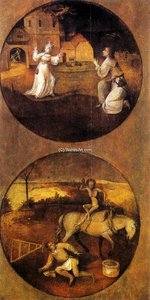 Mankind Beset by Devils (reverse of Rebel Angels panel) - Hieronymus Bosch
To gaze upon Mankind Beset by Devils is to feel a sudden, chilling breath of unease, as if stumbling into a fever dream from the late Middle Ages. In this intimate panel, Bosch captures a profound sense of psychological vulnerability; the interaction between the two central women—one kneeling, one standing—feels less like a simple conversation and more like a heavy, whispered pact made under the shadow of temptation. The atmosphere is thick with a claustrophobic tension, where sickly greens and bruised purples bleed into a landscape populated by symbolic creatures and the looming presence of a horse, representing our most earthly, unbridled desires.
As one of the most haunting entries in our collection of the top 25 artworks of Hieronymus Bosch , this piece serves as a universal mirror, reflecting the eternal struggle between virtue and vice. Bringing such a powerful, evocative work into your home does more than decorate a wall; it transforms a personal sanctuary into a space for deep, somber reflection, inviting you to contemplate the intricate, often shadowed depths of the human soul.
St John the Evangelist on Patmos - Hieronymus Bosch
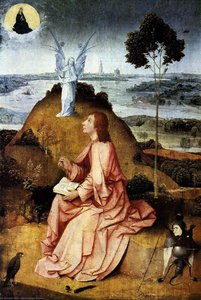 St John the Evangelist on Patmos - Hieronymus Bosch
To stand before a Bosch is to step into the threshold between the earthly and the divine, where the air feels thick with both prayer and profound mystery. In St John the Evangelist on Patmos by Hieronymus Bosch , we encounter this tension in its most intimate form. As the Saint sits upon a rugged, rocky outcrop, his head bowed in heavy contemplation, we are invited to share in his spiritual weight. The scene is not merely a landscape; it is an emotional atmosphere rendered through masterful oil glazes that capture the soft, ethereal glow of angelic presence against the shadowed, somber textures of the Brabant-inspired terrain.
This work earns its place among the top 25 artworks of Hieronymus Bosch because of its breathtaking ability to blend meticulous Netherlandish realism with a haunting, visionary depth. The delicate movement of birds above and the luminous, symbolic placement of angels create a rhythmic, sacred dance. Even centuries later, this painting possesses a transformative power, reminding us how art can turn a quiet corner of a room into a space for deep, soulful reflection.
Death and the Miser - Hieronymus Bosch
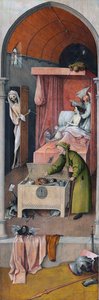 Death and the Miser - Hieronymus Bosch
To possess a study of Death and the Miser by Hieronymus Bosch is to invite a profound meditation on the human condition into one’s private collection, marking an investment in both historical legacy and uncompromising taste. As one of the most hauntingly beautiful entries in our exploration of the top 25 artworks of Hieronymus Bosch, this panel remains a cornerstone of Northern Renaissance mastery. Its market significance is matched only by its psychological depth, where the chilling presence of a skeletal Death looms over a dying man, caught between the clutching demons of avarice and the ethereal light of an angel.
The painting breathes with a visceral, claustrophobic energy; one can almost feel the weight of the heavy, earth-toned fabrics and the cold metallic glint of coins being surrendered to darkness. The meticulous oil textures capture every tremor of decay and every flicker of divine hope. For the modern connoisseur, a high-quality handmade reproduction of this masterpiece brings an unparalleled aesthetic authority to luxury interiors, serving as a sophisticated focal point that commands conversation and evokes the timeless, dramatic shadows of Bosch’s nocturnal visions.
Christ's Descent into Hell - Hieronymus Bosch
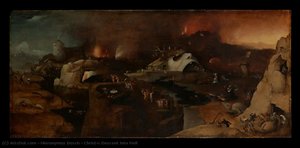 Christ's Descent into Hell - Hieronymus Bosch
To stand before Christ's Descent into Hell is to peer directly into the fractured psyche of the late Middle Ages. In this harrowing masterpiece, Hieronymus Bosch transcends mere religious illustration, crafting a visceral landscape where the boundaries between the divine and the demonic dissolve into a fiery abyss. The painting captures the profound moment of the Harrowing of Hell, yet it lacks any traditional comfort; instead, we find a claustrophobic world of jagged lines and deep, scorched ochres.
As you trace the path of Christ through the chaotic architecture of sin, you encounter the trembling figures of Adam and Eve, symbols of our shared fallibility. The palette—dominated by smoldering reds and sulfurous yellows—evokes a sensory experience of heat and decay that remains strikingly modern. In today’s era of surrealist fascination and psychological exploration, Bosch’s ability to manifest internal dread through grotesque, symbolic creatures continues to resonate. It is not merely a biblical scene, but a timeless meditation on the fragility of the soul amidst the shadows of existence, securing its place as one of the most hauntingly beautiful entries in the top 25 artworks of Hieronymus Bosch.
The Cure of Folly (Extraction of the Stone of Madness) - Hieronymus Bosch
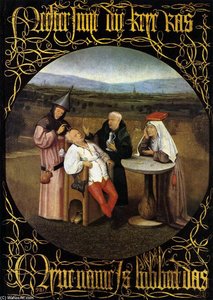 The Cure of Folly (Extraction of the Stone of Madness) - Hieronymus Bosch
In the hauntingly quiet shadows of The Cure of Folly (Extraction of the Stone of Madness) , Hieronymus Bosch captures a moment where the line between medical procedure and surreal nightmare dissolves into nothingness. This masterpiece earns its place among the top 25 artworks of Hieronymus Bosch through its profound ability to mirror the eternal human struggle with irrationality and the search for clarity amidst chaos.
The scene breathes with a peculiar, unsettling vitality; one can almost feel the cool, clinical tension as the surgeon prepares his tools. Bosch utilizes a palette that balances the earthy, grounded tones of the Dutch landscape with the sharp, jarring presence of symbolic objects—like the ironic tulip, whispering of folly to those who know how to listen. The light does not merely illuminate; it exposes the grotesque and the divine in equal measure. For the modern collector, bringing such a piece into a home offers more than mere decoration; it provides a sophisticated intellectual anchor, a conversation piece that invites deep contemplation on the complexities of the human psyche and the enduring beauty found within our most enigmatic shadows.
St Jerome in Prayer - Hieronymus Bosch
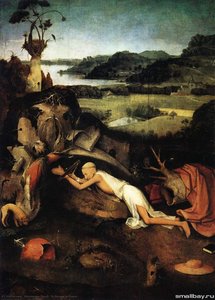 St Jerome in Prayer - Hieronymus Bosch
To gaze closely at St Jerome in Prayer is to witness the very pulse of Bosch’s late period, where the thick, textured application of oil paint breathes life into a scene of profound spiritual agony. One can almost feel the weight of the heavy, earthy browns and the stark, bone-like whites as they collide through dramatic chiaroscuro. The visible brushstrokes do more than merely depict form; they sculpt the raw emotion of Saint Jerome’s penance, capturing the tactile grit of the landscape and the unsettling softness of the surrounding creatures.
This masterpiece earns its place among the top 25 artworks of Hieronymus Bosch through its masterful use of Mannerist distortion and symbolic depth. At Mus3ums.com, we believe such profound materiality should never be lost to a flat print. Our hand-painted oil reproductions are meticulously crafted to honor this three-dimensional soul, ensuring that every ridge of impasto and every shadow of the original is preserved, bringing the haunting, visceral beauty of Bosch’s visionary world directly into your private collection.
Adoration of the Magi (central panel) - Hieronymus Bosch
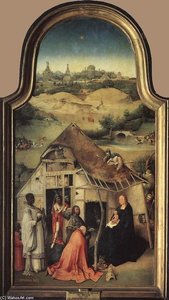 Adoration of the Magi (central panel) - Hieronymus Bosch
In the Adoration of the Magi (central panel) by Hieronymus Bosch, we encounter a breathtaking study in structural equilibrium that belies its chaotic subject matter. The composition is anchored by a profound geometric stability; the central figures of the Virgin and Child form a steady, pyramidal core that radiates outward, guiding the eye through a rhythmic arrangement of the Magi and surrounding onlookers. This careful balance of shapes creates a sense of timeless perfection, ensuring its rightful place among the top 25 artworks of Hieronymus Bosch .
There is a striking resonance between this Renaissance mastery and the principles of modern minimalist design. Just as contemporary aesthetics rely on a strong focal point to ground a clean space, Bosch uses the serene, luminous center to provide a visual anchor amidst a sea of intricate detail. The way the light settles upon the holy figures creates a sanctuary of stillness, offering a sophisticated way to introduce depth and narrative weight into a modern, curated interior. It is a masterpiece where spiritual gravity meets an enduring, balanced elegance.
St Agnes with the Donor (right wing, detail) - Hieronymus Bosch
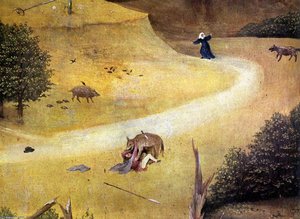 St Agnes with the Donor (right wing, detail) - Hieronymus Bosch
Step into a world where the boundary between the earthly and the divine dissolves into a landscape of profound spiritual tension. In this exquisite detail from St Agnes with the Donor , Hieronymus Bosch invites us to witness a moment of quiet sanctity amidst a wilderness of symbolic peril. The scene is a masterclass in contrast; while the soft, luminous presence of St. Agnes and her lambs evokes a sense of purity and peace, the surrounding terrain—a barren path shadowed by the looming threat of wolves and bears—whispers of the era's deep-seated anxieties regarding moral corruption.
Bosch’s meticulous technique is breathtaking here, as his painstaking layers of oil paint bring a visceral texture to the scene, from the coarse fur of the predators to the delicate, airy atmosphere of the sky. This fragment serves as a powerful reminder of the resilience of grace. Bringing such a piece into a modern home offers more than mere decoration; it provides a window into a complex psychological depth, inviting a moment of quiet reflection and intellectual wonder within your personal sanctuary.
The Arrest of Christ, Jheronimus Bosch (manner of), c. 1530 - c. 1550 - Hieronymus Bosch
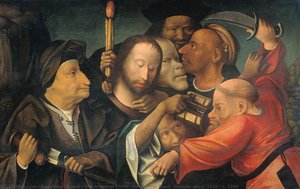 The Arrest of Christ, Jheronimus Bosch (manner of), c. 1530 - c. 1550 - Hieronymus Bosch
To step into the world of the Netherlandish masters is to encounter a landscape where the divine and the grotesque dance in eternal tension. Among the most hauntingly evocative works in our collection is The Arrest of Christ, Jheronimus Bosch (manner of), c. 1530 - c. 1550 by Hieronymus Bosch . This piece captures a moment of profound spiritual upheaval, rendered with a dramatic, flickering light that feels almost as if a torch has just been thrust into a dark corner of the soul.
The scene is a visceral tableau of chaos; we see Christ’s quiet resignation set against the violent, jagged energy of his captors. The palette, heavy with deep shadows and sudden, piercing highlights, emphasizes the psychological weight of betrayal. Every figure, from the righteous fury of St. Peter to the distorted, grotesque faces representing greed, serves as a symbolic window into human frailty. As one of the most striking entries in the top 25 artworks of Hieronymus Bosch, this painting does more than depict history—it invites us to confront our own shadows, bringing a sense of profound, contemplative depth to any space it inhabits.
The Seven Deadly Sins and the Four Last Things - Hieronymus Bosch
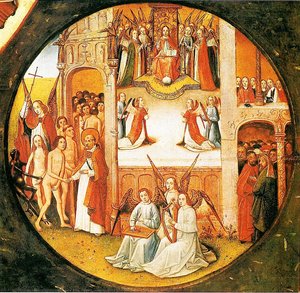 The Seven Deadly Sins and the Four Last Things - Hieronymus Bosch
To gaze upon The Seven Deadly Sins and the Four Last Things by Hieronymus Bosch is to step into a fever dream where the boundaries between the earthly and the eternal dissolve into a whirlwind of symbolic shadows. This masterpiece earns its place among the top 25 artworks of Hieronymus Bosch through its staggering ability to map the human psyche, weaving a complex tapestry of vice and virtue that remains as hauntingly relevant today as it was in 1500.
The composition breathes with a restless energy; vibrant, jewel-like pigments clash against the somber, heavy textures of the oak panel, creating a visual rhythm of moral tension. As your eyes wander through the intricate vignettes of Gluttony and Pride, you feel the weight of the Four Last Things —Death, Judgment, Heaven, and Hell—looming in the periphery like a whispered truth. In a modern home, this work serves as a profound intellectual anchor, offering a sophisticated, meditative focal point that invites guests to linger, contemplate, and lose themselves in the masterful, surrealist depths of Bosch’s unparalleled imagination.
Saint Christopher - Hieronymus Bosch
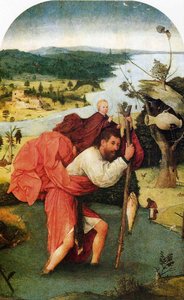 Saint Christopher - Hieronymus Bosch
In Saint Christopher , Bosch does not merely depict a scene; he composes a spiritual weight that you can almost feel pressing against the canvas. As we stand before this masterpiece, the light does not simply illuminate the river; it acts as a divine presence, catching the edges of the infant Jesus and the weary shoulders of the saint. It is a language of grace struggling against the shadows of the late medieval soul.
The painting captures the profound tension of the human journey. As Saint Christopher carries the Christ Child across the turbulent waters, Bosch weaves a tapestry of unsettling symbolism. Notice the three birds circling above—each a silent messenger of mortality, temptation, or divine grace—hovering over a landscape where a humble boat serves as a metaphor for our own passage through life. Through meticulous hatching and a hauntingly precise realism, Bosch invites us into a world where every creature and shadow holds a secret. To bring this work into your collection is to invite a portal of deep reflection and historical mystery into your home.
Noah's Ark on Mount Ararat (obverse) - Hieronymus Bosch
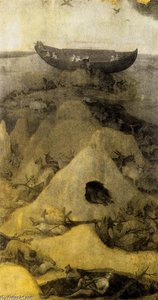 Noah's Ark on Mount Ararat (obverse) - Hieronymus Bosch
To gaze upon Noah's Ark on Mount Ararat (obverse) by Hieronymus Bosch is to feel a profound sense of trembling anticipation, as if standing on the precipice of a great spiritual deluge. There is an unsettling, restless energy in this work; it does not offer the quiet peace one might expect from a biblical sanctuary, but rather captures the raw, psychological tension of survival amidst chaos. As part of our curated collection of the top 25 artworks of Hieronymus Bosch , this piece serves as a universal mirror, reflecting the human struggle to find footing when the world feels as fluid and uncertain as a rising tide.
The meticulous Netherlandish detail—from the fluttering birds to the heavy, laden vessel—creates a landscape that is both haunting and deeply immersive. For the collector, bringing this masterpiece into a home offers more than mere decoration; it invites a space for profound reflection. Displaying such a powerful narrative of resilience can transform a personal sanctuary into a room of deep contemplation, where the interplay of light and shadow encourages one to contemplate the enduring strength of the human spirit.
Two Male Heads - Hieronymus Bosch
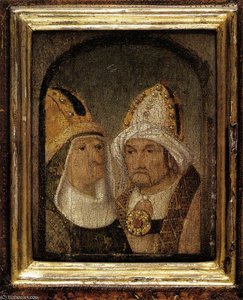 Two Male Heads - Hieronymus Bosch
Imagine stepping into a quiet, dimly lit corner of a gallery, where the air feels heavy with secrets. Before you, Two Male Heads by Hieronymus Bosch emerges from the shadows, not as a mere portrait, but as a profound psychological encounter. Painted around 1480, this work captures an intense, silent dialogue between two figures adorned in ecclesiastical mitres. Their gaze is piercing, caught in a moment of solemn contemplation that feels almost breathless.
Bosch’s mastery of oil on oak is evident in the luminous, weathered textures of their robes and the meticulous detail of their bearded features. There is a haunting tension here—a blend of realistic human emotion and the subtle, unsettling distortions that define his legendary style. The soft, dramatic interplay of light and shadow creates an atmosphere of deep introspection. Bringing such a piece into a modern home offers more than decoration; it provides a focal point for reflection, inviting a sense of historical depth and intellectual curiosity into your living space, much like a window into the soul of the Northern Renaissance.
Marriage Feast at Cana - Hieronymus Bosch
 Marriage Feast at Cana - Hieronymus Bosch
In Marriage Feast at Cana , one does not simply observe a biblical miracle; one is pulled into the dizzying, crowded energy of a world caught between divine grace and earthly indulgence. As you gaze upon this masterpiece attributed to Hieronymus Bosch , your eyes wander through a sea of figures gathered around long tables, where the luminous textures of oil and tempera glaze capture the flickering light of a festive, yet unsettling, gathering. There is a profound psychological tension here—a sense of humanity caught in the delicate balance of celebration and temptation.
This work stands as a vital entry in our collection of the top 25 artworks of Hieronymus Bosch because it mirrors the eternal human struggle with excess and devotion. The presence of small, symbolic details—from the watchful dog to the scattered vessels—invites a deep, meditative wandering. Bringing such a powerful piece into your home can transform a quiet corner into a sanctuary for profound reflection, allowing the complex, nightmarish beauty of Bosch’s vision to spark endless conversation and soulful contemplation within your personal space.
Paradise - Hieronymus Bosch
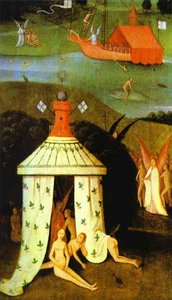 Paradise - Hieronymus Bosch
In the opening panel of his legendary triptych, Paradise by Hieronymus Bosch emerges through a soft, primordial luminescence that feels both divine and hauntingly fragile. Unlike the dramatic shadows found in later eras, Bosch utilizes a clear, ethereal light to bathe this prelapsarian world, where the clarity of every botanical detail and angelic figure suggests a state of untouched innocence. This masterful command of illumination does more than merely reveal form; it establishes a sense of sacred transparency, making this work an essential pillar among the top 25 artworks of Hieronymus Bosch .
The way light dances across the pristine landscapes and the delicate features of the gathered figures creates a breathtakingly serene atmosphere, yet there is an underlying tension—a brilliance that feels almost too bright to last. When captured in a high-quality oil reproduction, this sophisticated interplay of light and clarity brings a profound sense of depth and historical luxury to any modern interior. It offers a window into a lost Eden, inviting a quiet, contemplative energy into your home through the luminous textures of the Dutch master's vision.
Head of a Halberdier (fragment) - Hieronymus Bosch
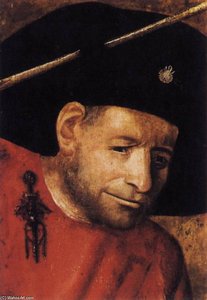 Head of a Halberdier (fragment) - Hieronymus Bosch
In the quiet corridors of the Museo Nacional del Prado, there exists a small, haunting window into a lost world. Hieronymus Bosch’s Head of a Halberdier (fragment) is not merely a remnant of a larger composition; it is a concentrated burst of psychological intensity that defies its modest size. Painted during the twilight of the fifteenth century, this fragment captures a moment of profound, unsettling stillness. The subject gazes downward with an expression oscillating between grim resignation and deep, spiritual contemplation.
The artistry is a masterclass in the Netherlandish tradition, utilizing oil on panel to create a surface that seems to breathe. Subtle transitions of light across weathered skin and the heavy texture of dark headwear demonstrate a profound command over chiaroscuro . Beyond technical brilliance, the piece evokes humilitas —the humility required before divine judgment. To possess such a fragment is to invite a sense of historical gravity into your home; it is an invitation to transform your space into a gallery of the soul, where every shadow tells a story of the human condition.
Group of Victims - Hieronymus Bosch
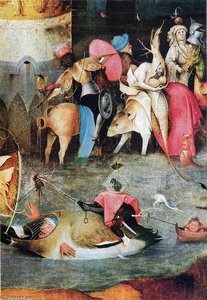 Group of Victims - Hieronymus Bosch
To gaze upon Group of Victims by Hieronymus Bosch is to step directly into a fever dream of the late Middle Ages, where the boundaries between reality and nightmare dissolve. As one of the most haunting entries in our collection of the top 25 artworks of Hieronymus Bosch , this piece serves as a profound meditation on human vulnerability and the chaotic nature of sin. The scene unfolds along a riverbank, populated by a disarray of figures, horses, and cattle, all rendered with that meticulous Netherlandish precision that makes Bosch’s surrealism feel so disturbingly tangible.
The painting’s brilliance lies in its sensory overload; one can almost feel the tension held in the swords and shields, and sense the heavy, atmospheric use of sfumato that softens the edges of this moral landscape. In today's era of surreal digital imagery, Bosch’s ability to use hybrid creatures and symbolic objects to mirror societal anxieties feels remarkably modern. It remains a vital cultural touchstone, reminding us that the struggle between order and chaos is an eternal human narrative, beautifully captured through his masterful use of rich, luminous oils.
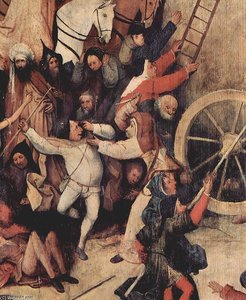
Haywain( detail) - Hieronymus Bosch
 Haywain( detail) - Hieronymus Bosch
To gaze upon the Haywain (detail) is to feel a sudden, chilling breath of the medieval soul. In this fragment of Bosch’s fever dream, we are not mere spectators but witnesses to an unsettling drama of human folly and moral reckoning. The scene vibrates with a palpable tension; figures gather around a central mystery, their postures heavy with judgment and morbid curiosity. The presence of scattered swords and a sturdy, watchful horse grounds the surreal chaos in a visceral, earthly reality that feels both ancient and hauntingly relevant.
This work earns its place among the top 25 artworks of Hieronymus Bosch because it captures the eternal struggle between temptation and conscience through unparalleled symbolic depth. At Mus3ums.com, we believe such profound emotional resonance deserves to be felt in your own sanctuary. Our master artists meticulously recreate these nightmarish visions on 100% cotton canvas, using thick, visible brushstrokes that preserve the heavy, atmospheric texture of Bosch’s original vision. Bring the haunting beauty of the Dutch Renaissance into your home with a hand-painted reproduction that honors every shadow and symbolic whisper.
Conclusion
As we draw the curtain on this journey through Bosch’s feverish and fantastical landscapes, we are left not with a sense of closure, but with a lingering wonder that stays in the quiet corners of the mind. To gaze upon these twenty-five masterpieces is to witness the eternal dance between the seen and the unseen, the sacred and the surreal. Though centuries have passed since his brush first touched oak panels in the Netherlands, the echoes of his imagination remain vibrantly alive, pulsing through our modern consciousness and challenging us to find meaning within the chaos.
These works are far more than mere relics of a bygone era or historical curiosities tucked away in museum halls; they are living presences. When we bring the spirit of such profound artistry into our own homes, we invite a dialogue between the past and the present. A carefully chosen reproduction does not merely decorate a wall—it anchors a room with depth, sparking conversations and reflecting the complex, beautiful, and sometimes unsettling layers of our own human experience. They remind us that even in our most modern spaces, there is always room for mystery, for storytelling, and for the sublime.
It has been a privilege to wander through these dreamscapes with you, exploring the shadows and the light that Bosch so masterfully captured. If these visions have stirred your soul or inspired a new perspective on your own surroundings, we invite you to continue your exploration within our full collection . May you always find beauty in the unexpected, and may your home always be a sanctuary for the stories that move you.