


The Renaissance of the Cabinet of Curiosities: Art as Private Prestige
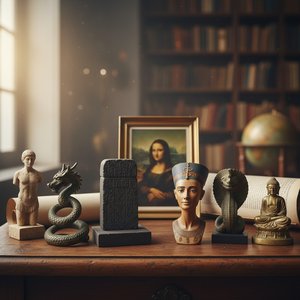
Long before the grand, marble-pillared halls of our modern institutions existed, the appreciation of beauty was a deeply intimate, often secretive affair. In the centuries preceding the Enlightenment, the true pulse of art history beat within the Wunderkammer, or the Cabinet of Curiosities. These were not merely rooms, but microcosms of the known world, curated by Renaissance princes, scholars, and aristocrats who sought to possess the extraordinary. Within these private sanctuaries, a single exquisite Renaissance sculpture might sit alongside a rare seashell from a distant voyage or an ancient Roman coin, creating a tapestry of human knowledge and aesthetic wonder.
To walk through such a collection was to witness the intersection of science, magic, and art. For the collector, art was more than decoration; it was a symbol of intellectual prowess and political dominion. The prestige of a private collection lay in its exclusivity—the ability to hold within one's grasp objects that were otherwise invisible to the masses. This era established the fundamental concept of connoisseurship, where the discerning eye learned to distinguish the subtle brushwork of a master from the imitation of a student. It was a time when art served as a personal dialogue between the creator and the patron, a silent exchange of prestige that remained locked behind the heavy oak doors of private estates.
From Aristocratic Galleries to Public Halls: The Birth of the Modern Museum
As the tides of history shifted toward the Enlightenment, the concept of the collection underwent a profound metamorphosis. The closed doors of the aristocracy began to creak open, driven by a burgeoning philosophical belief that knowledge and beauty were not the sole inheritance of the elite, but a shared human legacy. This period witnessed the transition from the private gallery to the public museum, a movement that fundamentally altered the social fabric of art appreciation. The grand galleries of Europe began to reorganize themselves, moving away from the chaotic splendor of the Cabinet of Curiosities toward structured, thematic narratives designed for education and public enlightenment.
This era saw the rise of institutions that sought to categorize the world through the lens of art history. No longer were objects merely gathered for their rarity; they were curated to tell the story of human progress. The birth of the modern museum brought with it a new sense of order, where the Renaissance, the Baroque, and the Neoclassical movements could be studied in sequence. This structural evolution allowed the public to engage with masterpieces that were once the guarded secrets of kings. It was a revolutionary moment in cultural history, transforming the museum from a site of aristocratic display into a temple of collective memory, where the shared heritage of humanity could be explored by any curious soul.
Preserving National Identity: Museums as Guardians of Cultural Heritage
As nations began to coalesce and define their borders, museums took on an even more solemn responsibility: they became the custodians of national identity. A museum is far more than a repository for beautiful objects; it is a living archive of a people's soul. From the National Museum in Belgrade, which preserves the rich tapestry of Serbian heritage, to regional treasures like those found in the Homeland Museum of Knjaževac, these institutions serve as anchors for cultural continuity. They protect the artifacts, paintings, and historical remnants that define a region's past, ensuring that the narrative of a nation is not lost to the erosions of time or conflict.
The curation within these halls often reflects a deep reverence for cultural heritage. Every artifact—be it a piece of ancient pottery, a traditional textile, or a monumental oil painting—acts as a vessel for the values and struggles of previous generations. By showcasing these treasures, museums provide a sense of belonging to their citizens. They offer a journey into the past that allows modern populations to understand the foundations upon which their current society is built. In this capacity, the museum functions as a guardian, standing watch over the symbols of identity and presenting them to the world with dignity and academic rigor.
The Democratization of Beauty: Bridging the Gap Between Institutions and the Home
For much of history, a profound barrier existed between the masterpiece and the individual. The most breathtaking works of art were often physically and economically out of reach, confined to climate-controlled vaults or distant metropolitan centers. However, the spirit of democratization has recently found new expression through the ability to bring the essence of these museum-grade treasures into the private sphere. We have entered an era where the aesthetic experience is no longer tethered to a specific geographic location or social class.
Through the meticulous craft of high-quality reproductions and the advancement of printing technologies, the boundary between the institution and the home has begun to dissolve. At Mus3ums, we believe that the profound emotional impact of a Van Gogh or a Monet should be accessible to anyone with a passion for art. Whether it is a hand-painted oil reproduction that captures the thick, tactile impasto of a master, or a sophisticated Giclée print that preserves the delicate light of an Impressionist landscape, the goal remains the same: to allow the beauty of the world's greatest museums to breathe within our own living spaces. This movement does not diminish the original; rather, it extends its influence, allowing art to become a daily companion in the lives of collectors worldwide.
The Digital Renaissance: How Technology is Reimagining Art Accessibility
As we navigate the complexities of the 21st century, we are witnessing a new Digital Renaissance. The intersection of ancient artistry and cutting-edge technology is creating unprecedented opportunities for art lovers. Today, artificial intelligence and digital tools allow us to reimagine history in ways previously unimaginable. We can now utilize AI Masterpiece Transformation to see modern imagery through the stylistic logic of Cubism or Surrealism, or use digital platforms to virtually place a Baroque canvas onto a contemporary wall before a single drop of paint is applied.
This technological leap does not replace the human hand; instead, it empowers it. The most exciting frontier lies in the marriage of pixels and paint—where digital innovation provides the blueprint, but the traditional, rigorous workflow of the master artist provides the soul. From the initial digital mockup to the final application of protective Damar varnish, technology serves to enhance the transparency and accessibility of the creative process. As we look toward the future, the museum is no longer just a physical building; it is a global, digital, and tactile experience that continues to bridge the gap between the treasures of the past and the homes of the future.