The Sovereign Symbol: The Lion's Role in the Iconography of Power
Throughout the annals of human civilization, few creatures have commanded as much reverence and awe as the lion. To gaze upon the lion is to confront a primal force, a biological manifestation of sovereignty that has transcended mere biology to become a profound cultural archetype. In the lexicon of art history, the lion serves as a silent yet thunderous herald of authority, courage, and divine right. From the heraldic crests of medieval dynasties to the grand sculptural adornments of imperial palaces, the feline form has been utilized by monarchs and conquerors to legitimize their reign, projecting an image of unshakeable strength and watchful protection.
This symbolic weight is not merely decorative; it is deeply embedded in our collective psyche. The lion represents a duality of nature: the terrifying predator capable of sudden, decisive violence, and the serene guardian embodying justice and stability. When an artist chooses to depict the King of Beasts, they are participating in a long-standing tradition of exploring the concept of natural law. To capture the lion is to attempt to capture the very essence of command. This iconography has allowed generations of collectors to surround themselves with an aura of nobility, using the lion as a visual anchor for themes of leadership and enduring legacy.
From Baroque Drama to Romantic Realism: Evolution of the Feline Form
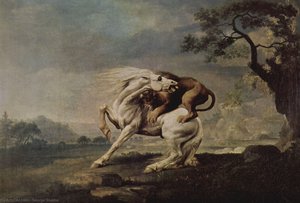
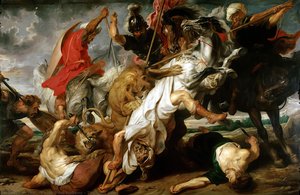
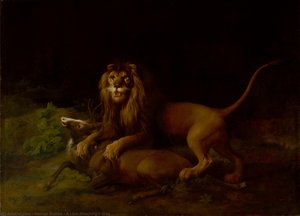
The stylistic journey of the lion in art reflects the broader shifts in Western aesthetic philosophy. During the Baroque era, the lion was often rendered with an intense, theatrical energy. Artists utilized chiaroscuro—the dramatic interplay of light and shadow—to emphasize the musculature and the predatory tension held within a single moment. Consider the works of masters like William Huggins, where the use of impasto and rich, saturated colors creates a sense of physical presence that feels almost tactile. In these compositions, the lion is a protagonist in a cosmic drama, its form defined by bold lines and a palpable sense of movement.
As art transitioned into the Romantic period, the focus shifted from the purely symbolic to the emotional and the sublime. The lion became a vessel for exploring the untamed wilderness and the overwhelming power of nature. This era brought a more nuanced approach to texture and atmosphere, where the beast was no longer just a symbol of a king, but a part of a vast, breathing landscape. The evolution continued into the late 19th and early 20th centuries with naturalists like Friedrich Wilhelm Kuhnert, who moved away from theatricality toward an almost scientific precision. Here, the lion is captured in moments of quietude—watching for prey or resting amidst serene mountains—allowing the viewer to connect with the animal's true biological essence rather than its mythological persona.
Capturing the Primal Gaze: Technique, Texture, and the Majesty of the Mane
To truly render a lion in oil is to engage in a complex dialogue with texture. The greatest challenge for any master painter lies in the mane—that magnificent, chaotic crown of hair that serves as the focal point of the creature's majesty. Achieving this requires more than mere representation; it requires impasto techniques where thick, deliberate brushstrokes build a three-dimensional topography on the canvas. Each strand must contribute to a sense of weight and volume, catching the light in a way that mimics the organic complexity of real fur.
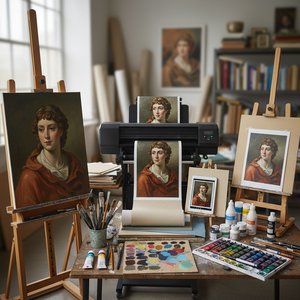
Beyond the mane, the artist must master the "primal gaze." The eyes of a lion possess a depth that can unsettle or enchant the observer. Achieving this requires a sophisticated understanding of light reflection and pupil dilation, often involving multiple translucent glazes to create a lifelike luminosity. When combined with the heavy-duty cotton canvas and premium pigments used in high-end reproductions, these technical elements coalesce to create a "living" quality. The interplay of light across the textured surface ensures that the artwork retains the spirit and depth of the original museum piece, inviting the viewer to look deeper into the soul of the beast.
The Naturalist’s Eye: Wildlife Portraiture and the Spirit of the Wild
In the realm of wildlife portraiture, the lion is treated with a reverence akin to human portraiture. The naturalist's goal is to strip away the artifice of myth and reveal the dignity of the individual animal. This requires an intimate observation of anatomy, from the powerful architecture of the forelimbs to the subtle twitch of a whisker. Artists like Marsi Sukhumbhand Paribatra have demonstrated how even more delicate elements—such as the inclusion of birds or river rocks—can enhance the narrative, placing the lion within a holistic ecosystem that feels both ancient and immediate.
This approach celebrates the spirit of the wild. It is not merely about documenting a species, but about capturing a temperament. Whether it is the stillness of a predator in wait or the weary grace of an elder lion, the naturalist's eye seeks to find the humanity within the animal. This connection is what allows wildlife art to resonate so deeply with modern audiences; in an increasingly urbanized world, these paintings serve as windows into a primal reality that remains fundamentally connected to our own evolutionary history.
Curating Grandeur: Integrating Lion Masterpieces into Sophisticated Interiors
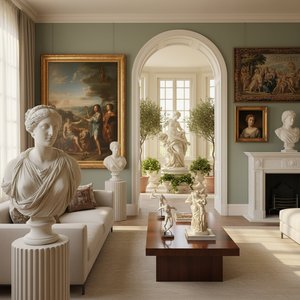
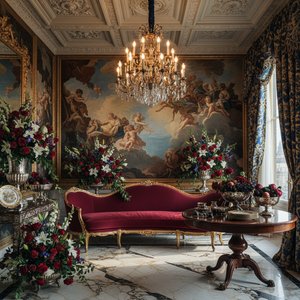
Integrating such powerful imagery into a home or professional space requires a discerning eye for composition and scale. A large-format lion painting, perhaps even a multi-panel group set spanning three or five sections, can serve as the definitive architectural statement in a room. For those decorating wide walls or grand staircases, the flow of color and brushstroke across multiple canvases creates a modern, cohesive look that commands attention without overwhelming the surrounding decor.
When selecting art for a sophisticated interior, consider the interplay between the subject matter and your existing color palette. A lion rendered in the warm, golden tones of the Romantic era can complement rich wood finishes and espresso-colored frames, while a more contemporary, textured print might suit a minimalist, light-drenched space. The key is to treat the artwork as an anchor—a piece that provides both a focal point for conversation and a sense of historical continuity. By choosing high-quality reproductions that feature visible, tactile brushstrokes, you bring the prestige of the Old Masters into the modern era, ensuring your collection remains a testament to timeless elegance.
At Mus3ums.com, we specialize in preserving this legacy of human creativity. From bespoke oil reproductions that capture every nuance of the master's hand to museum-grade Giclée prints designed for longevity, our mission is to make the grandeur of art history accessible to collectors worldwide. Whether you are seeking a custom portrait or a transformative mural, our artists and consultants are dedicated to helping you curate a space filled with power, soul, and enduring beauty.