The Romanticized Ruin: Architecture as a Memento Mori
To gaze upon the weathered columns of a fallen empire is to engage in a silent dialogue with time itself. In the realm of fine art, ancient ruins have never been mere depictions of decaying stone; they serve as profound memento mori, poignant reminders of the transience of human achievement and the inexorable march of eternity. When an artist captures the fractured pediment of a Roman temple or the hollowed eye of a triumphal arch, they are documenting more than architectural decay. They are exploring the tension between the permanence of nature and the fragility of civilization. There is a haunting beauty in the way ivy climbs through marble cracks, suggesting that while empires may fall, the organic pulse of the earth remains unyielding. This intersection of tragedy and splendor creates an emotional resonance that has captivated collectors for centuries, inviting us to reflect on our own place within the vast, unfolding tapestry of history.
The Grand Tour Aesthetic: Giovanni Paolo Pannini and the Veduta Tradition
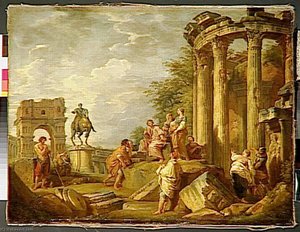
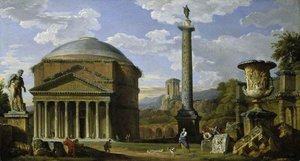
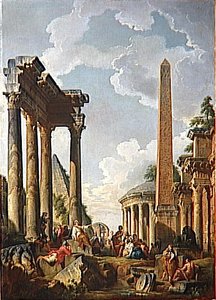
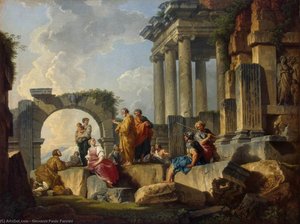
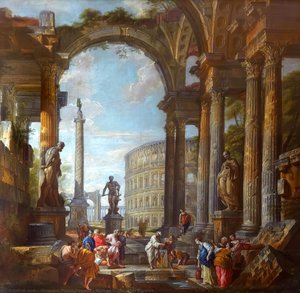
During the height of the 18th century, the concept of the "Grand Tour" transformed the landscape of European culture, turning the ruins of Italy into the ultimate destination for the enlightened elite. It was within this era of intellectual pilgrimage that the veduta—or highly detailed topographical view—reached its zenith. No artist embodied this spirit of discovery more masterfully than Giovanni Paolo Pannini. His works, such as the breathtaking Ruins of Rome, do not merely record a location; they celebrate an experience. Through his brush, the debris of antiquity is elevated to a stage of monumental grandeur. Pannini’s ability to weave historical accuracy with a sense of theatrical scale allowed travelers to carry the majesty of the Roman Forum back to their private estates in Northern Europe and beyond. His paintings functioned as both a window into a lost world and a prestigious souvenir of cultural sophistication, establishing a standard for architectural portraiture that remains unsurpassed.
The legacy of these vedute lies in their ability to evoke a sense of nostalgia for an era the viewer may never have personally witnessed. By meticulously documenting the interplay between classical structures and contemporary figures, Pannini and his contemporaries created a bridge between the ancient past and the living present. This tradition invites the observer to wander through the canvas, lost in the intricate details of a Corinthian capital or the sweeping perspective of a sun-drenched piazza, fostering a deep connection to the heritage of Western civilization.
Light, Shadow, and Stone: The Technical Mastery of Baroque Perspectives
The true magic of depicting ancient architecture lies in the technical challenge of rendering weight, texture, and atmosphere. To paint a ruin is to master the physics of light. In the Baroque tradition, artists utilized dramatic chiaroscuro to breathe life into cold marble. Consider how the sunlight strikes a broken column, creating brilliant highlights that contrast sharply with the deep, velvety shadows tucked within a crumbling archway. This manipulation of light does more than provide depth; it directs the viewer's eye, guiding them through a complex labyrinth of stone and space. The artist must also contend with the tactile reality of the medium—the grit of weathered travertine, the smoothness of polished porphyry, and the soft, organic textures of encroaching moss.
Achieving this level of realism requires an intimate understanding of perspective and tonal range. A successful masterwork uses light to suggest volume, making the heavy stone feel palpable even on a flat canvas. When executed with precision, the interplay of shadow and illumination creates an illusionistic realism that pulls the spectator into the scene. It is this technical rigor—the ability to make the viewer feel the heat of the Roman sun or the coolness of a shaded alcove—that separates a mere illustration from a profound piece of fine art.
Capriccio and Fantasy: Reimagining History through Architectural Illusionism
Beyond the strict confines of topographical accuracy lies one of the most enchanting genres in art history: the Capriccio. In a Capriccio, the artist is liberated from the constraints of reality, allowed instead to engage in architectural fantasy. Using real ruins as building blocks, masters like Pannini would construct impossible landscapes where monuments from different eras and locations are brought together in a single, harmonious composition. This "architectural collage" allows for a heightened sense of drama and a more curated exploration of classical themes. A Capriccio might place the Arc of Janus alongside the Temple of Vesta in a way that defies geography but satisfies the soul's desire for aesthetic perfection.
This genre represents the ultimate triumph of imagination over documentation. By rearranging the fragments of history, the artist creates a dreamscape of antiquity—a world where the grandeur of Rome is reimagined as an eternal, idealized state. These works offer a playground for the intellect, challenging the viewer to discern between what was historically present and what has been artistically invented. In this way, the Capriccio becomes a celebration of human creativity, proving that even in the wreckage of the past, we can build new and wondrous visions.
Preserving the Past: Bringing Classical Grandeur into the Modern Interior
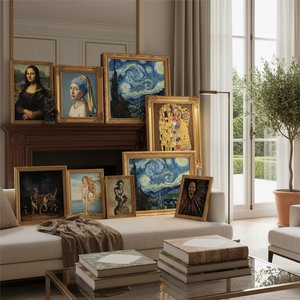
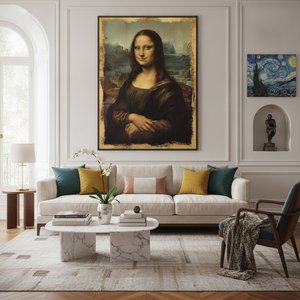
In our fast-paced, digital age, there is a growing desire to anchor our living spaces with objects of permanence and historical depth. Integrating fine art reproductions of ancient ruins into a modern interior offers more than just decoration; it provides a sense of continuity and cultural grounding. A large-scale oil painting of a Roman vista can serve as a profound focal point in a contemporary room, its rich textures and deep tones providing a sophisticated contrast to the clean lines of modern architecture. Such pieces act as "windows" to another time, expanding the perceived boundaries of a room and inviting quiet contemplation.
Whether through a multi-panel set that spans a wide wall or a single, framed masterpiece, these works allow collectors to curate an environment steeped in history. The presence of classical motifs evokes a sense of timelessness, transforming a house into a sanctuary of culture. By surrounding ourselves with the echoes of greatness, we ensure that the majesty of the past continues to resonate within the homes of the present, preserving the splendor of antiquity for generations to come.
At Mus3ums.com, we are dedicated to making this profound connection to art history accessible to all. Our mission is to preserve human creativity by offering exquisite, hand-painted reproductions that capture the soul and texture of the Old Masters. From the dramatic light of Pannini’s ruins to custom commissions that reimagine your own memories through the lens of classical styles, our master artists use traditional techniques on fine cotton canvas to ensure every brushstroke tells a story. We invite you to explore our vast library and bring the enduring majesty of the past into your contemporary world.