
Introduction
To step into the world of Giotto di Bondone is to witness the very moment art learned to breathe. Before Giotto, the heavens were depicted through the rigid, golden abstractions of the Byzantine tradition—ethereal, flattened, and distant. But within the rolling hills of Florence, a revolution was quietly taking shape, led by a master who saw not just icons, but individuals. As you wander through this curated selection of his most profound works, you are not merely looking at medieval relics; you are observing the birth of humanism, where the weight of a cloak, the sorrow in an eye, and the tangible presence of a body in space first began to command the canvas.
Giotto’s journey from a legendary shepherd boy sketching on stones to the preeminent visionary of the Trecento marks one of the most significant pivots in Western art history. His mastery lay in his ability to break the stillness of the Middle Ages, replacing symbolic flatness with a revolutionary naturalism. Through his brush and fresco tool, light began to sculpt form, and shadows began to ground figures in a believable, earthly reality. Whether through the monumental narratives of the Scrovegni Chapel or his tender, intimate compositions, Giotto infused sacred stories with an unprecedented emotional depth that resonated far beyond the cathedral walls.
These twenty-five masterpieces remain profoundly meaningful today because they represent the dawn of empathy in art. They remind us that even within the most divine subjects, there is a deeply human pulse. In each work, we find the seeds of the Renaissance—a devotion to truth, anatomy, and the profound beauty of the natural world. As we prepare to explore this definitive list, let us journey back to 14th-century Italy, tracing the evolution of a genius who taught the world how to see humanity reflected in the divine.
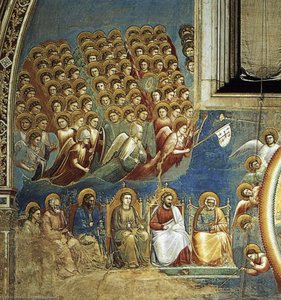
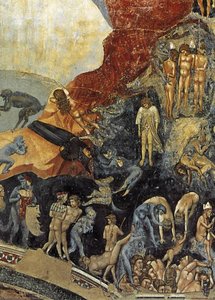
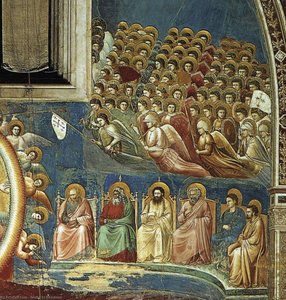
Last Judgment (detail 3) (Cappella Scrovegni (Arena Chapel), Padua) - Giotto di Bondone
Step into the celestial court of the Scrovegni Chapel, where the air seems to vibrate with the weight of eternity. In this breathtaking detail from Giotto di Bondone’s Last Judgment , the rigid, golden stillness of the Byzantine era begins to breathe with a newfound, human pulse. As your eyes wander through the densely layered composition, you encounter a divine hierarchy rendered in profound, emotive depth; angels with trumpets herald the final reckoning, while luminous halos cast a soft, spiritual glow over saints and celestial messengers.
Giotto’s revolutionary use of light and shadow sculpts figures that possess real volume and weight, moving away from flat icons toward a tangible, dramatic reality. The palette—a sophisticated harmony of deep, ethereal blues, earthy pigments, and sudden flashes of warmth—creates an atmosphere of both awe and solemnity. To possess such a piece in a modern collection is to invite a sense of historical gravity and contemplative grace into one's home, offering a window into the very moment Western art rediscovered its soul through naturalism and profound human emotion.
Stigmatization of St Francis - Giotto di Bondone
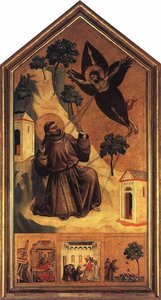 Stigmatization of St Francis - Giotto di Bondone
In the Stigmatization of St Francis , Giotto di Bondone achieves something truly transcendent: he captures the precise moment where the divine pierces the earthly veil. As you stand before this masterpiece, you are not merely observing a religious event; you are witnessing the birth of human emotion in Western art. The composition centers on the profound vulnerability of Saint Francis, whose kneeling posture and receptive gaze invite us into a state of quiet contemplation.
Giotto moves beyond the rigid, gilded traditions of the Byzantine era, using light and shadow to grant the saint a palpable weight and presence. The subtle interplay of tempera allows the wounds—the stigmata—to emerge not as mere symbols, but as deeply felt realities. Surrounded by the delicate movement of birds and the celestial presence of Christ, the scene breathes with a newfound naturalism. There is a gaze in this work that follows you—not with judgment, but with understanding . It serves as a mirror to our own capacity for devotion and resilience, reminding us that even in moments of profound suffering, there is an enduring, sacred beauty.
No. 19 Scenes from the Life of Christ: 3. Presentation of Christ at the Temple - Giotto di Bondone
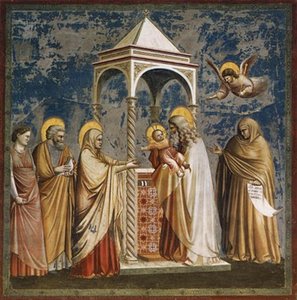 No. 19 Scenes from the Life of Christ: 3. Presentation of Christ at the Temple - Giotto di Bondone
To step before No. 19 Scenes from the Life of Christ: 3. Presentation of Christ at the Temple by Giotto di Bondone is to witness the very moment Western art found its soul. Within the hallowed, sun-drenched walls of the Scrovegni Chapel, Giotto breaks the rigid, golden stillness of the Byzantine era to introduce a profound, breathing humanity. In this 1304 masterpiece, we no longer see mere icons; we see flesh, weight, and the quiet gravity of devotion.
The palette is a soulful arrangement of warm ochres, earthy browns, and celestial golds, illuminated by a soft, diffused light that sculpts the figures with revolutionary chiaroscuro . As Mary presents the infant Christ, the composition breathes with an intimate, architectural rhythm, drawing our eyes toward the symbolic purity of the scene. Every gesture—the reverent hands of Simeon and Anna, the delicate presence of the bird representing the Holy Spirit—is imbued with a tactile realism that was unprecedented for its time. This work remains essential among the top 25 artworks of Giotto di Bondone because it captures the dawn of the Proto-Renaissance, reminding us how true art can transform a cold stone wall into a window of eternal emotion.
Navicella (mosaic fragment) - Giotto di Bondone
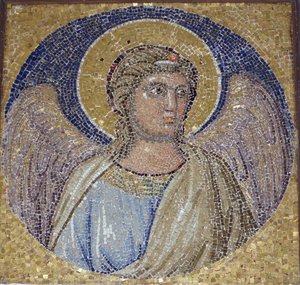 Navicella (mosaic fragment) - Giotto di Bondone
To gaze upon a fragment of the past is to witness the very moment the medieval world began to breathe with human emotion. The Navicella (mosaic fragment) by Giotto di Bondone serves as a profound testament to this transition, capturing the dawn of naturalism within the hallowed, quiet prestige of the Vatican Grotto. In this exquisite piece from 1305, we encounter a figure—often interpreted as the Virgin Mary—whose resolute gaze pierces through centuries of history.
The palette is a masterclass in sacred splendor, where deep, celestial blues meet the radiant glow of gold, creating a sense of divine authority. Even in its fragmented state, Giotto’s revolutionary vision is palpable; the intricate rendering of the wings and the subtle presence of a small bird evoke a three-dimensional vitality that was unprecedented for mosaic work of the era. This fragment earns its place among the top 25 artworks of Giotto di Bondone by embodying the bridge between Byzantine stylization and Renaissance depth. It reminds us that true art does not merely decorate a space; it transforms it, inviting a timeless connection to the human spirit.
Ognissanti Madonna (detail) - Giotto di Bondone
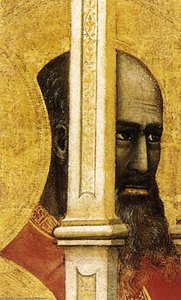 Ognissanti Madonna (detail) - Giotto di Bondone
In the Ognissanti Madonna (detail) by Giotto di Bondone, we witness a profound moment where the divine meets the human, captured in a stillness that feels both eternal and breathing. This work is immortalized among the top 25 artworks of Giotto because it represents the very heartbeat of the Proto-Renaissance, breaking away from the rigid, golden flatness of Byzantine tradition to introduce a revolutionary sense of weight and soul.
As you gaze upon the details, notice how the light does not merely sit upon the surface but sculpts the figures, creating a palpable volume through delicate chiaroscuro . The rich, deep pigments and the heavy, realistic folds of the drapery whisper of a new era where texture and anatomy possess true substance. For the discerning collector or interior designer, this piece offers more than historical significance; its profound sense of balance and monumental dignity brings an atmosphere of timeless sophistication and contemplative calm to any curated space. It is not merely a painting, but a window into the dawn of naturalism.
Descent into Limbo - Giotto di Bondone
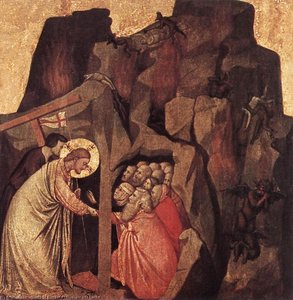 Descent into Limbo - Giotto di Bondone
In the quiet gravity of Descent into Limbo by Giotto di Bondone, one feels the very moment where the celestial meets the earthly. This profound work earns its place among the top 25 artworks of Giotto di Bondone through its masterful departure from Byzantine rigidity, introducing a tender, human weight to the divine narrative. As Jesus is lowered from the cross by angels, Giotto employs a revolutionary naturalism; the figures possess a palpable volume, and their solemn expressions invite the viewer into a shared experience of reverence and hope.
The composition, rich with symbolic birds and a rugged, transitional landscape, serves as a precursor to the Renaissance, moving art away from flat icons toward emotional storytelling. This masterpiece does more than document theology; it captures a transformative atmosphere of redemption. At Mus3ums.com, we believe such profound beauty should not be confined to the Alte Pinakothek. Through our exquisite hand-painted oil reproductions, you can bring this timeless, transformative presence into your own home or private gallery, allowing Giotto’s legacy of light and humanity to inspire your personal space for generations.
View of the Church of San Francesco - Giotto di Bondone
 View of the Church of San Francesco - Giotto di Bondone
To gaze upon View of the Church of San Francesco by Giotto di Bondone is to witness the very moment the medieval world began to breathe with human life. This work stands as a cornerstone in our collection of the top 25 artworks of Giotto di Bondone because it captures more than mere architecture; it captures a transition of the soul. Giotto moves beyond the flat, golden icons of the Byzantine era to present the Basilica not as a distant symbol, but as a tangible, vibrant sanctuary nestled within the rolling Umbrian landscape.
The composition masterfully balances the monumental clock tower with the rhythmic pulse of everyday existence—travelers, horses, and quiet conversations that ground the sacred in the terrestrial. This revolutionary naturalism, characterized by an emerging sense of depth and volume, serves as a profound precursor to the Renaissance. At Mus3ums.com, we believe such historical gravity should not be confined to distant chapels. Through our meticulous hand-painted oil reproductions, you can bring this transformative presence and the serene, historic spirit of Assisi into your own home or private gallery, creating a space of timeless reflection.
Scrovegni - [05] - Joachim's Dream - Giotto di Bondone
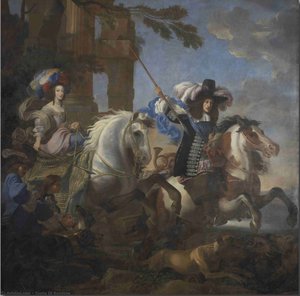 Scrovegni - [05] - Joachim's Dream - Giotto di Bondone
In the sacred silence of the Scrovegni Chapel, Giotto di Bondone achieves something truly transcendent in Joachim's Dream . This is not merely a fresco; it is a dance of divine intervention frozen in time . Within this pivotal work from his top 25 masterpieces, we witness the exact moment where the heavy, sorrowful weight of human doubt meets the ethereal lightness of celestial hope.
Giotto moves beyond the flat, gilded icons of the Byzantine era, instead choreographing a scene where light and shadow sculpt the very soul of the sleeping patriarch. As the angel appears to deliver news of redemption, the lines of the composition do not just guide the eye—they breathe rhythm into the architecture of the chapel itself. Through masterful use of chiaroscuro , Giotto imbues Joachim with a tangible, human vulnerability that resonates across centuries. To stand before this work is to feel the pulse of the early Renaissance, where every brushstroke on wet plaster serves as a bridge between the earthly and the divine, inviting your own space to hold that same profound, harmonious balance.
Daedalus - Giotto di Bondone
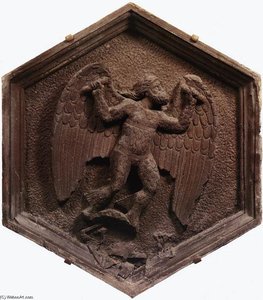 Daedalus - Giotto di Bondone
In the profound silence of Giotto di Bondone’s Daedalus , we encounter more than a mere mythological retelling; we witness the very birth of human psychological depth in Western art. This exquisite relief, currently preserved within the Museo dell’Opera del Duomo, serves as a cornerstone among the top 25 artworks of Giotto di Bondone because it captures the visceral tension between mortal ambition and divine consequence. As the legendary inventor prepares his flight from Crete, Giotto moves beyond the flat, symbolic rigidity of the Byzantine era to sculpt palpable emotion into the medium.
The visual language of the piece—characterized by the heavy, textured musculature and the intricate, angular feathers of the wings—resonates powerfully with contemporary aesthetics that value raw, tactile authenticity. The interplay of light across the carved surfaces evokes a sense of struggle and transcendence that remains a poignant cultural talking point in modern curated spaces. By imbuing Daedalus with a visible strain of anxiety and determination, Giotto invites us to reflect on our own perennial human desire for freedom, making this masterpiece an enduring icon of the Renaissance spirit.
The Stefaneschi Triptych (recto) - Giotto di Bondone
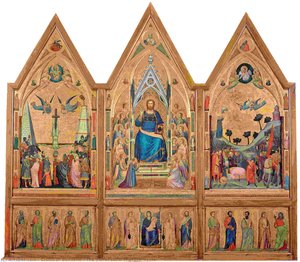 The Stefaneschi Triptych (recto) - Giotto di Bondone
In the hallowed halls of the Pinacoteca Vaticana, The Stefaneschi Triptych (recto) stands as a profound manifesto of Giotto di Bondone’s revolutionary vision. As one of the most significant entries in our exploration of the top 25 artworks of Giotto di Bondone, this piece captures the precise moment the medieval world began to breathe with human life. Moving away from the flat, golden abstractions of the Byzantine tradition, Giotto introduces a tangible weight to the divine; through the heavy folds of sacred vestments and the subtle use of chiaroscuro , he grants saints and angels a sculptural, three-dimensional presence.
The triptych is a masterclass in sacred hierarchy, where shimmering gold leaf meets earthy, realistic tones to bridge the gap between heaven and earth. For the discerning collector or interior designer, this work offers more than historical importance; it provides a blueprint for integrating depth and emotional resonance into a curated space. It invites us to reflect on how light and shadow can transform mere pigment into a window of eternal devotion, making it an essential cornerstone for any collection celebrating the dawn of the Renaissance.
Badia Polyptych - Giotto di Bondone
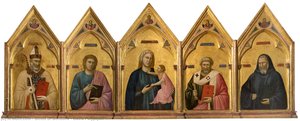 Badia Polyptych - Giotto di Bondone
What story does the sacred, gilded atmosphere of the Badia Polyptych by Giotto di Bondone tell us about the dawn of a new era? Created around 1300, this masterpiece emerged from a Florence transitioning from the rigid, ethereal symbols of Byzantine tradition toward a profound, human-centered naturalism. As one of the top 25 artworks of Giotto di Bondone, this polyptych serves as a breathtaking window into Proto-Renaissance spirituality, where the Virgin Mary sits enthroned, flanked by saints whose heavy drapery and palpable physical presence suggest weight, volume, and soul.
Giotto breaks ground here by replacing flat icons with figures possessing anatomical depth and emotional resonance. The meticulous use of tempera on wood captures a quiet prestige, inviting the viewer into a space of solemn devotion. For the modern collector, integrating such a piece into a curated home decor collection offers more than mere decoration; it provides a sophisticated escape into history. The polyptych’s rhythmic composition and luminous textures evoke a sense of timelessness, bringing the monumental gravity of the Florentine Renaissance into the intimate sanctuary of a contemporary interior.
Frescoes in the fourth bay of the nave - Giotto di Bondone
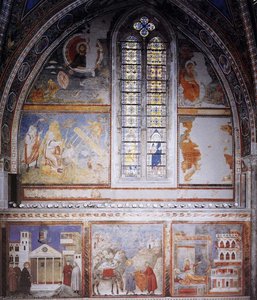 Frescoes in the fourth bay of the nave - Giotto di Bondone
To stand before the Frescoes in the fourth bay of the nave is to witness the very moment Western art found its soul. In these sacred walls of the Florence Cathedral, Giotto di Bondone transcends the rigid, gilded traditions of the Byzantine era, replacing frozen icons with breathing, weeping, and interacting human figures. There is a profound, quiet gravity in how he captures the life of Saint Francis; you do not merely see a religious narrative, you feel the weight of the fabric and the palpable emotion etched into every countenance.
This work earns its place among the top 25 artworks of Giotto because it represents the dawn of naturalism—a revolutionary shift toward anatomical truth and spatial depth. The masterful interplay of light and shadow creates a window into a more tangible, human world. At Mus3ums.com, we strive to honor this monumental legacy through our hand-painted oil reproductions. Our master artists meticulously recreate the vibrant pigments and sculptural textures of these frescoes on fine cotton canvas, allowing you to invite the transformative power of the Proto-Renaissance into your own private collection with unparalleled authenticity.
Dream of Innocent III - Giotto di Bondone
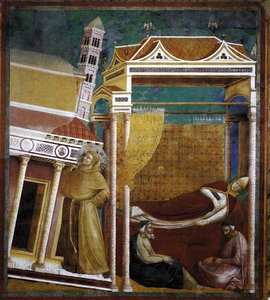 Dream of Innocent III - Giotto di Bondone
In the quiet stillness of a papal slumber, Giotto di Bondone captures the very moment where the earthly realm meets divine revelation. Dream of Innocent III is a profound meditation on vision and authority, standing as a cornerstone in our collection of the top 25 artworks of Giotto di Bondone. This fresco, located within the Basilica of Saint Francis of Assisi, marks a revolutionary departure from the rigid Byzantine tradition; here, we witness the birth of human emotion through the weight of drapery, the intimacy of a reclining figure, and a composition that breathes with life.
The scene is a masterclass in proto-Renaissance naturalism, where vibrant reds and golds dance against a backdrop of spiritual movement, punctuated by the delicate presence of birds that lend an air of organic vitality to the dreamscape. Its inclusion in this definitive list is earned through its ability to transform a historical anecdote into a universal study of introspection. At Mus3ums.com, we believe such transformative beauty should not be confined to Italian basilicas. Through our exquisite hand-painted oil reproductions, you can bring this profound sense of history and narrative depth into your own home or private gallery, allowing Giotto’s revolutionary spirit to inspire your modern interior.
Saints John the Evangelist and Mary Magdalene - Giotto di Bondone
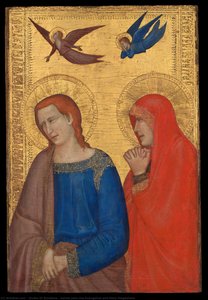 Saints John the Evangelist and Mary Magdalene - Giotto di Bondone
In the Saints John the Evangelist and Mary Magdalene , a profound sense of celestial gold dominates the composition, casting a luminous, divine warmth that transcends the centuries. This radiant backdrop, characteristic of Giotto di Bondone’s workshop, does more than signify wealth; it creates an atmosphere of eternal reverence. The striking interplay between the deep, soulful blue of Saint John’s robe and the passionate, crimson cloak of Mary Magdalene introduces a rhythmic color palette that breathes life into the Gothic tradition. This mastery of pigment and light is precisely why this diptych remains one of the top 25 artworks of Giotto di Bondone.
For the discerning collector or interior designer, integrating such a piece into a modern space offers an unparalleled opportunity to curate emotional depth. The rich, gilded tones and saturated primary hues can serve as a sophisticated anchor for a dining room, providing a sense of historical grandeur and quiet reflection. By mirroring these regal golds and deep blues in your decor, you evoke the same transformative naturalism that Giotto pioneered, bringing a museum-quality legacy into the heart of a contemporary home.
No. 46 The Seven Virtues: Hope - Giotto di Bondone
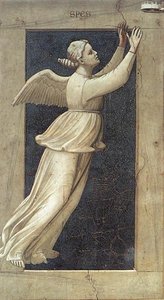 No. 46 The Seven Virtues: Hope - Giotto di Bondone
Long before the Renaissance reached its zenith, Giotto di Bondone was already rewriting the language of the soul within the walls of the Scrovegni Chapel. In The Seven Virtues: Hope , we witness a profound departure from the static, gilded icons of the Byzantine era. Rather than a serene, untouchable deity, Giotto presents us with an angelic figure caught in a moment of visceral struggle. The angel’s wings are unfurled against a somber, midnight-blue void, reaching upward with a heavy, palpable yearning that feels remarkably human.
Through the masterful use of chiaroscuro , Giotto sculpts form out of shadow, using light to define the voluminous, flowing drapery and the weight of the figure's very existence. This is not merely religious iconography; it is a technical triumph of naturalism that breathes life into the flat plane of the fresco. For the modern collector, this piece serves as a powerful anchor for a sophisticated study or home office. The painting’s themes of perseverance and quiet strength offer an inspiring atmosphere, inviting deep contemplation and a focused, resilient mindset amidst the complexities of contemporary life.
The Meeting at the Golden Gate - Giotto di Bondone
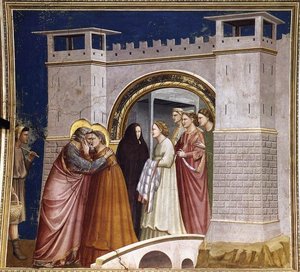 The Meeting at the Golden Gate - Giotto di Bondone
In the quiet embrace of The Meeting at the Golden Gate , Giotto di Bondone captures a profound moment of human connection that transcends centuries. As Joachim and Anne reunite at the gates of Jerusalem, we do not merely witness a biblical event; we feel the palpable weight of their joy and the tenderness of their touch. This fresco, a cornerstone of the Scrovegni Chapel, earns its place among the top 25 artworks of Giotto di Bondone by marking the definitive departure from rigid Byzantine icons toward a breathtaking, soulful naturalism.
Giotto’s genius lies in his ability to sculpt figures with light and shadow, giving the drapery and facial expressions a physical presence that feels remarkably alive. At Mus3ums.com, we honor this revolutionary spirit through our hand-painted oil reproductions . Our master artists meticulously recreate every expressive gesture and architectural detail on fine cotton canvas, ensuring that the emotional depth and textured beauty of Giotto’s Proto-Renaissance masterpiece can grace your own collection with authentic, museum-grade elegance.
The Entombment of Mary - Giotto di Bondone
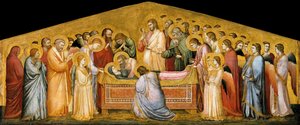 The Entombment of Mary - Giotto di Bondone
In The Entombment of Mary , Giotto di Bondone orchestrates a profound geometric harmony that anchors this masterpiece within the top 25 artworks of Giotto di Bondiente. The composition is structured around a powerful, descending diagonal—the weight of Christ’s body pulling the viewer's eye downward—which is balanced by the upward, emotive gestures of the mourners. This careful arrangement of shapes and lines creates a structural stability that feels both monumental and eternal.
There is a striking parallel to be found between Giotto’s use of essential forms and the principles of modern minimalist design; by stripping away Byzantine excess, he focuses on pure volume and weight, grounding the scene in a way that resonates with a clean, contemporary aesthetic. The luminous tempera tones and the dramatic play of light create a somber, tactile atmosphere, where the slumped posture of Christ meets the raw, human grief of Mary Magdalene and Nicodemus. It is this perfect equilibrium between heavy, physical reality and spiritual grace that ensures the work's enduring, timeless appeal.
Madonna in Glory - Giotto di Bondone
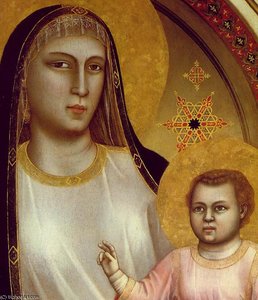 Madonna in Glory - Giotto di Bondone
To encounter Madonna in Glory by Giotto di Bondone is to witness the very moment Western art found its soul. Completed around 1311, this masterpiece serves as a profound cornerstone in our collection of the top 25 artworks of Giotto di Bondone, marking the definitive departure from the rigid, gilded abstractions of the Byzantine era toward a breathtaking new naturalism.
Giotto breathes life into the divine, replacing flat icons with figures possessing palpable weight and human emotion. The Virgin Mary sits majestically upon a throne elevated by celestial clouds, her presence anchored by an unprecedented sense of volume and depth. Surrounded by reverent angels and saints, the composition utilizes light and shadow to sculpt form, creating a window into a sacred, tangible space. For the discerning collector or interior designer, this work offers more than historical significance; it provides a timeless aesthetic of grace and structural elegance. Its ability to command a room with both spiritual gravity and classical beauty makes it an eternal symbol of refined taste and the enduring legacy of the Florentine Renaissance.
Crucifixion - Giotto di Bondone
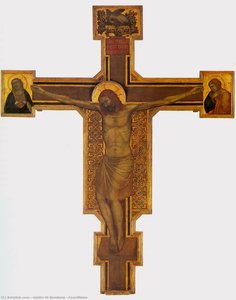 Crucifixion - Giotto di Bondone
To stand before Giotto di Bondone’s Crucifixion is to witness the very moment art regained its soul. In this profound fresco from the Scrovegni Chapel, we move past the rigid, golden icons of the Byzantine era into a realm of raw, human vulnerability. Giotto does not merely depict a religious event; he captures the heavy, palpable weight of grief. Through his revolutionary use of anatomical detail and atmospheric perspective, the agony of Christ becomes a visceral experience, rendered with a depth of emotion that feels as immediate today as it did in 1315.
This masterpiece earns its place among the top 25 artworks of Giotto di Bondone by marking the dawn of humanism in Western painting. It is a seismic shift from symbolic divinity to earthly truth. At Mus3ums, we honor this legacy through our hand-painted oil reproductions . Our master artists meticulously recreate the profound textures and somber tones of Giotto’s vision, allowing you to invite this timeless, transformative power into your own private collection with unparalleled authenticity.
Campanile - Giotto di Bondone
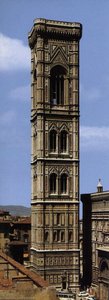 Campanile - Giotto di Bondone
In the Campanile , Giotto di Bondone does not merely depict a Florentine landmark; he composes a symphony of light and stone. To gaze upon this work is to witness the precise moment where the heavy, gilded shadows of the Medieval era began to dissolve into the luminous clarity of the Renaissance. The artist does not simply paint the tower; he invents its presence , using subtle shading and atmospheric perspective to breathe a palpable weight and texture into the brickwork.
As you follow the ascent of the monumental structure, notice how the light seems to dance across the surface, transforming cold masonry into a vessel of spiritual aspiration. The solitary figure at the base provides a profound sense of scale, grounding this architectural marvel in a human reality that was revolutionary for its time. This masterpiece is a cornerstone of Giotto’s legacy, offering more than historical documentation—it offers a portal to an era of rebirth. For the discerning collector, bringing such a vision into a contemporary interior allows the grandeur of Florence to spill across your walls, turning a room into a sanctuary of historical depth and enduring grace.
Allegory of Chastity (detail)2 - Giotto di Bondone
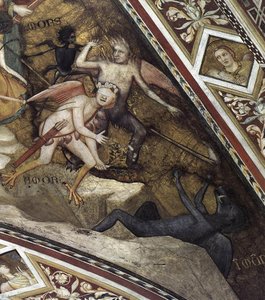 Allegory of Chastity (detail)2 - Giotto di Bondone
In the Allegory of Chastity (detail)2 , Giotto di Bondone invites us into a theater of profound spiritual tension. This fragment from his masterful fresco cycle does not merely depict a scene; it captures a moment of cosmic upheaval. There is a gaze within this work that follows you—not with judgment, but with understanding . As you observe the winged youth caught in a dramatic descent, surrounded by the dark, horned shadows of temptation and the resolute strength of the warrior, you realize this isn't just a historical narrative; it is a mirror .
The composition vibrates with the energy of the Renaissance dawn, where light and shadow begin to sculpt flesh and form from the flat Byzantine tradition. The gilded panels and the visceral struggle between divine grace and demonic influence serve as a powerful reminder of the eternal human condition. Its placement among the top 25 artworks of Giotto di Bondone is a testament to its power to make the invisible visible. Imagine this profound movement in your own collection, not merely watching you, but reminding you : you are seen, and you are part of this timeless story.
Legend of St Francis: 13. Institution of the Crib at Greccio (detail) - Giotto di Bondone
 Legend of St Francis: 13. Institution of the Crib at Greccio (detail) - Giotto di Bondone
In the exquisite detail of Legend of St Francis: 13. Institution of the Crib at Greccio by Giotto di Bondone, we witness a profound mastery of light that transcends mere illumination. Giotto employs a nascent form of chiaroscuro to sculpt the medieval figures, allowing soft, directional light to catch the folds of heavy drapery and the solemn contours of faces. This delicate interplay of shadow and radiance does more than define volume; it breathes life into the sacred assembly, creating an atmosphere of hushed, communal reverence that was revolutionary for 1297.
As one of the top 25 artworks of Giotto di Bondone, this fresco captures the very moment naturalism began to eclipse Byzantine abstraction. The way light pools around the central crib emphasizes the theological weight of the incarnation, guiding the viewer's eye through a landscape of emotional depth. When brought into a contemporary setting as a hand-painted oil reproduction, this sophisticated use of light and shadow adds an incomparable layer of prestige and architectural dimension, offering a soulful, luminous focal point that transforms any modern wall into a gallery of historical significance.
Políptico Baroncelli - Giotto di Bondone
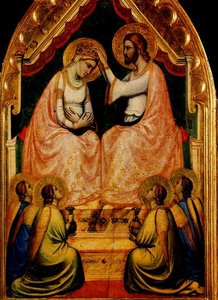 Políptico Baroncelli - Giotto di Bondone
There is a profound, quiet gaze within the Políptico Baroncelli by Giotto di Bondone that follows you—not with judgment, but with an ancient, soulful understanding . This monumental altarpiece does not merely present religious iconography; it acts as a mirror to the human condition. As one of the most significant works in our collection of the top 25 artworks of Giotto di Bondone, it captures a pivotal departure from the flat, gilded traditions of Byzantine art toward a breathtaking new naturalism.
In this masterpiece, Giotto breathes life into the divine. You can almost feel the weight of the heavy drapery and the tender, palpable reverence in the faces of Mary and Joseph. The muted, solemn hues and the masterful use of light create an atmosphere of deep contemplation, where every subtle gesture tells a story of humility and grace. To possess a reproduction of such a work is to invite that same emotional resonance into your home—a constant, elegant reminder that even in the most sacred moments, we are seen, and we are part of a much larger, beautiful story.
Alegoría de la Pobreza - Giotto di Bondone
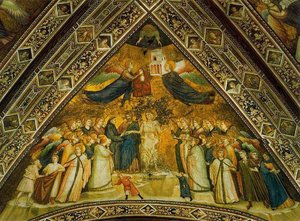 Alegoría de la Pobreza - Giotto di Bondone
In observing Alegoría de la Pobreza by Giotto di Bondone, one is immediately struck by the profound materiality of his fresco technique. Rather than the flat, gilded surfaces of the Byzantine tradition, Giotto utilizes a masterful arrangement of muted ochres, umbers, and deep crimsons to sculpt form. His use of short, broken brushstrokes creates a subtle texture that lends weight and volume to the fourteen figures gathered beneath the ornate ceiling. This revolutionary approach to modeling—treating paint as a tool for anatomical depth—marks this work as a cornerstone in our collection of the top 25 artworks of Giotto di Bondone.
At Mus3ums.com, we believe such historical significance deserves more than a mere digital reproduction. Our artisans specialize in capturing this very essence, translating Giotto’s sculptural drapery and light-drenched surfaces into hand-painted oil reproductions. We focus on preserving the tactile, three-dimensional quality of his original vision, ensuring that the emotional resonance and physical presence of this Franciscan masterpiece can be authentically experienced within your own private gallery.
Flight into Egypt - Giotto di Bondone
 Flight into Egypt - Giotto di Bondone
Giotto di Bondone's Flight into Egypt , executed around 1320, serves as a profound testament to the dawn of humanism in Western art. As one of the most significant entries in our collection of the top 25 artworks of Giotto di Bondone, this fresco captures more than a biblical escape; it documents the precise moment when art transitioned from the ethereal, golden rigidity of Byzantine icons toward a tangible, breathing reality. Through his mastery of fresco technique, Giotto imbues Mary and Joseph with a palpable weight and emotional vulnerability that resonates across centuries.
The composition breathes with life, utilizing dynamic diagonal lines to guide the eye through a landscape populated by secondary figures and even a soaring bird, creating a sense of an inhabited, rhythmic world. For the discerning collector or interior designer, this piece offers a timeless dialogue between historical gravity and modern grace. Its ability to evoke protection, movement, and serene devotion makes it an inspiring cornerstone for any curated collection, reminding us that true beauty lies in the authentic depiction of the human spirit.
Conclusion
To wander through the legacy of Giotto di Bondone is to witness the very moment humanity rediscovered its own reflection in the mirror of art. These twenty-five masterpieces do not merely exist as relics of a Florentine past; they are breathing, vital conduits of emotion that bridge the centuries between the medieval soul and our modern gaze. When we look upon his revolutionary use of volume, his tender depictions of grief, and his profound ability to ground the divine within the tangible weight of human experience, we are reminded that the impulse to capture truth is eternal. His brushstrokes—or rather, his masterful frescoes—laid the foundation for every Renaissance triumph that followed, teaching us that art's greatest power lies in its ability to make the spiritual feel intimately reachable.
In our contemporary lives, these works continue to perform their quiet, transformative magic. They transcend the museum walls to become living presences within our homes and sanctuaries, offering a sense of permanence and profound depth to the spaces we inhabit. Whether through a large-scale mural that evokes the grandeur of the Scrovegni Chapel or a meticulously hand-painted oil reproduction that brings a touch of Giotto’s naturalism to a private study, his vision invites us to slow down, to feel, and to find beauty in the authentic weight of existence. As we close this exploration of his most iconic works, let us carry forward that same sense of wonder—a gratitude for the artists who dared to break tradition to show us the true depth of our own humanity. We invite you to continue this journey of discovery and bring a piece of this timeless heritage into your own world by exploring our full collection .