The Catalan Gothic Maestro: The Life and Legacy of Arnau Bassa
In the vibrant tapestry of fourteenth-century Mediterranean art, few names resonate with as much foundational importance as Arnau Bassa. A pivotal figure in the genesis of the Catalan School, Bassa did not merely paint; he helped orchestrate a stylistic revolution that would redefine the visual language of Spain and beyond. Born around 1285 into a lineage of profound artistic significance, his life was inextricably linked to the workshop of his father, the celebrated Ferrer Bassa. This familial bond served as more than just an apprenticeship; it was a shared mission to bridge the gap between the rigid, stylized traditions of the early Middle Ages and the burgeoning humanism emerging from the Italian peninsula.
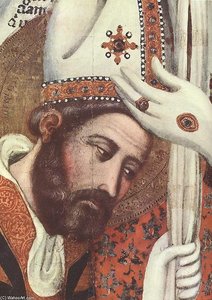
The formative years of Arnau Balssa were spent immersed in an environment where craftsmanship met innovation. Under his father’s tutelage, he mastered a technique that blended the meticulous detail of Catalan tradition with the sweeping, emotive power of the Italian Gothic movement. The influence of masters such as Giotto and Duccio di Buoninsegna is palpable in Bassa's evolution. While his early work reflected the more static, pre-Avignonese school, he gradually transitioned toward a more naturalistic approach. This shift was characterized by an increasing command over spatial depth, the fluid movement of drapery, and a newfound ability to imbue sacred figures with a sense of palpable, human emotion.
A Monumental Legacy in Fresco and Altarpiece
The zenith of Bassa’s artistic achievement is perhaps most breathtakingly realized in the Pedralbes Monastery near Barcelona. Between 1338 and 1340, he executed a series of monumental frescoes within the chapel of St. Marcus that remain a watershed moment in European art history. These works represent a decisive departure from the flat, symbolic iconography of previous generations. In these walls, one finds a masterful command of color and perspective, where scenes from the Gospels are rendered with a clarity and narrative weight that mirrored the most progressive stylistic trends across Europe. His ability to use light and shadow to create volume transformed the chapel into a window onto a more tangible, sacred reality.
Beyond the permanence of fresco, Bassa’s contributions to the tradition of the retablo (altarpiece) were equally transformative. His collaborative efforts with his father produced works of immense spiritual and civic importance, such as:
- The Altarpiece for the Shoemakers Guild: A significant commission for the Barcelona cathedral, which later found a home in the Basilica of Santa Maria in Manresa.
- The Retablo of St. James: Executed in 1347 for the Monastery of Jonqueres, showcasing the height of his collaborative mastery.
- The Royal Palace of La Almudaina: A grand undertaking in Palma de Mallorca that demonstrated his reach into the highest echelons of royal patronage.
A Tragic End and Eternal Influence
The trajectory of Arnau Bassa’s life was as dramatic as it was brilliant, ending in a profound tragedy that silenced one of the era's most promising voices. In 1348, the devastating arrival of the Black Death swept through Catalonia, claiming the lives of both Arnau and his father, Ferrer. This sudden loss represented more than just the death of two men; it was the abrupt conclusion of a creative lineage that had been single-handedly steering Catalan art toward a new era of naturalism.
Despite this untimely end, Bassa’s impact remained indelible. He succeeded in establishing a stylistic foundation that allowed the Catalan School to flourish for decades after his passing. By integrating Byzantine grandeur with humanist observation, he provided the tools for future generations of Spanish painters to explore the complexities of the human condition through a divine lens. Today, his works stand not merely as relics of the fourteenth century, but as enduring testaments to a period of profound cultural metamorphosis, where the shadows of the medieval past were being illuminated by the first light of a new, more naturalistic world.