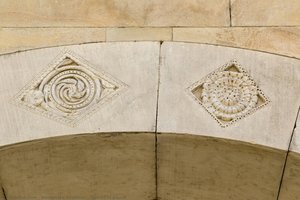
The Master of Stone: The Legacy of Benedetto Antelami
To encounter the works of Benedetto Antelami is to step into a silent, rhythmic dialogue between the earthly and the divine. An Italian architect and sculptor of the Romanesque school, Antelami stands as a monumental figure whose creative spirit bridged the gap between the sturdy traditions of late antiquity and the emerging fluidity of the Gothic era. While much of his personal life remains shrouded in the mists of the twelfth century, his presence is felt through the enduring weight of his stone carvings. Likely originating from Lombardy, Italy, his sculptural style was deeply rooted in local north Italian traditions, yet it possessed a visionary quality that allowed him to transcend the rigid boundaries of his time.
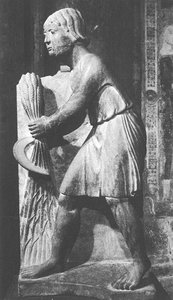
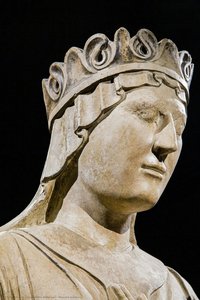
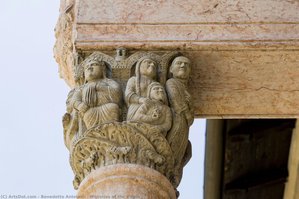
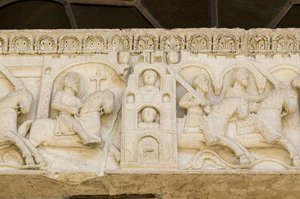
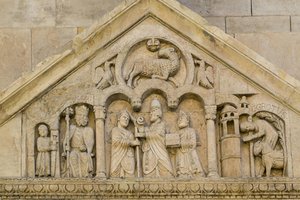
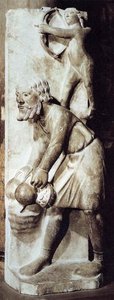
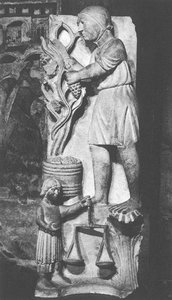
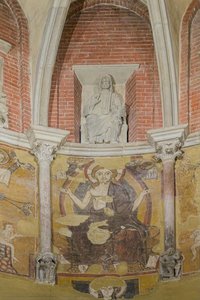
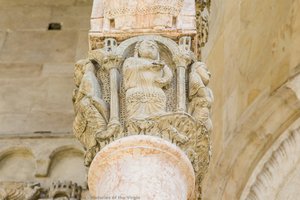
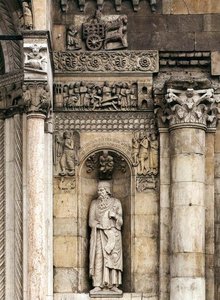
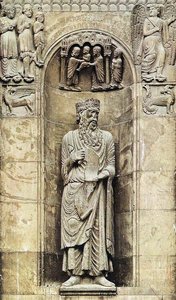
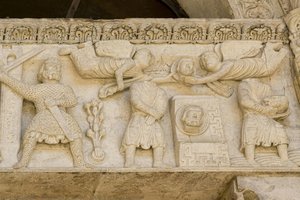
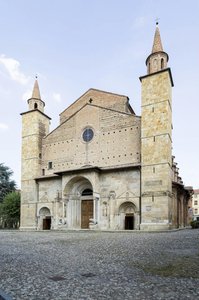
His artistry is most profoundly realized in the sacred spaces of Parma, where his hand breathed life into cold sandstone and marble. In the Parma Baptistery, Antel andami achieved a breathtaking synthesis of form and narrative. His work there, including the allegorical figures and prophets that decorate the structure, serves as a frozen chronicle of faith. Through varying depths of relief, he mastered the play of light and shadow, granting his figures a sculptural weight and a sense of profound presence. Whether carving the intricate Histories of the Virgin or the symbolic History of Borgo, Antelami utilized a multi-layered arrangement to guide the viewer’s eye through sacred timelines, turning architectural surfaces into epic tapestries of stone.
A Transition of Styles and Spirit
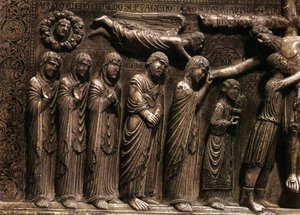
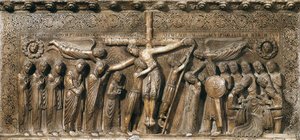
The technical prowess displayed by Antelami reflects a pivotal moment in medieval art history. He was a master of transition, moving away from the static, heavy forms of the early Romanesque toward a more fluid, proto-Renaissance sensibility. This evolution is evident in masterpieces such as the Deposition from the Cross, where dramatic relief carving and poignant religious scenes showcase a burgeoning Gothic influence. His ability to manipulate medium—specifically the yielding yet unforgiving nature of sandstone—allowed him to imbue his subjects with an expressive grace that captured the raw emotion of religious ecstasy.
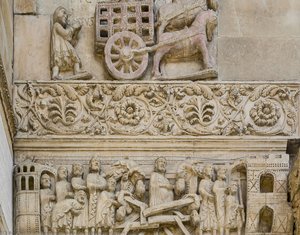
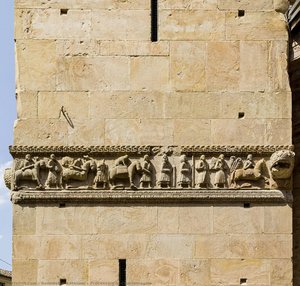
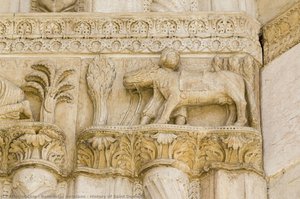
Beyond mere decoration, Antelami’s work functioned as a visual liturgy for the faithful. In pieces like the History of Saint Donnino, he integrated the pastoral reality of the world—represented by sturdy oxen and horses—with the spiritual triumphs of saints. This integration of the mundane and the miraculous suggests a cosmic order where every element of creation plays a role in the unfolding of divine history. His architectural contributions, including three renowned carved doorways, further solidified his reputation as an artist who could command both the grand scale of a cathedral and the intimate detail of a relief carving.
The historical significance of Benedetto Antelami lies in his role as a foundational pillar of Italian sculpture. By drawing upon local traditions and infusing them with a new, dynamic energy, he helped pave the way for the sculptural revolutions that would follow in the centuries to come. His works remain etched into the very heart of Parma, serving as a permanent testament to an era where stone was transformed into spirit, and architecture became a vessel for the eternal.
Questions & Answers
What are the birthplace and birth year of Benedetto Antelami?
Benedetto Antelami was born in Lombardy in 1150.
What are the birth city and country of Benedetto Antelami?
Benedetto Antelami was born in Lombardy, in Italy.