The Life of Michelangelo Merisi da Caravaggio
Milan, 29 September 1571. The Duchy of Milan, under the Spanish Empire, provides the setting for the birth of Michelangelo Merisi da Caravaggio. He is known by several names: Michele Angelo Merigi or Amerighi da Caravaggio. His existence begins in a landscape of shifting political borders and heavy atmosphere. He moves through the world not as a scholar, but as a man of action and impulse.
Rome becomes the center of his gravity. He spends most of his artistic life within its walls, navigating a city of intense religious fervor and fierce competition. The streets of Rome provide the models for his work—the laborers and the outcasts. He does not seek the idealized beauty of the past. Instead, he finds his truth in the grit of the present. His presence in the city is marked by both rapid artistic ascent and a reputation for volatility. He is a man of the shadows, both in his technique and his personal conduct.
Early Life, Family and Training
Milan, 1571. The air is heavy with the scent of plague. Young Michelangelo Merisi watches as death claims his father and grandfather in a single day in 1577. His father, Fermo, worked as a household administrator and architect-decorator to the marquess of Caravaggio. Poverty settles over the family. His mother raises five children in these lean years, struggling to maintain a household until her own death in 1584.
By 1584, the boy moves into the workshop of Simone Peterzano. The apprenticeship begins in Milan. Peterzano, a former pupil of Titian, provides the technical foundation. The training is rigorous. He learns the fundamentals of Renaissance technique, but the spirit of the boy from Milan is already restless. He absorbs the Lombard tradition, valuing direct observation and naturalistic detail over the idealized forms of the High Renaissance.
Arrival and Rise in Rome
Rome, circa 1588 or 1592. The city is a crucible of religious fervor and intense competition. A young man in his twenties enters this landscape of grand ambitions, but he brings nothing with him. He is a penniless migrant, lacking a fixed address or any form of provision. He moves through the streets without the safety net of established status, a stranger in a city that demands immediate impact.
The struggle for survival is immediate. He finds footing through the patronage of Cardinal Francesco Maria del Monte. In the shadows of the Palazzo Madama, the artist begins to strip away the artificial elegance of Mannerism. He replaces elongated, idealized forms with something far more visceral. The transition from a struggling migrant to a recognized talent happens in the tension between the darkness of the Roman streets and the light of high-level patronage.
Patrons and Major Commissions
Rome offers no easy path for a newcomer, but the shadows of the city hold powerful allies. Cardinal Francesco Maria del Monte becomes a central figure in Caravaggio's ascent. This high-ranking ecclesiastical patron provides the stability the artist needs to move beyond the struggle for survival. Under the protection of the del Monte circle, the painter finds the space to develop his intense, naturalistic vision. This patronage is not merely financial; it is the bridge between a penniless migrant and a recognized force in the Roman art scene.
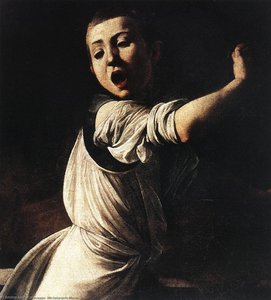
The stakes rise with the arrival of monumental religious commissions. In the Church of San Luigi dei Francesi, the Contarelli chapel becomes a stage for his evolving style. Here, he produces works that demand attention through their raw, unadorned humanity. The scale of these projects forces a confrontation between his gritty realism and the formal requirements of the Church. He is not alone in this sphere of influence; Vincenzo Giustiniani also emerges as a significant patron, further cementing the artist's position among the elite collectors of the era.
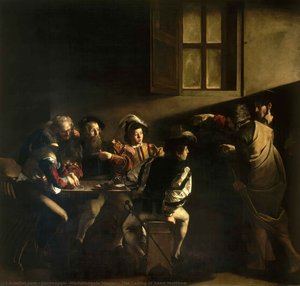
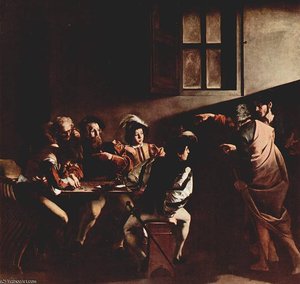
- The Calling of Saint Matthew
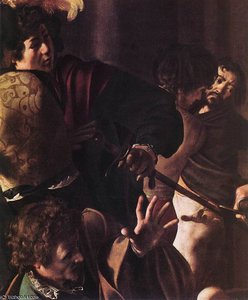
- Martyrdom of Saint Matthew
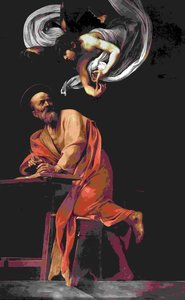
- St. Matthew Writing his Gospel
Revolutionary Technique and Style
Light does not merely illuminate the scene; it strikes. Through a technique known as tenebrism, Caravaggio employs violent contrasts between light and dark to command the viewer's attention. Shadows are not mere absences of light but physical, heavy presences that swallow the periphery, leaving only the essential subject exposed. This dramatic use of chiaroscuro carves figures out of an impenetrable black void. The effect is immediate and visceral.
He rejects the safety of preparatory drawings. Instead, he works alla prima, applying paint directly onto the canvas to capture a sense of immediacy. This method relies on close physical observation and the use of live models. He does not seek to idealize his subjects. Instead, he brings the people of the Roman streets—the laborers and the outcasts—into the realm of the sacred. The divine becomes profoundly human, marked by the dirt and weariness of real life.
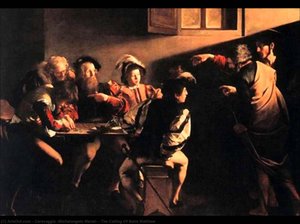
- The Calling of Saint Matthew (1599-1600)
- The Martyrdom of Saint Matthew (1600)
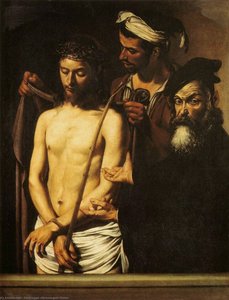
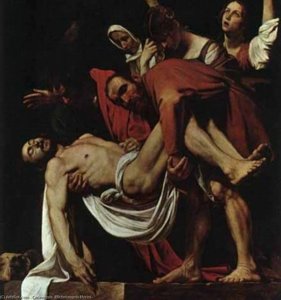
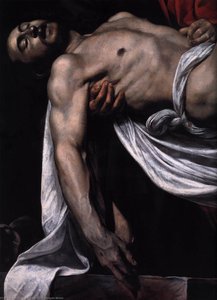
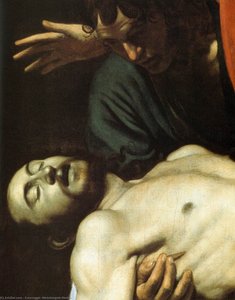
- The Entombment of Christ (undated)
Key Works and Masterpieces
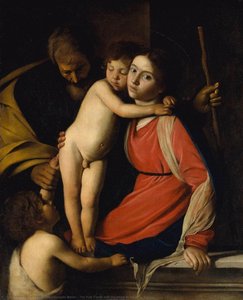
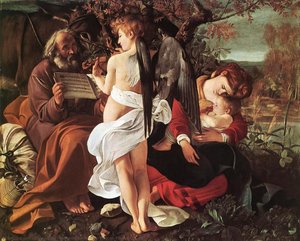
The tension of the street enters the sacred through his early Roman works. Around 1594, The Cardsharps captures a moment of psychological maneuvering, where light cuts through the scene to expose the mechanics of deception. By 1596, the focus shifts to a moment of respite in Rest on the Flight into Egypt. Here, the divine is stripped of its usual ethereal glow, replaced by the heavy, physical presence of a family in transit, their exhaustion rendered with startling clarity.
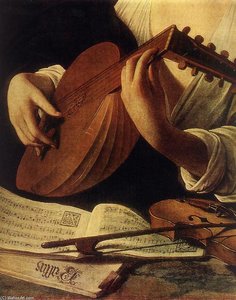
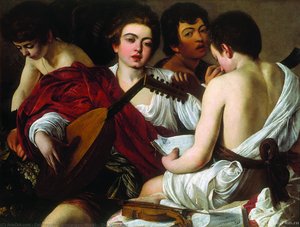
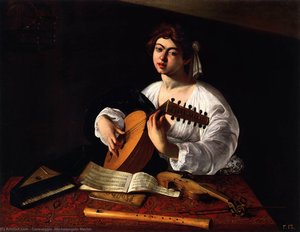
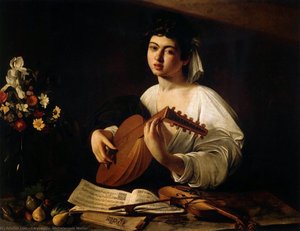
As his command over shadow deepens, the compositions become more intense. In 1600, The Lute Player utilizes a sharp, focused light to sculpt the textures of the instrument and the figure, pulling the subject out of an impenetrable void. This technique reaches a peak of dramatic confrontation between 1599 and 1600 in The Calling of Saint Matthew. A single, piercing shaft of light strikes the scene, cutting through the darkness to bridge the gap between the mundane world of the tax collector and the sudden, transformative presence of the divine.
- Sick Bacchus (1593)
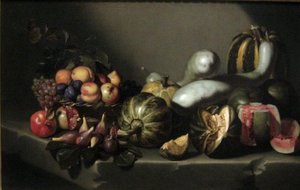
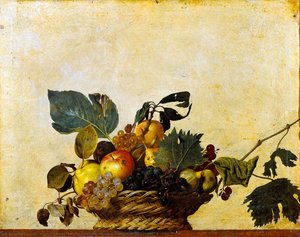
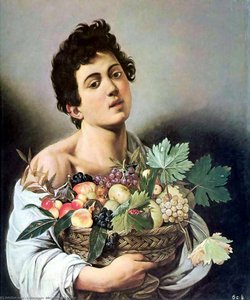
- Basket of Fruit (1596)
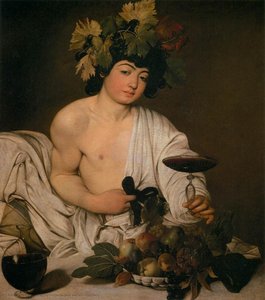
- Bacchus (1596)
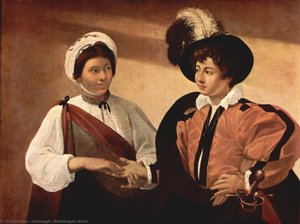
- The Fortune Teller (1599)
A Turbulent Life and Flight
The tension in Rome finally snaps. A brawl erupts, and in the chaos, Caravaggio kills Ranuccio Tomassoni. The fallout is immediate and absolute. A murder charge follows, and with it, a death sentence. He is no longer just a controversial painter; he is an outlaw. The city he once navigated through patronage and talent now becomes a place of pursuit. He must leave everything behind.
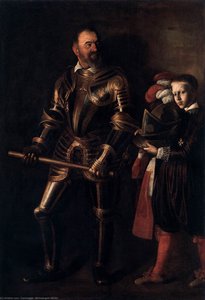
The flight is a frantic movement across the Mediterranean. He moves through Naples, Malta, and Sicily, always looking over his shoulder. Even in exile, the brush does not rest. The shadows in his work grow heavier, mirroring the life of a man constantly on the run. He seeks a papal pardon, a way back to the center of the art world, but the darkness of his past follows him through every port and province.
Later Years and Death
The momentum of his life is a series of frantic movements. After the violence in Rome, the path leads through Naples, Malta, and Sicily. He is a man in constant motion, always looking toward the next refuge or the next confrontation. In 1609, a clash in Naples leaves him disfigured, a physical mark of his volatile existence. He is an outlaw, moving through the Mediterranean, seeking a papal pardon that remains out of reach. The tension between his creative output and his legal status defines these final years.
The end arrives in 1610. He is traveling from Naples back toward Rome, perhaps finally closing the circle of his exile. He reaches Porto Ercole, in the State of the Presidi, Spanish Empire. He is 38 years old. The exact cause of his death remains a subject of debate; theories range from fever and wounds to the possibility of lead poisoning. He dies in the shadow of the very cities he once dominated, leaving behind a trail of unfinished business and a legacy of darkness.
Legacy and Artistic Influence
The shadows he cast extended far beyond the borders of Italy. His approach to light and darkness fundamentally altered the course of Western art, breaking the grip of Mannerism and setting the stage for the Baroque era. This shift was not a quiet transition; it was a seismic movement that redefined how reality is captured on canvas. His influence ripples through the works of giants like Peter Paul Rubens and Rembrandt, whose own handling of light and shadow owes a debt to his radical naturalism.
A movement of imitators and innovators emerged in his wake. These followers, known as the Caravaggisti, carried his dramatic tension across Europe. They adopted his method of using intense, focused light to carve figures out of an impenetrable void, ensuring his visual language became a standard for the next generation of painters. He did not merely change a style; he changed the way the eye perceives the human condition through paint.
- The Calling of Saint Matthew
- The Martyrdom of Saint Matthew
- Saint Matthew Writing his Gospel
Where to See His Works Today
The physical remnants of his vision are scattered across Europe’s most significant institutions. In London, the National Gallery holds ten of his works, placing a substantial portion of his output within reach of the city. The Louvre in Paris maintains a collection of seven paintings, while the Kunsthistorisches Museum in Vienna and the Galleria Borghese in Rome each house six. These sites act as the primary repositories for his dramatic use of light and shadow.
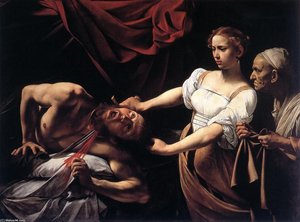
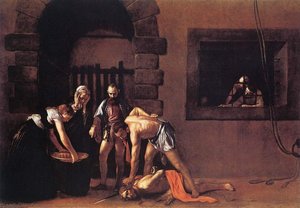
Travelers seeking his specific religious and secular subjects find them in diverse settings. In Rome, the Galleria Borghese offers a concentrated look at his output. The Galleria Nazionale d'Arte Antica also holds significant pieces, including the work depicting Judith beheading Holofernes. In Malta, the Saint John Museum contains the monumental canvas of the Beheading of Saint John the Baptist. Elsewhere, the Metropolitan Museum of Art in New York and the Galleria Doria Pamphilj in Rome preserve his presence in the collections of major international museums.
- The Calling of Saint Matthew
- The Lute Player
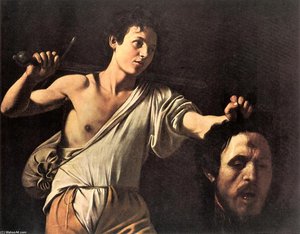
- David with the Head of Goliath
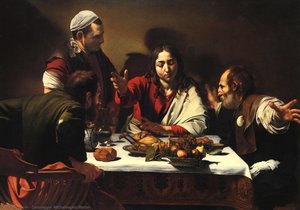
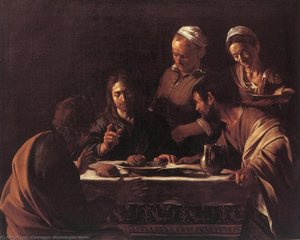
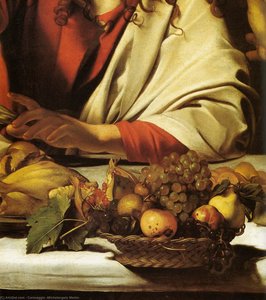
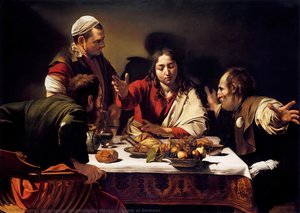
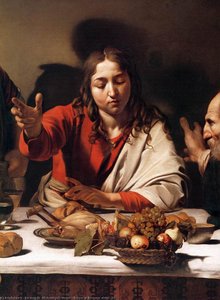
- The Supper at Emmaus
- The Entombment of Christ
Questions & Answers
What other names is Caravaggio known by?
Caravaggio is also known as Michelangelo Merisi Da Caravaggio, Michele Angelo Merigi, Amerighi Da Caravaggio.
Where is Caravaggio from?
Caravaggio was born in Spain.
What are the birthplace and birth year of Caravaggio?
Caravaggio was born in Milan in 1571.