A Master of Light and Line
The artistry of Francesc Xavier Parcerisa i Boada serves as a profound window into the soul of nineteenth-century Spain. A versatile Catalan draughtsperson, painter, and lithographer, his work captures the delicate interplay of light and shadow, transporting viewers to a bygone era of quiet beauty and historical continuity. Through his skilled hand, landscapes and architectural marvels are transformed into emotive studies of atmosphere and human connection.
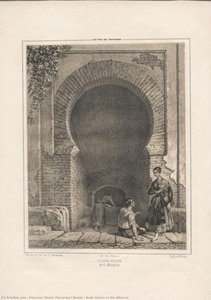
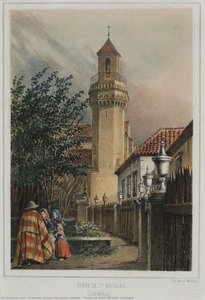
His technical mastery is particularly evident in his ability to breathe life into diverse mediums. Whether through the meticulous precision of lithography or the soft, evocative strokes of his drawings, Parcerisa i Boada possessed a unique talent for defining depth and texture. In his lithographic works, such as the Arab cistern in the Albaicín, he utilized a sophisticated range of grayscale values to make weathered brickwork feel tactile and heavy with the weight of centuries, creating a three-dimensional experience from a flat print.
Romanticism and the Captured Moment
As a master of Spanish Romanticism, Parcerisa i Boada’s oeuvre is characterized by a deep sense of nostalgia and a reverence for the past. His compositions often feature sun-drenched hillsides, quaint towns, and majestic mountains, all rendered with an intimate touch that captures a mood of profound tranquility. In works like Cuesta de Gomérez View, he balances the rugged grandeur of distant peaks with the rhythmic, unhurried life of village figures, creating a sense of domestic peace.
The artist’s work frequently explores themes of:
- Historical Continuity: Using architectural elements to bridge the gap between ancient heritage and the present day.
- Human Connection: Integrating figures into landscapes not merely as scale, but as essential components of a shared communal life.
- Atmospheric Perspective: Employing light and shadow to evoke the ethereal quality of distant mountains and the tactile reality of stone and earth.
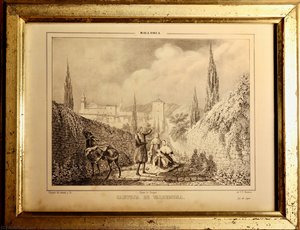
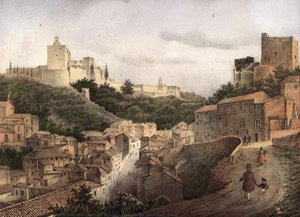
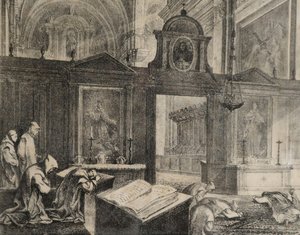
Through his depictions of serene scenes—ranging from the lush trees of the Valldemossa Charterhouse to the historic enclaves of Granada—Parcerisa i Boada invites the observer into an emotional sanctuary, offering a glimpse of a world untouched by the frenetic energy of modernity.
Questions & Answers
What are the birthplace and birth year of Francesc Xavier Parcerisa I Boada?
Francesc Xavier Parcerisa I Boada was born in Barcelona in 1803.
Where is Francesc Xavier Parcerisa I Boada from?
Francesc Xavier Parcerisa I Boada was born in Spain.
What other names is Francesc Xavier Parcerisa I Boada known by?
Francesc Xavier Parcerisa I Boada appears under the alternate names Francisco Javier Parcerisa.