The Sculptural Elegance of Francesco Laurana
Francesco Laurana, also known by the name Francesco de la Vrana, remains one of the most intriguing and complex figures of the fifteenth century. A Dalmatian sculptor and medallist, his life and career were defined by a remarkable journey across the cultural landscapes of Europe. Born in the territory of the Republic of Venice, in what is now present-day Croatia, Laurana’s artistic identity was shaped by the diverse influences he encountered as he moved through the great courts of the Renaissance. His path took him from the vibrant centers of Naples and Sicily to the refined atmosphere of Urbino, eventually leading him to southern France, where his life reached its conclusion.
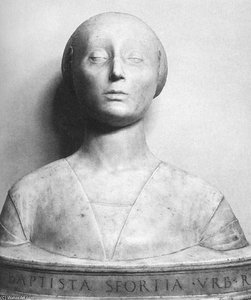
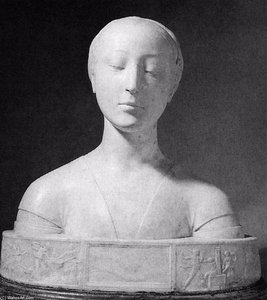
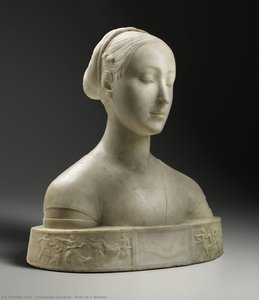
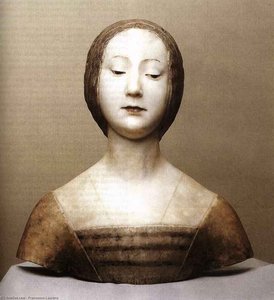
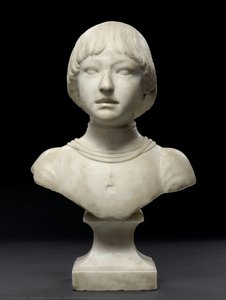
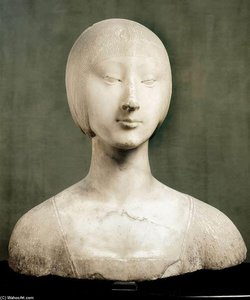
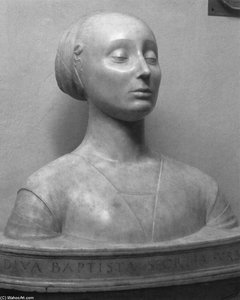
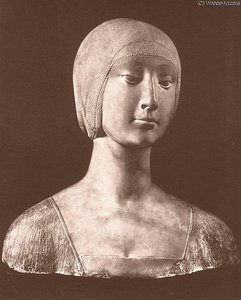
Laurana’s artistry serves as a profound bridge between two eras, capturing the delicate transition from the lingering traditions of Gothic art to the burgeoning humanist spirit of the Renaissance. His work is characterized by a sophisticated understanding of classical ideals, often manifesting in his celebrated portrait busts. These sculptures, particularly those of women, are noted for their severe elegance and a sense of quiet contemplation. In pieces such as his Bust of a Woman, one can observe a mastery of marble that transcends mere physical likeness, imbuing the stone with a palpable sense of grace, dignity, and an enduring spirit.
A Legacy of Form and Humanism
The significance of Laurana’s contribution to art history lies in his ability to navigate varying cultural circles and assimilate differing stylistic influences. While his early career was rooted in the workshop traditions of Italy, his later years in France revealed a subtle assimilation of northern realism, a departure from the more idealized forms seen in his Italian works. This evolution highlights a creator who was never static, but rather one who constantly absorbed the textures and nuances of the regions he inhabited.
His achievements are most visible in the following areas:
- Mastery of Portraiture: He was particularly renowned for his elegantly composed portrait busts, which captured both the outward beauty and the inner life of his subjects.
- Technical Versatility: As both a sculptor and a medallist, he demonstrated a profound command over diverse media, translating classical ideals into tangible, lasting forms.
- Cultural Synthesis: His work embodies the complex interplay between Gothic stylistic conventions and the emerging Renaissance fascination with human potential and balanced proportions.
Through his hands, the cold marble of the late fifteenth century was transformed into a medium for meditation on beauty and serenity. Though much of his oeuvre remains enigmatic due to the absence of signatures or precise dating, the impact of his creative individuality continues to resonate, marking him as a pivotal figure in the shaping of European artistic history.
Questions & Answers
What are the birthplace and birth year of Francesco Laurana?
Francesco Laurana was born in Vrana in 1430.
What other names is Francesco Laurana known by?
Francesco Laurana is also known as Francesco De La Vrana, Franjo Vranjanin.
In which historical period did Francesco Laurana work?
Francesco Laurana worked in the Renaissance period. The period situates the artist's activity in history.