A Visionary of the Paulista School
Gaspar Gasparian stands as a monumental figure in the history of Brazilian photography, a master who helped redefine the photographic lens through the lens of modernism. Born in São Paulo, his journey into the arts was an unexpected departure from his primary identity as a textile industrialist and successful businessman. It was not until the early 1940s that Gasparian turned his gaze toward the camera, embarking on a creative evolution that would eventually place him at the heart of the so-called Paulista School. His arrival in the photographic scene brought a fresh, structural sensibility to the medium, as he moved away from the soft, romanticized aesthetics of Pictorialism toward a more rigorous and geometric exploration of the world around him.The Geometry of Light and Form
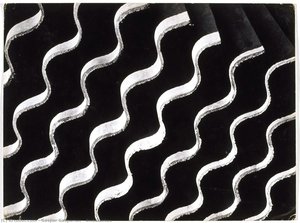
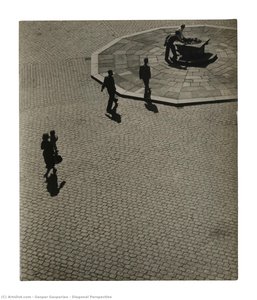
Gasparian’s artistic development was deeply intertwined with the vibrant energy of mid-century Brazilian modernism. In 1942, he joined the prestigious Foto Cine Clube Bandeirante in São Paulo, a gathering place for luminaries such as Thomaz Farkas and Geraldo de Barros. Within this influential circle, Gasparian began to experiment with the architectural and urban motifs that defined the era. He possessed a unique ability to find rhythm in the mundane, utilizing diagonal perspectives and the interplay of light and shadow to transform everyday scenes into carefully crafted tableaus. His work often emphasized the structural character of his subjects, finding beauty in the stark lines of buildings and the rhythmic patterns of urban life.Innovation and Collective Spirit
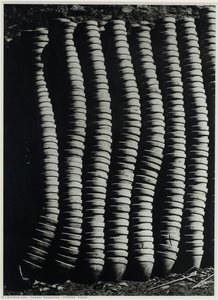
Beyond his individual technical mastery, Gasparian was a pivotal collaborator and a catalyst for collective artistic movement. In 1950, seeking to expand the boundaries of contemporary expression, he moved away from the Foto Cine Club Bandeirante to co-found O Grupo dos Seis alongside artists such as Angelo Francisco Nuti and Ricardo Belinazzi. This period marked a significant chapter in his career, as he continued to push the limits of photographic composition, often employing black and white printing techniques to emphasize texture, form, and tonal balance. His legacy remains etched in the annals of art history, recognized not only for his individual compositions but for his role in shaping the very trajectory of modern photography in Brazil.Questions & Answers
In which historical period did Gaspar Gasparian work?
Gaspar Gasparian worked in the Modern period. The period situates the artist's activity in history.
What are the birth city and country of Gaspar Gasparian?
Gaspar Gasparian was born in Angra do Reis, in Brazil.
Where is Gaspar Gasparian from?
Gaspar Gasparian was born in Brazil.
What are the birthplace and birth year of Gaspar Gasparian?
Gaspar Gasparian was born in Angra do Reis in 1928.