A Legacy of Innovation and Controversy
The story of IG Farbenindustrie AG is not one of a single hand or a solitary brushstroke, but rather a monumental and complex tapestry woven from the threads of industrial might, scientific brilliance, and profound moral tragedy. Emerging in 1925 from a daring merger of six titans of German chemistry—Agfa, BASF, Bayer, Griesheim-Elektron, Hoechst, and Weiler-ter-Meer—this conglomerate ascended to become Europe’s largest industrial force. To view the "work" of IG Farben is to look upon the very fabric of modern existence; it was a period where the boundaries between scientific progress and industrial dominance blurred, creating a legacy that remains as much a subject of historical scrutiny as it is of technological awe.
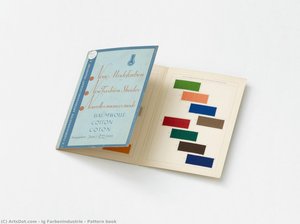
In its early years, the conglomerate functioned as a vanguard of the chemical revolution. Driven by the visionary intellects of leaders like Carl Duisberg and Otto Bayer, the entity pushed the limits of high-pressure chemistry to achieve what was once thought impossible. The achievements of this era were nothing short of transformative, laying the groundwork for much of the modern world's material culture. From the development of synthetic dyes that colored the textiles of a growing global market to the pioneering work in nitrogen fixation that revolutionized agricultural yields, the scientific output of IG Farben was a masterclass in applied innovation.
The Shadow of the Third Reich
However, the brilliance of its scientific achievements cannot be decoupled from the darkness that descended upon Germany during the rise of the Nazi regime. As the 1930s progressed, the trajectory of IG Farben shifted from pure industrial expansion to a chilling complicity with totalitarian ideology. The company became a vital engine for the German war effort, providing the essential materials required for military dominance. Yet, this period is most infamously defined by the company's deep entanglement with the horrors of the Holocaust. The utilization of slave labor from concentration camps, including the unimaginable atrocities at Auschwitz, remains a permanent stain on its historical record.
The procurement and production of Zyklon B—the agent used in extermination chambers—serves as a haunting symbol of how industrial capacity can be weaponized against humanity. During this era, the "art" of the conglomerate was no longer found in the beauty of synthetic pigments or the utility of pharmaceuticals, but in the cold, calculated efficiency of mass destruction. The Nuremberg Trials eventually brought these complicities to light, forcing the world to confront the terrifying reality of a corporation that had integrated itself into the machinery of genocide.
Dissolution and Enduring Impact
The aftermath of World War II brought about the inevitable fragmentation of this industrial giant. Seized by the Allied forces, IG Farben was dismantled, and its constituent parts were split and redistributed, with some portions being nationalized in East Germany. While the corporate entity known as IG Farben ceased to exist in its original form, its scientific DNA lived on through the successor companies that continue to lead the global chemical and pharmaceutical industries today. The legacy of its innovations—such as the discovery of polyurethane—remains embedded in our daily lives, even as we grapple with the ethical lessons of its past.
Ultimately, the history of IG Farbenindustrie serves as a profound meditation on the dual nature of human progress. It stands as a testament to what can be achieved through collective scientific endeavor and industrial scale, but also as a stark warning of the catastrophic consequences when such power is stripped of moral accountability. To study this era is to navigate a landscape of immense achievement and irreparable loss, a complex narrative that continues to challenge our understanding of ethics in the age of innovation.
Questions & Answers
Where is Ig Farbenindustrie from?
Ig Farbenindustrie was born in Germany.