Ion Andreescu: A Romanian Impressionist
Early Life and Education
- Born in Bucharest, Romania in 1850 into a merchant family.
- Initially educated privately before attending the Gheorghe Lazăr Middle School and later the Sfântul Sava High School.
- Demonstrated artistic talent early on, winning an art contest while at Saint Sava High School.
- In 1869, he enrolled in Theodor Aman's National School of Fine Arts (now Bucharest National University of Arts), focusing on linear drawing and calligraphy.
Early Career and Teaching Positions
- By 1872, Andreescu was already working as an instructor of Drawing and Calligraphy at the Bishop's School in Buzău.
- He subsequently taught at the Tudor Vladimirescu Communal Secondary School and Buzău’s Craftsmanship School, showcasing his versatility and commitment to art education.
Parisian Influences and Artistic Development
- Influenced by Nicolae Grigorescu, Andreescu traveled to Paris in the 1870s to further his artistic training.
- He studied at the Académie Julian and exhibited works at the Salon (Paris), including “Start of Spring” and “The Fair in Romania.”
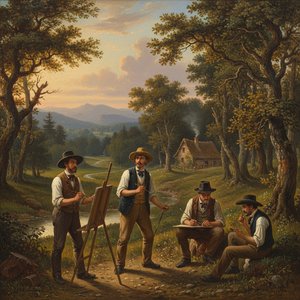
- His time in Barbizon proved pivotal, where he mastered plein-air painting alongside artists like Corot, Millet, and Monet.
- He became acquainted with prominent Impressionist painters such as Manet and Renoir, absorbing their techniques and philosophies.
Artistic Style and Major Themes
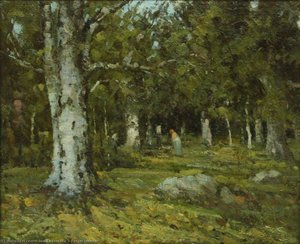
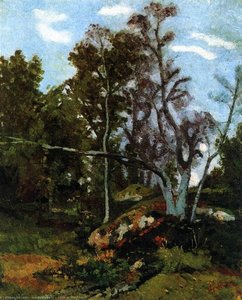
- Andreescu’s work is characterized by vibrant color palettes, loose brushstrokes, and a focus on capturing the fleeting effects of light and atmosphere – hallmarks of Impressionism.
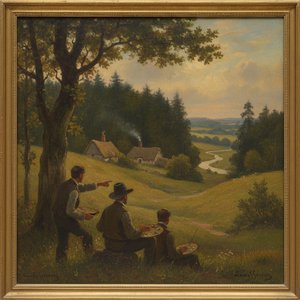
- He frequently depicted landscapes, particularly forests and rural scenes, reflecting his deep connection to nature.
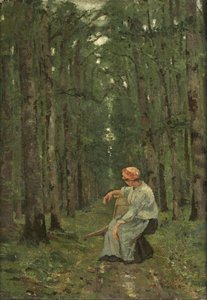
- Scenes of peasant life also feature prominently in his oeuvre, offering glimpses into Romanian rural society.
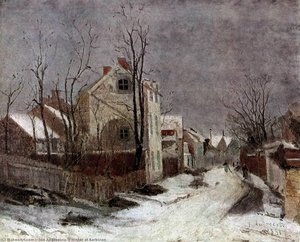
- Notable works include “Beech Forest,” “Street from Barbizon during Summer Time,” “The Oak”, and "Woman in the Wood”.
Return to Romania and Legacy
- Andreescu returned to Romania in 1881, already battling tuberculosis.
- He passed away shortly after, in 1882, at the young age of 32.
- Despite his short life, Andreescu left a lasting impact on Romanian art, bridging the gap between traditional academic painting and the emerging Impressionist movement.
- In 1948, he was posthumously elected as a member of the Romanian Academy, recognizing his significant contribution to national culture.
Historical Significance
- Ion Andreescu is considered one of Romania’s first true Impressionist painters.
- His work helped introduce and popularize the principles of plein-air painting and modern artistic techniques within the Romanian art scene.
- He remains a celebrated figure in Romanian art history, admired for his sensitivity to light, color, and the beauty of the natural world.
Questions & Answers
Where is Ion Andreescu from?
Ion Andreescu was born in Romania.
In which historical period did Ion Andreescu work?
Ion Andreescu worked in the 19th-Century period. The period situates the artist's activity in history.