The Monochrome Vision of John Virtue
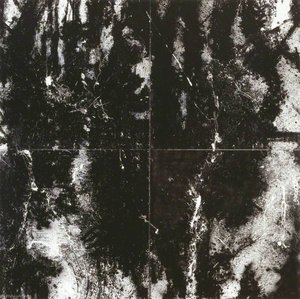
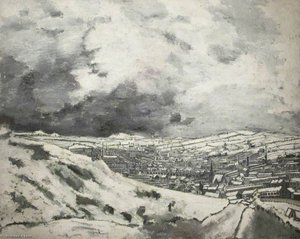
In the vast landscape of contemporary British art, few voices resonate with as much atmospheric intensity as John Virtue. Born in Accrington, United Kingdom, in 1947, Virtue has carved out a singular niche through his mastery of monochrome landscapes. His work does not merely depict scenery; it evokes a profound sense of solitude and urban beauty, stripping away the distractions of color to reveal the raw, structural essence of the world around him. By viewing color as an unnecessary distraction, he focuses the viewer's gaze on the interplay of light, shadow, and form, creating a visual language that is both hauntingly beautiful and deeply meditative.
Virtue’s artistic journey is one of remarkable evolution and dedication. After training at the Slade School of Fine Art in London between 1965 and 1969, his early years were marked by a transition from traditional painting to a more intricate, linear approach. Following a period in Green Haworth, near Oswaldtwistle, he experimented with pen and ink drawings characterized by dense networks of lines, a style reminiscent of the intricate work of Samuel Palmer. This period of intense study and observation laid the groundwork for his later, more monumental achievements, where the fine line meets the expansive canvas.
Technique and the Essence of Monochrome
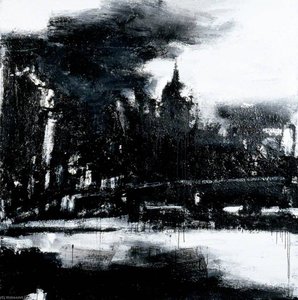
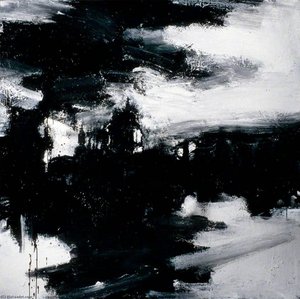
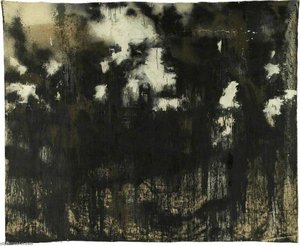
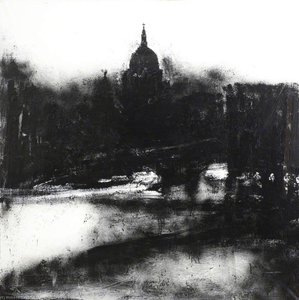
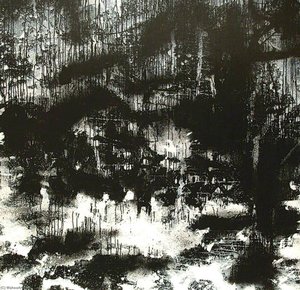
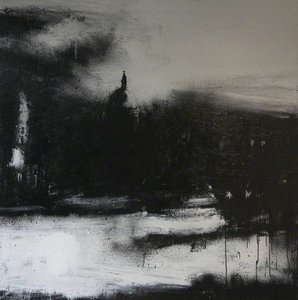
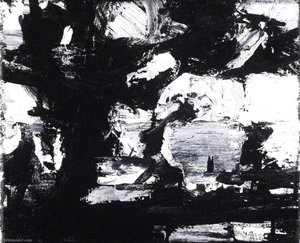
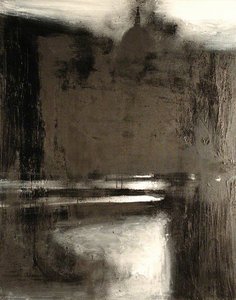
The technical brilliance of Virtue’s work lies in his ability to create immense depth using a restricted palette. Utilizing shellac black ink and white paint, he constructs landscapes that feel as though they are emerging from a mist or a memory. His process often involves textured impasto and expressive brushwork, particularly evident in his oil on canvas pieces, which lend a tactile quality to the monochromatic surfaces. This method allows him to capture the vitality of a scene—whether it be the ruggedness of an estuary or the sprawling complexity of a metropolis—through purely tonal contrasts.
His most celebrated period as an Associate Artist at London's National Gallery from 2003 to 2005 brought his "London Paintings" to international prominence. In these works, Virtue provided a new vision of the capital, transforming recognizable landmarks such as St. Paul's Cathedral, the Gherkin, and the NatWest Tower into abstract, atmospheric patterns. By working directly at significant sites, including the rooftops of Somerset House and the National Gallery itself, he captured the topographical relationships and the very soul of the city, presenting a London that is simultaneously familiar and otherworldly.
Legacy and Artistic Significance
Beyond his technical prowess, John Virtue’s significance lies in his ability to connect the traditions of the Old Masters with contemporary abstraction. His work has been recognized through numerous prestigious accolades, including the Arts Council Major Award and being named the Best Visual Artist in the South Bank Awards. His dedication to his craft is further evidenced by his role as an honorary Professor of Fine Art at the University of Plymouth.
Today, the enduring impact of his vision can be found in the esteemed collections of some of the world's most renowned institutions, ensuring that his monochrome explorations continue to inspire future generations. His contributions to the art world include:
- The National Gallery, London: Showcasing his monumental works as an Associate Artist.
- TATE, London: Housing his significant contributions to British landscape art.
- British Museum and Victoria and Albert Museum: Preserving his intricate drawings and historical perspectives.
- Yale Center for British Art: Featuring his profound explorations of urban topography.
Questions & Answers
What are the birthplace and birth year of John Virtue?
John Virtue was born in Accrington in 1947.
What are the birth city and country of John Virtue?
John Virtue was born in Accrington, in United Kingdom.