The Master of Parisian Time
Joseph Buzot, often referred to as
Buzot the elder, was one of the most significant Parisian clockmakers active during the second half of the eighteenth century. His career unfolded within the vibrant and competitive landscape of Paris, where he established himself as a master of horology. After achieving the rank of master on August 21, 1770, he navigated the shifting urban geography of the city, opening workshops in several prestigious locations. His journey took him from the Quai des Grands Augustins to the rue des Fossés Montmartre in 1772, and eventually to the rue des Petits Carreaux shortly before the onset of the French Revolution.
Artistry in Motion
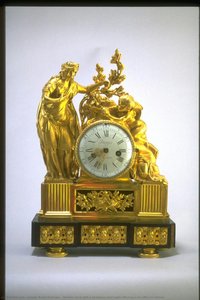
As a horloger, Buzot’s work existed at the delicate intersection of functional precision and fine sculpture. His creations were far more than mere instruments for measuring time; they were miniature stages designed to capture the imagination through Neoclassical elegance. One of his most breathtaking achievements is a mantel clock created in 1793, which serves as a profound testament to his ability to blend mechanical skill with mythological storytelling. This particular piece features a priestess and Cupid engaged in a sacred sacrifice to Venus, transforming a timepiece into a narrative of eternal devotion.
Legacy and Craftsmanship
The significance of Buzot's work is reflected in the prestigious collections of his era. During the eighteenth century, his pieces were noted as being held within the homes of important contemporary collectors, marking him as a sought-after artisan for the elite. His mastery extended beyond simple clockwork to include the integration of exquisite materials and sculptural elements, such as:
- Intricate gilt bronze mounts that provided a sense of Neoclassical refinement.
- The use of delicate gold trim to frame mythological narratives.
- The seamless blending of fine sculpture with the movement of clock hands.
Through his ability to evoke themes of piety, passion, and the cyclical nature of time, Buzot ensured that his horological masterpieces remained enduring symbols of both technical excellence and artistic grace.