A Life of Adventure and Artistry
Born in Paris, France, Jules Tavernier was a man whose life was as much a journey of exploration as it was a pursuit of aesthetic mastery. Trained under the French painter Félix-Joseph Barrias, his early years were steeped in the classical traditions of Europe, yet his spirit was far too restless to be confined by the salons of Paris alone. After experiencing the turbulence of the Franco-Prussian War, Tavernier’s path took him through London and eventually across the Atlantic, where he would find a new canvas in the vast, untamed landscapes of the American West. As a painter, draftsman, and illustrator, he possessed a unique ability to translate the raw energy of the natural world into evocative works of art.
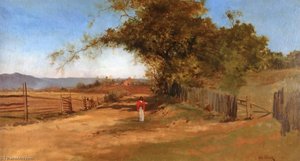
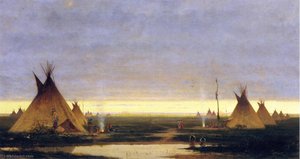
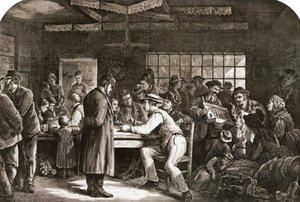
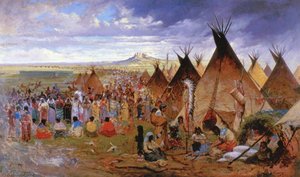
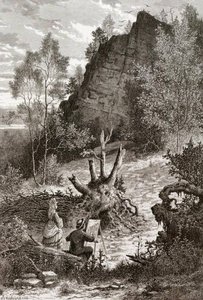
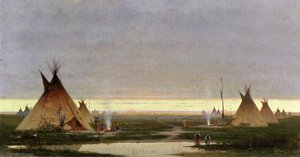
His career was defined by an adventurous spirit that led him from the rugged frontiers of California to the volcanic heart of Hawaii. In the United States, his talent caught the attention of major institutions; notably, his work as an illustrator for Harper's Magazine allowed him to document the American frontier during a year-long sketching tour of the coast. This period of travel was instrumental in shaping his vision, as he captured the essence of Native American themes and pastoral scenes that were then being transformed by westward expansion.
The Volcano School and Masterful Technique
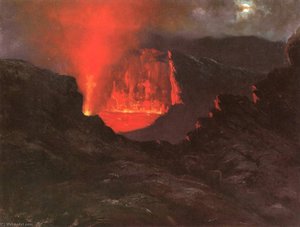
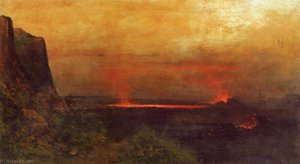
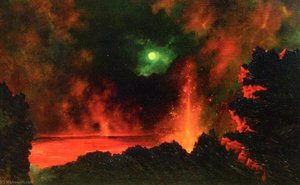
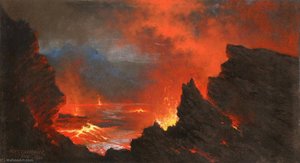
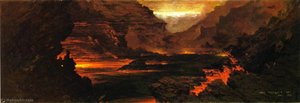
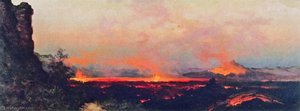
Tavernier is perhaps most celebrated for his association with Hawaii’s Volcano School, a movement characterized by its intense focus on the dramatic geological phenomena of the islands. His time in Hawaii allowed him to witness and record the terrifying beauty of volcanic eruptions, a subject he treated with profound technical skill. In masterpieces such as Kilauea Fire Fountain, Tavernier utilized bold brushstrokes and a vibrant palette to convey the heat and power of flowing lava against darkened, ash-filled skies. His technique often involved thick layers of oil paint, creating a sense of three-dimensional depth that made the molten landscapes appear almost tangible to the viewer.
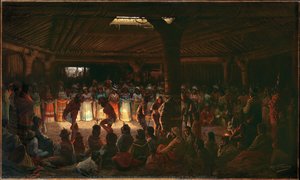
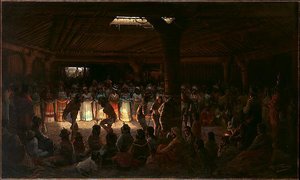
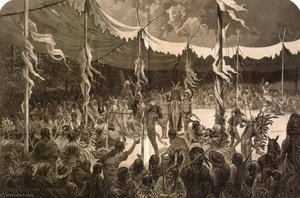
Beyond the volcanic landscapes, his work also served as a vital historical record of cultural encounters. In pieces like Dance in a Subterranean Roundhouse at Clear Lake, California, he demonstrated a masterful command of chiaroscuro, using stark contrasts between light and shadow to illuminate the sacred rituals of the Elem Pomo people. Through his use of earthy tones punctuated by flashes of red and ochre, he captured not just a scene, but an atmosphere of mystery and reverence. His ability to blend the ethnographic with the atmospheric ensured that his paintings functioned as both fine art and poignant meditations on tradition and change.
Legacy and Artistic Significance
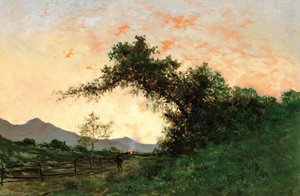
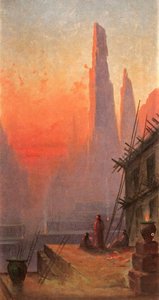
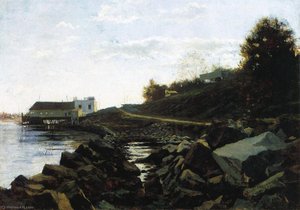
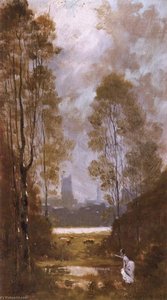
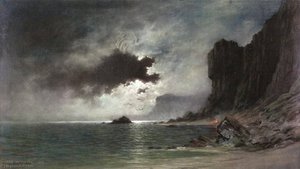
The significance of Jules Tavernier lies in his role as a visual bridge between the Old World and the New. He brought the refined training of French academic art to the wild, burgeoning landscapes of the American West and the Pacific. His work remains a vital window into a period of intense cultural exchange and environmental awe. Whether capturing the serene sunset over Marin or the subterranean shadows of a California roundhouse, Tavernier’s legacy is one of profound observation and an enduring passion for the sublime power of the natural world.
Questions & Answers
In which historical period did Jules Tavernier work?
Jules Tavernier worked in the 19th-Century period. The period situates the artist's activity in history.
Where is Jules Tavernier from?
Jules Tavernier was born in France.
What other names is Jules Tavernier known by?
Jules Tavernier appears under the alternate names Tavernier, Жюль Таверньє.