A Pioneer of Korean Abstraction
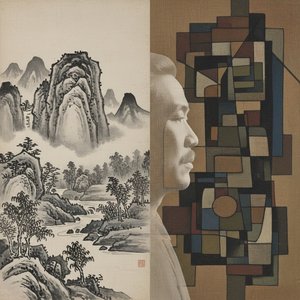
Kim Whanki stands as a monumental figure in the landscape of twentieth-century modernism, recognized as a pioneering abstract artist and a cornerstone of the first generation of Korean abstract painters. His life was a nomadic journey through some of the world's most vibrant cultural hubs, including Tokyo, Japan; Seoul and Busan, Korea; Paris, France; and New York City, USA. This peripatetic existence allowed him to absorb the energetic currents of global modernism while maintaining a profound connection to his Korean heritage. Through this unique synthesis, he developed a characteristic art world that blended Oriental concepts and ideals with the formal rigor of Western abstraction.
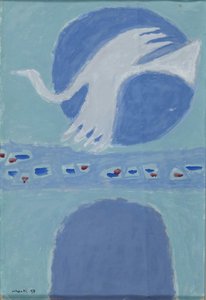
The evolution of his style is a captivating narrative of artistic transformation. In his earlier periods, particularly during his studies in Paris, Kim utilized a more semi-abstract language. He sought to express a distinct Korean sentiment and sense of beauty by selecting natural and traditional subjects such as mountains, rivers, the moon, cranes, Japanese apricots, and moon jars. These works often featured simple, stylized lines and shapes that captured the essence of the natural world through an understated, lyrical lens.
The Symphony of Color and Form
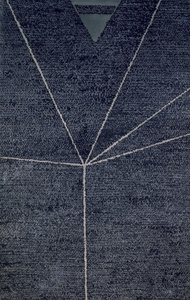
As his career progressed, Kim's work underwent a deep metamorphosis, moving from geometric abstraction toward more deeply absorbed abstract paintings. He became masterfully adept at using diverse hues and patterns to create a meditative realm for the viewer. His later masterpieces are often celebrated for their use of dot painting and monochrome compositions, where the boundaries between the physical canvas and the infinite cosmos seem to dissolve.
One of his most evocative techniques involved the sophisticated layering of blues, creating atmospheric depths reminiscent of a twilight ocean or a star-strewn night sky. This mastery of color allowed him to bridge the gap between the organic world and structured intellect. His work often presents a mesmerizing field of deep, atmospheric tones, where geometric motifs suggest celestial fragments suspended in an eternal moment. This rhythmic dance of light and shadow captures the very soul of abstraction, reflecting his ability to balance Korean values with foreign techniques.
Legacy and Historical Significance
Kim Whanki's impact on the history of art is profound, particularly as a godfather of the Dansaekhwa movement. His ability to incorporate new, global techniques while keeping Korean identity at the heart of his practice reflects the complex political and social conditions of the mid-1900s. He successfully created a refined and moderated formative expression based on Korean Lyricism, leaving behind a legacy that continues to resonate in the international art community.
His enduring influence is preserved through various institutions and foundations dedicated to his memory, ensuring that his contribution to both Korean and global modernism remains a vital part of the artistic conversation. His life's work remains a breathtaking testament to a journey spent chasing the very essence of form, color, and spirit.
Questions & Answers
What other names is Whanki Kim known by?
Whanki Kim appears under the alternate names Kim Hwan-gi, Kim Whanki, كيم وهانكي, Kim Whan-Ki, 金煥基.
Where is Whanki Kim from?
Whanki Kim was born in Korea under Japanese rule.
What are the birthplace and birth year of Whanki Kim?
Whanki Kim was born in Zenra-nan Prefecture in 1913.