Lattanzio Gambara: Life and Legacy
Early Life and Apprenticeship
- Born: Brescia, Italy in 1530.
- Initial Training: At the age of fifteen, Gambara began his artistic journey as an apprentice to Giulio Campi in Cremona. This early exposure laid the foundation for his developing skills.
- By 1549, he was working alongside Girolamo Romanino, who would later become his father-in-law. This collaboration proved pivotal to Gambara’s artistic growth and provided him with invaluable mentorship.
Artistic Development and Influences
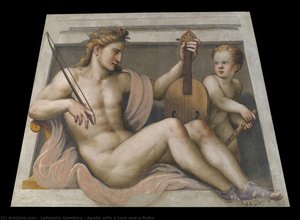
- Renaissance & Mannerism: Gambara's style seamlessly blended the principles of the Renaissance with the emerging aesthetics of Mannerism, characterized by elongated figures, dynamic compositions, and a sophisticated use of color.
- Key Influences: He was significantly influenced by Il Pordenone, whose dramatic flair and expressive brushwork resonated in Gambara’s own work. Romanino's influence is also evident in his compositions and attention to detail.
- His early works demonstrate a careful study of classical forms, while later pieces exhibit the more stylized and emotionally charged characteristics of Mannerism.
Major Works and Achievements
- S. Maria in Silva Altarpiece (1558): An early example showcasing his developing talent and mastery of religious iconography.
- Villa Contarini Frescoes: Gambara contributed to the decorative schemes within the Villa Contarini in Asolo, demonstrating his versatility as a fresco painter.
- Loggia of Brescia (Apocalypse Cycle): Perhaps his most ambitious undertaking, this extensive fresco cycle depicted scenes from the Book of Revelation. Tragically, it was destroyed during bombing raids in 1944.
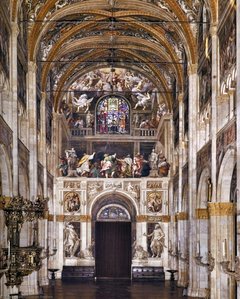
- Parma Cathedral Frescoes (1567-1573): In collaboration with Bernardino Gatti, Gambara created a masterpiece within the nave of Parma Cathedral, solidifying his reputation as a leading artist of the time.
- Frescoes in Vimercate: The fresco cycle at S. Stefano in Vimercate (1566) is another significant example of his mature style and narrative skill.
Later Life and Legacy
- Final Years: Gambara continued to receive commissions for frescoes in Brescia and Parma, including a “Deposition” for the church of San Pietro al Po in Cremona (1568).
- Tragic Death: He tragically fell from a scaffold while working on frescoes at S. Lorenzo in Brescia in 1574, bringing his promising career to an untimely end.
- Pupil and Influence: Giovita Brescianino was among Gambara’s pupils, continuing the artistic traditions he helped establish.
Historical Significance
- Bridging Styles: Lattanzio Gambara played a crucial role in transitioning between the High Renaissance and Mannerist styles in Northern Italy.
- Frescoes & Religious Art: His extensive fresco work, though often fragmented or lost, provides valuable insight into 16th-century artistic practices and religious devotion.
- Regional Importance: He remains a significant figure in the art history of Brescia and Parma, contributing to the rich cultural heritage of these regions.
Questions & Answers
What aliases or alternate names does Lattanzio Gambara have?
Lattanzio Gambara appears under the alternate names Latanzio Gambara, Latantia Gambere, Gambara, Latanzio Gambara Bressano, Letantió Gambara.
What are the birthplace and birth year of Lattanzio Gambara?
Lattanzio Gambara was born in Vendôme in 1530.
Where is Lattanzio Gambara from?
Lattanzio Gambara was born in France.