The Soul of Finnish Expressionism
Anton Lindforss stands as a compelling figure within the landscape of early twentieth-century Finnish art, embodying the vibrant energy and shifting perspectives of his era. Born in Tampere, Finland, Lindforss developed a visual language that bridged the gap between traditional observation and the bold, emotive experimentation of modernism. His work is deeply rooted in the spirit of Finnish expressionism, a style characterized by its ability to convey the raw essence of a subject through color and form rather than mere photographic imitation.
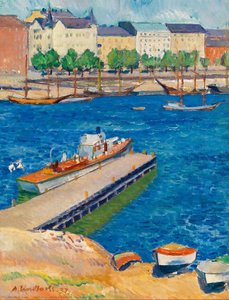
As a member of the influential November Group, Lindforss was part of a movement that embraced more radical, distorted forms and a striking palette. This association placed him at the heart of a significant artistic transition in Europe, where the tension between structure and spontaneity became a defining feature of the period. His paintings often capture a sense of profound vitality, whether through the rhythmic dance of vessels in a bustling harbor or the quietude of a landscape, imbuing even the most tranquil scenes with an underlying emotional depth.
Maritime Vitality and Landscape
The breadth of Lindforss’s oeuvre reveals an artist deeply attuned to the atmosphere of his surroundings. One of his most evocative achievements is found in his maritime works, such as North Harbour. In this piece, created in 1937, he masterfully arranges a diverse fleet of boats, guiding the viewer's eye through an intricate layout of masts and hulls. Through the application of color, he captures the very soul of the coastal atmosphere, utilizing the interplay of light upon the water to create a textured, captivating experience that feels both serene and alive.
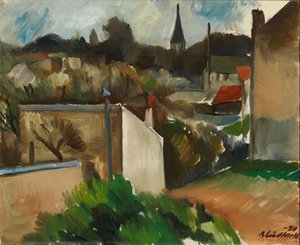
Beyond the sea, Lindforss explored the nuances of landscape and figurative subjects with equal passion. His ability to ground expansive seascapes in everyday reality—often by introducing solitary figures that provide a human connection to the vastness of nature—demonstrates his skill as a storyteller. His landscapes, including views of France and Bogneux, showcase a sophisticated balance of complexity and tranquility, making his work a testament to the enduring allure of the natural world.
Artistic Legacy and Recognition
The historical significance of Anton Lindforss lies in his contribution to the evolution of Finnish modernism. His works serve as a window into a period of significant transition, reflecting both his national identity and the broader currents of European art. While much of his legacy is preserved through auction records and museum collections, his true impact is felt in the way he utilized bold colors and expressive techniques to breathe life into the physical world.
Today, the works of Lindforss continue to resonate with collectors and art enthusiasts alike. His ability to capture a moment of profound vitality—a symphony of maritime life or the quietude of a forest—ensures his place in the annals of Finnish art history. Through his dedication to capturing the essence of his subjects, Lindforss left behind a body of work that remains both a sophisticated piece of modern history and a timeless exploration of light, form, and emotion.
Questions & Answers
What are the birthplace and birth year of Lindforss, Anton?
Lindforss, Anton was born in Tampere in 1890.
What are the birth city and country of Lindforss, Anton?
Lindforss, Anton was born in Tampere, in Finland.
What other names is Lindforss, Anton known by?
Lindforss, Anton is also known as Anton Lindforss.