The Pont-Aven Period and The Talisman
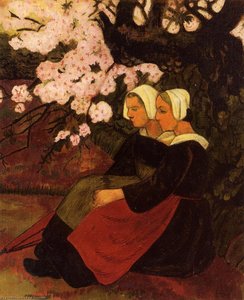
The summer of 1888 changed the trajectory of Paul Sérusier's career when he traveled to Pont-Aven. He joined a small circle of artists operating around Paul Gauguin, a move that shifted his focus away from academic traditions. This period was defined by a rejection of realistic depiction in favor of something more structural and direct. By moving into this group, Sérusier moved toward a style that prioritized the artist's internal perception over the mere imitation of nature.
In October 1888, under the close supervision of Gauguin, Paul Sérusier produced The Talisman. This work functioned as an extreme exercise in Cloisonnism, utilizing bold, flat forms separated by dark contours. The painting approached pure abstraction, stripping away unnecessary detail to focus on the essential arrangement of color and line. It was a radical departure from the visual language of the time. This specific experiment provided the foundation for the stylistic shifts that would define the next decade of modern painting.
Technique and the Synthetist Style
Sérusier’s approach to the canvas was a deliberate departure from the pursuit of realistic depth. He rejected traditional perspective, opting instead for a flattened space that prioritized the arrangement of color and form over three-dimensional accuracy. This shift was driven by the principles of Synthetism, a method defined by simplified drawing and clearly-defined contours. By stripping away the subtle gradations of light and shadow used by his predecessors, he focused on the essential structure of the subject. The result was a visual language that favored the artist's internal perception over the mere imitation of nature.
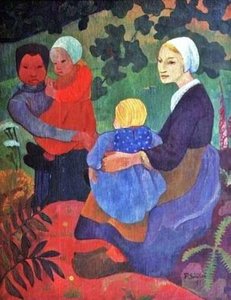
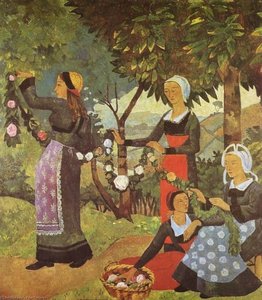
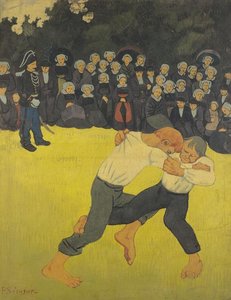
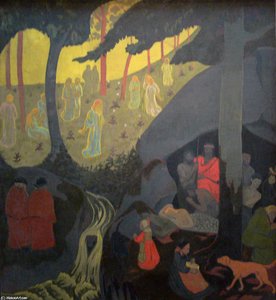
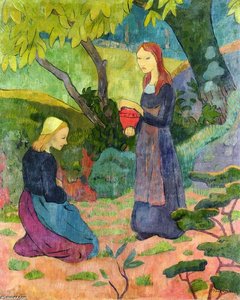
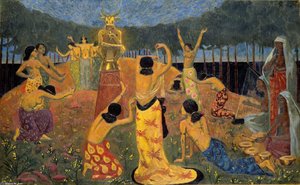
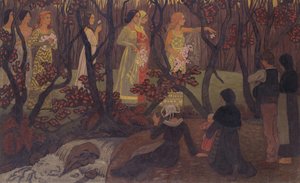
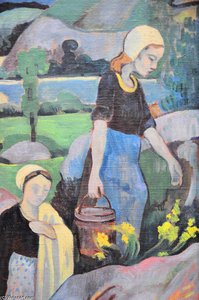
His technical execution relied heavily on Cloisonnism, a style characterized by bold, flat forms separated by dark, heavy outlines. This technique is reminiscent of the decorative art of cloisonné enamelwork, where distinct compartments of color are held in place by wire. In works like Celtic Tale (1894), this method produces an arresting visual effect through the use of intensified colors. He utilized blocks of solid color to delineate shapes, creating a sense of luminous intensity that relied on the strength of the contour rather than the nuance of shading. This structural clarity remains the most significant aspect of his technical contribution.
The Nabis Movement and Artistic Circles
Sérusier’s influence extended far beyond his individual canvases through his association with the Nabis. He did not merely join this group; he co-named it alongside Paul Gauguin. This collective functioned as a vital node in the avant-garde, connecting Sérusier to other significant figures such as Pierre Bonnard, Édouard Vuillard, and Maurice Denis. Their shared objective was to move away from the literalism of previous eras, favoring a more structured, symbolic approach to composition.
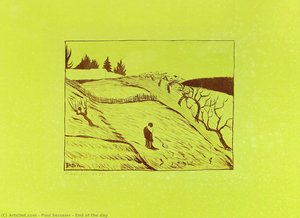
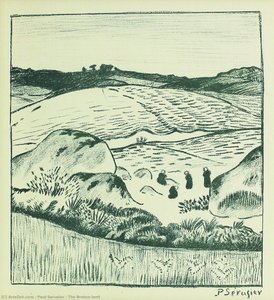
His involvement in these circles was not limited to oil on canvas. In 1895, he contributed the illustration Pastorale Bretonne to the publication The Evergreen: A Northern Seasonal: The Book of Spring. This work demonstrates how his aesthetic principles moved into the realm of graphic design and book illustration, expanding the reach of the Nabis' visual language. His ability to translate complex ideas into simplified, flattened forms made him a central figure in this shift toward modernism.
Key Works and Notable Paintings
The weight of Sérusier's influence rests heavily on The Talisman. Created in 1888, this work functioned as a landmark for early Post-Impressionism, Synthetism, and Cloisonnism. It moved beyond mere representation to approach pure abstraction, marking a definitive break from academic traditions. This single piece provided the visual vocabulary that the Nabis would later adopt and expand.
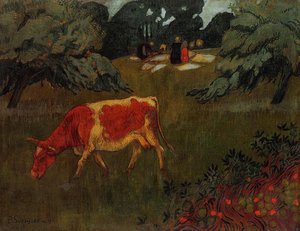
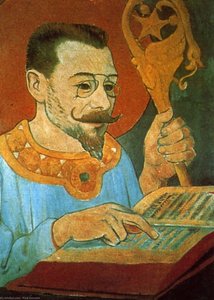
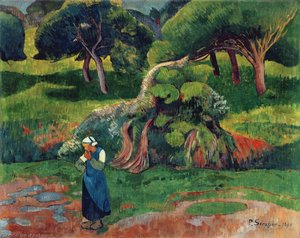
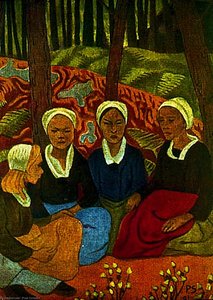
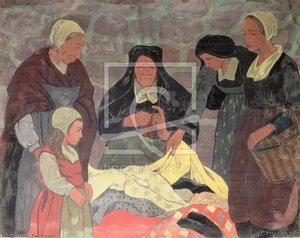
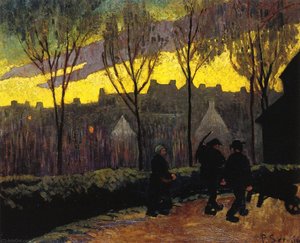
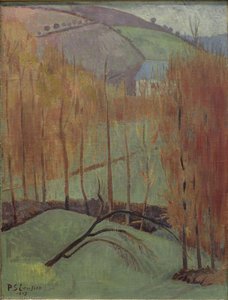
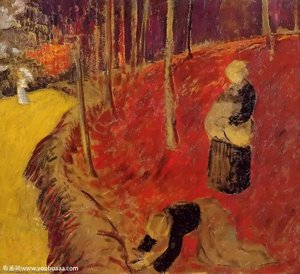
His output throughout the late 19th and early 20th centuries demonstrates a consistent commitment to these structural principles. In 1890, he produced Portrait of Paul Ranson, a work that solidified his presence within his artistic circle. By 1893, L'averse showed his continued development of the style. Later, his 1894 painting Celtic Tale functioned as a profound exploration of light and color, utilizing a flattened, almost geometric approach to the natural world. Even in his later years, such as with The Daughters of Pelichtim in 1908, the focus on form and essential color remained central to his practice.
- The Talisman (1888)
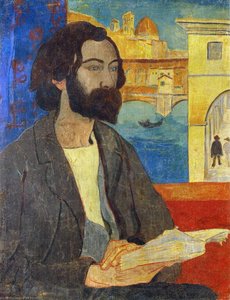
- Portrait of Paul Ranson (1890)
- L'averse (1893)
- Celtic Tale (1894)
- The Daughters of Pelichtim (1908)
Where to See His Works Today
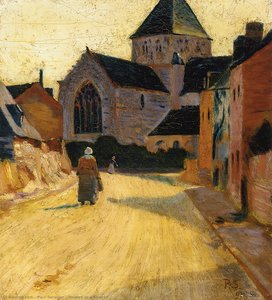
To witness the shift toward abstraction in Sérusier's practice, one must visit the Musée d'Orsay in Paris. It holds The Talisman, the work that defined his early departure from academicism. This piece remains a primary reference for understanding how he moved toward pure color and form. The Musée de Pont-Aven in Hastenparck also maintains a significant presence of his output, preserving the connection between his canvases and the Breton landscape that fueled his experimentation.
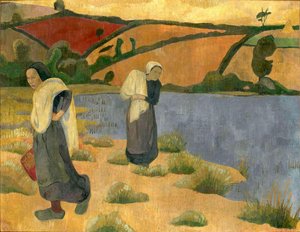
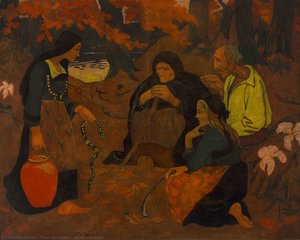
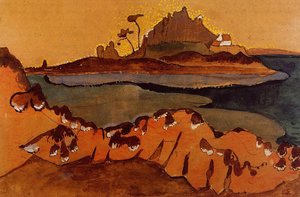
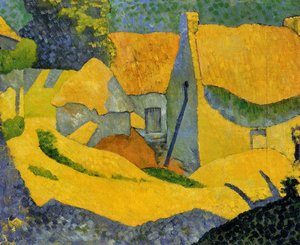
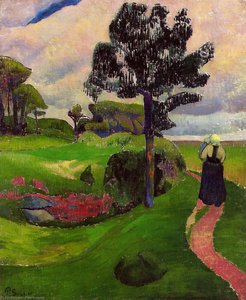
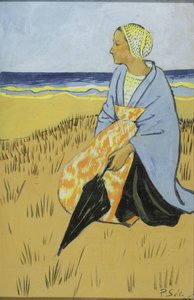
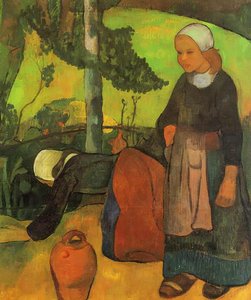
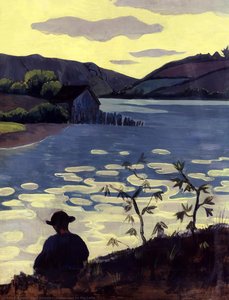
His reach extends far beyond France, with important collections held in major international institutions. The Museum of Fine Arts, Houston contains Landscape at Le Pouldu (1890) and Washerwomen (1891). These works demonstrate his ability to translate the physical world into the flattened, structured language of Synthetism. In Europe, the Warsaw National Museum preserves several undated pieces, including The Snake Eaters and Breton Woman Sitting at the Seashore.
- The Talisman, Musée d'Orsay, Paris
- Landscape at Le Pouldu (1890), Museum of Fine Arts, Houston
- Washerwomen (1891), Museum of Fine Arts, Houston
- The Snake Eaters, Warsaw National Museum
- Breton Woman Sitting at the Seashore, Warsaw National Museum
Questions & Answers
What are the birthplace and birth year of Paul Sérusier?
Paul Sérusier was born in Paris in 1864.
What are the birth city and country of Paul Sérusier?
Paul Sérusier was born in Paris, in France.
In which historical period did Paul Sérusier work?
Paul Sérusier worked in the 19th-Century period. The period situates the artist's activity in history.