A Master of the Dutch Pastoral
In the golden era of the seventeenth century, a period defined by profound prosperity and a deep-seated connection to the land, Paulus Pietersz Potter emerged as a singular voice in Dutch art. Born in Enkhuizen, Netherlands, Potter possessed an extraordinary ability to transform the mundane rhythms of rural life into scenes of monumental significance. His work serves as a window into the soul of a nation, capturing the quiet vitality of the countryside with a level of naturalism that remains breathtaking centuries later. Through his eyes, the heavy, muscular presence of livestock and the serene movements of herdsmen became more than mere subjects; they became symbols of a stable, flourishing society.
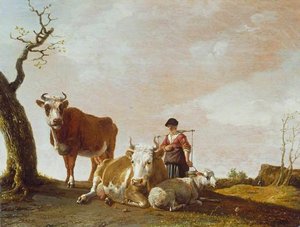
The essence of Potter's artistry lies in his masterful command of texture and light. He did not merely paint animals; he breathed life into them. One can almost feel the coarse grain of the earth or the thick, tactile warmth of a bull's fur through his meticulous brushwork. His palette, often dominated by earthy ochres, deep browns, and muted greens, creates an organic unity that feels both grounded and eternal. By manipulating soft, diffused light—reminiscent of a heavy North Sea mist—he achieved an atmospheric realism that avoids dramatic tension in favor of a quiet, profound stillness.
The Spirit of the Landscape
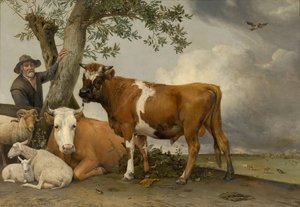
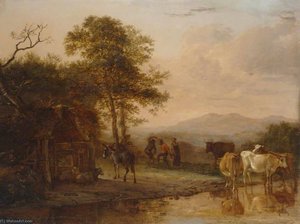
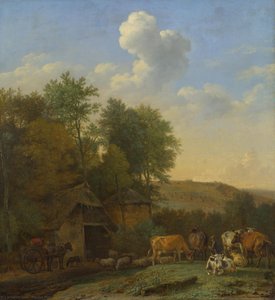
Potter's compositions often invite the viewer to step into a weathered, atmospheric world where the boundaries between man, animal, and earth seem to dissolve. In masterpieces such as The Bull, he places the powerful presence of livestock at the center of a meticulously composed pastoral scene. This focus on the physical reality of the animals reflects the economic and social foundations of the Netherlands during his lifetime, where agriculture and livestock were the very pillars of identity and wealth. His ability to balance large-scale anatomical precision with the delicate textures of foliage and sky creates a sense of harmony that is both captivating and tranquil.
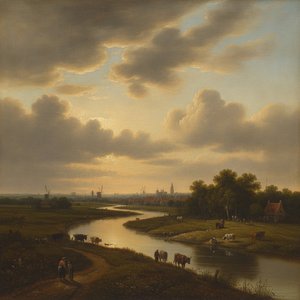
Beyond the mere depiction of cattle, Potter's work captures the emotional resonance of the Dutch landscape. Whether portraying Herdsmen with Their Cattle or more expansive vistas featuring travelers and distant church towers, his paintings evoke a sense of peace and continuity. His technical brilliance allowed him to capture the following elements with unparalleled skill:
- Anatomical Precision: The rendering of muscular forms and the physical weight of animals.
- Atmospheric Depth: The use of light and shadow to create a sense of vast, open space.
- Textural Realism: The detailed depiction of animal coats, wooden structures, and trampled earth.
- Symbolic Harmony: A composition that reflects the symbiotic relationship between humans and nature.
Though his life was relatively brief, the impact of Paulus Pietersz Potter remains etched in the history of the Dutch Golden Age. He elevated the genre of animal painting, proving that the humble subjects of the field could carry the same weight and dignity as the grandest historical or mythological scenes. His legacy lives on through works that continue to resonate with anyone seeking the beauty in the quiet, enduring rhythms of the natural world.
Questions & Answers
What are the birthplace and birth year of Paulus Pietersz Potter?
Paulus Pietersz Potter was born in Enkhuizen in 1625.
In which historical period did Paulus Pietersz Potter work?
Paulus Pietersz Potter worked in the Early-Modern period. The period situates the artist's activity in history.
What are the birth city and country of Paulus Pietersz Potter?
Paulus Pietersz Potter was born in Enkhuizen, in Netherlands.
Where is Paulus Pietersz Potter from?
Paulus Pietersz Potter was born in Netherlands.