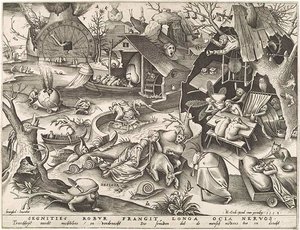
The Master of the Burin: The Life of Pieter van der Heyden
In the vibrant artistic landscape of sixteenth-century Flanders, Pieter van der Heyden emerged as a vital figure in the world of printmaking. A Flemish engraver whose presence was felt deeply within the bustling publishing hubs of the era, he occupied a specialized niche that bridged the gap between the grand visions of master painters and the wider public. While much of his personal history remains shrouded in the mists of time, we know him as an artist of immense technical fidelity, a man capable of translating the complex textures of oil and wash into the precise, rhythmic language of the engraved line.
Born in Antwerp, van der Hey and his contemporaries operated within one of Europe's most sophisticated art markets. His career was inextricably linked to the prestigious publishing house of Hieronymus Cock, a central figure in the Northern Renaissance. Through this connection, van der Heyden became a primary conduit for the dissemination of Flemish visual culture. He did not merely copy; he acted as a reproductive virtuoso, tasked with the delicate responsibility of preserving the essence of much larger, more fluid works within the permanent, monochrome medium of the print.
A Legacy of Reproduction and Influence
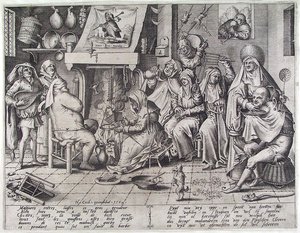
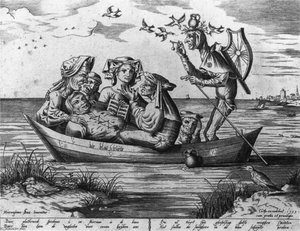
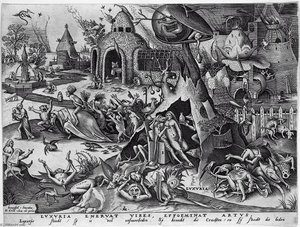
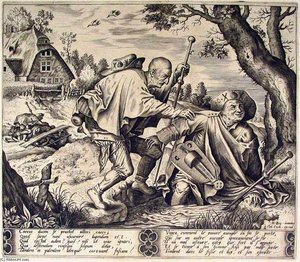
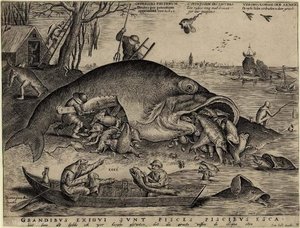
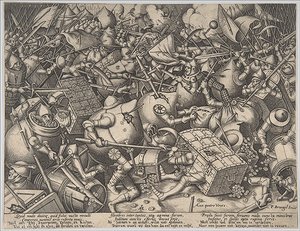
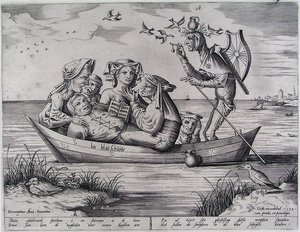
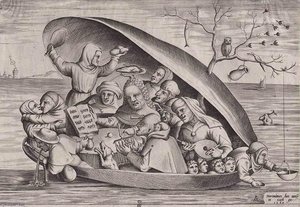
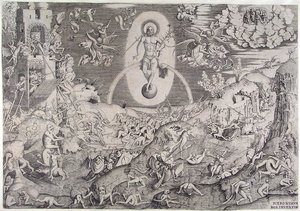
The true significance of van der Heyden lies in his role as a custodian of the Flemish tradition. He was frequently called upon to engrave works after the most celebrated painters of his age, including Hieronymus Bosch, Pieter Bruegel the Elder, and Frans Floris. His work allowed the monumental compositions of these masters to travel far beyond the walls of private collections, reaching collectors across the continent through the medium of paper.
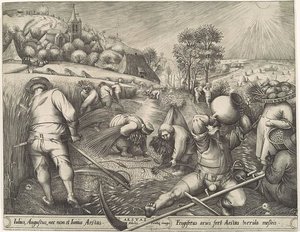
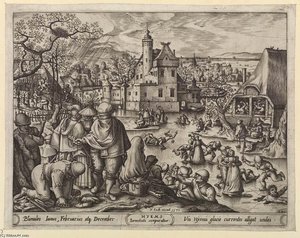
One of his most notable achievements involves his contribution to the celebrated series representing the four seasons. Following the death of Bruegel, van der Heyden worked alongside designs by Hans Bol to complete this ambitious project for Hieronymus Cock. His ability to navigate the transition from Bruegel’s original concepts to a finished, publishable set of prints demonstrates his essential role in the continuity of the Antwerp school's visual narrative.
While some art historians have noted that his figures could occasionally appear stiff or angular, such observations often overlook the profound skill required for his specific task. His technique was characterized by:
- Fidelity to Design: An unwavering commitment to capturing the exact lines and intentions of the original painters.
- Technical Precision: A highly skilled mastery of the burin that allowed him to translate complex compositions into reproducible engravings.
- Collaborative Excellence: The ability to work seamlessly within the large-scale publishing projects that defined the Golden Age of Flemish printmaking.
Through his meticulous hand, the fleeting strokes of a brush were transformed into enduring legacies of ink and paper, ensuring that the brilliance of the sixteenth-century masters would remain accessible to generations of viewers long after the original canvases had faded.
Questions & Answers
What are the birthplace and birth year of Pieter Van Der Heyden?
Pieter Van Der Heyden was born in Antwerp in 1530.
Where is Pieter Van Der Heyden from?
Pieter Van Der Heyden was born in Belgium.
What aliases or alternate names does Pieter Van Der Heyden have?
Pieter Van Der Heyden is also known as Quentin Massys, Quinten Metsys, Kwinten Matsys, Qüintin Matsijs.