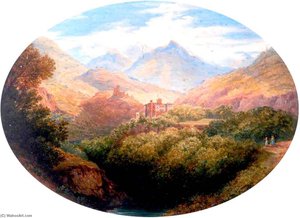
A Journey Through Light and Landscape
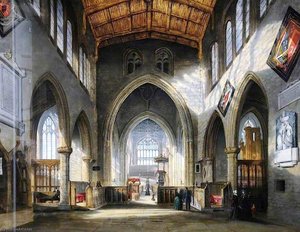
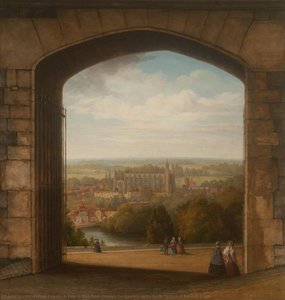
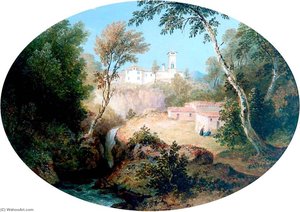
William Cowen was an English landscape painter whose life and work served as a vibrant window into the changing vistas of the nineteenth century. Born in Rotherham, England, his early years were rooted in the artistic traditions of the North, where he began his professional journey teaching drawing in nearby Sheffield. His talent caught the eye of influential figures, most notably William Fitzwilliam, 4th Earl Fitzwilliam, whose patronage proved transformative. This support allowed Cowen to transcend local boundaries, funding extensive travels through Italy, France, and Switzerland. These continental excursions were not merely trips of leisure but essential periods of artistic cultivation, where the light and topography of Europe deeply informed his developing aesthetic.
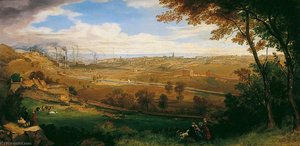
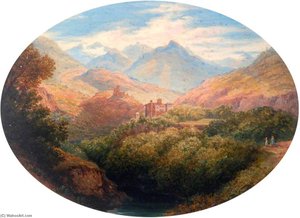
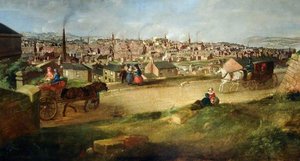
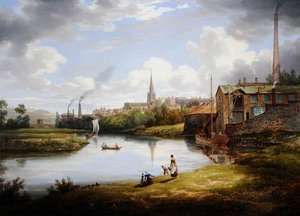
The breadth of Cowen's vision was truly revealed in his ability to capture diverse terrains, from the rugged beauty of Corsica to the serene vistas of the Italian lakes. His work often sought to document the essence of a place, whether through the meticulous detail of an oil painting or the delicate touch of watercolours. In 1824, he shared these discoveries with a wider audience by publishing Six Views of Italian and Swiss Scenery, a collection that featured his own engravings. His fascination with the landscape also extended to his homeland; through publications like Yorkshire Scenery, he brought the charm of Rotherham and the ruins of Roche Abbey to the forefront of the public consciousness.
Legacy and Artistic Contributions
Beyond his individual canvases, Cowen played a pivotal role in the institutional development of the British art world. He was one of the eight founding members of the Royal Institute of Painters in Water Colours, an organization established to provide a platform for artists specializing in this medium. This involvement highlights his commitment to the professionalization and promotion of watercolour painting during a period of significant artistic transition. His later years saw him based in London, where he continued to explore new subjects, including a notable series of paintings inspired by his travels to Corsica, which were later compiled into a travelogue titled Six Weeks in Corsica.
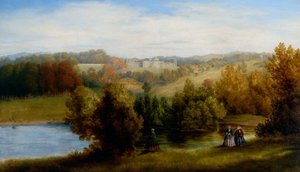
Cowen's oeuvre remains a testament to the Romantic era's fascination with nature and the sublime. His ability to blend the precision of topographical recording with an emotive response to landscape allowed him to create works that were both informative and deeply moving. Whether depicting the stately grandeur of Wentworth Woodhouse or the atmospheric depth of an Italian Lake, his paintings capture a sense of time and place that continues to resonate with those who seek to understand the historical soul of the English and European landscapes.
Questions & Answers
Where is William Cowen from?
William Cowen was born in United Kingdom.
In which historical period did William Cowen work?
William Cowen worked in the 19th-Century period. The period situates the artist's activity in history.
What other names is William Cowen known by?
William Cowen appears under the alternate names Cowen, W. Cowen, ウィリアム・コーエン.