
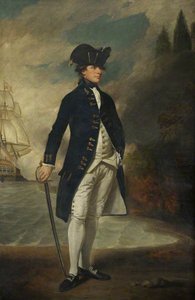
Captain, Later Admiral, Sir Hyde Parker (1739–1807)George RomneyNone
 Oil On Canvas
- WallArt
- Romanticism
 208.0 x 146.0 cm
 National Trust
George Romney (1734 – 1802)
Discover George Romney (1734-1802), the celebrated British portrait painter of high society! Explore his elegant style, captivating portraits & muse, Emma Hamilton. Shop reproductions now!
National Trust (Sudbury, Canada)
Visit the National Trust at Sudbury to explore 18th-century history, colonial life, vintage toys, and interactive exhibits. Enjoy family-friendly gardens, events, and the stunning Peak District setting. Book your visit today!
Captain, Later Admiral, Sir Hyde Parker (1739–1807): A Portrait of Power and Grace
George Romney’s depiction of Captain, later Admiral, Sir Hyde Parker stands as a cornerstone of British portraiture from the Regency era—a testament to both artistic skill and the opulent social landscape of its time. Executed in oil on canvas in 1795, this monumental artwork (208 x 146 cm) resides within the National Trust’s Melford Hall collection, offering visitors a rare glimpse into the life of one of Britain's most influential naval officers and a masterful demonstration of Romney’s signature style. Romney, renowned for his ability to capture not merely physical likeness but also inner character, skillfully portrays Parker with an unwavering gaze and posture radiating confidence—a reflection of his commanding presence at sea and in government circles. The artist meticulously rendered the uniform, paying particular attention to the intricate details: the gleaming buttons adorning Parker’s jacket, the delicately embroidered waistcoat, and the richly ornamented sword belt – all symbols of authority and military distinction. These elements speak volumes about the societal values of the period, where status and honor were paramount. Beyond mere representation, Romney imbues the painting with a palpable sense of atmosphere. The stormy seascape serves as a dramatic backdrop, mirroring Parker’s turbulent career marked by naval battles and political maneuvering. The muted palette—dominated by earthy browns and greens—creates an impression of solidity and seriousness, yet subtle touches of blue capture the shimmering expanse of the ocean and hint at Parker's connection to the natural world. This masterful use of color contributes significantly to the painting’s emotional impact, conveying both strength and contemplation. The symbolism embedded within the composition is equally noteworthy. Parker’s upright stance embodies resilience and determination—qualities essential for navigating the challenges of leadership. The sword held aloft symbolizes courage and vigilance, reminding viewers of the sacrifices made in defense of Britain's interests. Furthermore, Romney’s meticulous attention to detail elevates the portrait beyond a simple likeness; it becomes an exploration of identity and ambition, encapsulating the spirit of a man who shaped the course of British history. Further research into Sir Hyde Parker reveals he was a pivotal figure in naval administration during Nelson’s era, overseeing the establishment of Greenwich Hospital and championing advancements in maritime medicine—a legacy that Romney subtly acknowledges through his portrayal of Parker as a respected statesman alongside his military accomplishments. This artwork continues to fascinate scholars and collectors alike, cementing Romney's place among Britain’s greatest portrait painters and offering an enduring symbol of Regency grandeur.- Artist: George Romney
- Born Year: 1734
- Death Year: 1802
- Birth City: Dalton-in-Furness
- Birth Country: United Kingdom
Additional Resources
Explore more about Captain, Later Admiral, Sir Hyde Parker and George Romney’s artistic legacy:
- Captain, Later Admiral, Sir Hyde Parker (1739–1807) | Art UK
- Hyde Parker (Royal Navy officer, born 1739) - Wikipedia
- George Romney
Image Details
You can view a high-resolution image of the artwork here:
About this artwork
- Title: Captain, Later Admiral, Sir Hyde Parker (1739–1807)
- Artist: George Romney
- Original dimensions: 208.0 x 146.0 cm
- Format: Portrait
- Copyright status: Public domain
- Where to see it: National Trust
- Medium type: WallArt
- Main color: Driftwood
- Purpose: Accent
- Keywords: hyde parker melford hall, ship seascape romney, british artist romney
Quick Facts
- Influences: British Portrait Tradition
- Subject or theme: Portrait of Sir Hyde Parker
- Location: National Trust, Melford Hall
- Title: Captain, Later Admiral, Sir Hyde Parker
- Medium: Oil on Canvas
- Artist: George Romney
- Dimensions: 208 x 146 cm
Questions & Answers
What placement suits the format of "Captain, Later Admiral, Sir Hyde Parker (1739–1807)" by George Romney?
With its portrait shape, a reproduction of "Captain, Later Admiral, Sir Hyde Parker (1739–1807)" is suggested for a living room.
Which artistic current is "Captain, Later Admiral, Sir Hyde Parker (1739–1807)" by George Romney part of?
"Captain, Later Admiral, Sir Hyde Parker (1739–1807)" is a work of Romanticism. The movement indicates the artistic tradition the work is part of.
Does "Captain, Later Admiral, Sir Hyde Parker (1739–1807)" by George Romney use strong contrasts or soft harmonies?
The color analysis of "Captain, Later Admiral, Sir Hyde Parker (1739–1807)" by George Romney records a balanced contrast and a strong color unity harmony.
Who is the artist behind "Captain, Later Admiral, Sir Hyde Parker (1739–1807)"?
The artist behind "Captain, Later Admiral, Sir Hyde Parker (1739–1807)" is George Romney. The work is catalogued under George Romney's name.
What is the perceived brightness of "Captain, Later Admiral, Sir Hyde Parker (1739–1807)" by George Romney?
Overall, "Captain, Later Admiral, Sir Hyde Parker (1739–1807)" is recorded as shadow. Perceived brightness describes how light or dark the work appears.
Which artist and which style stand behind "Captain, Later Admiral, Sir Hyde Parker (1739–1807)"?
"Captain, Later Admiral, Sir Hyde Parker (1739–1807)" was created by George Romney in the Romanticism style. Artist and movement identify the work's tradition.
Where can I see the original "Captain, Later Admiral, Sir Hyde Parker (1739–1807)" by George Romney?
"Captain, Later Admiral, Sir Hyde Parker (1739–1807)" by George Romney is on display at the National Trust, Sudbury, Canada. The museum listing refers to the original work, not to reproductions.