
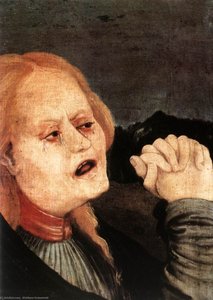
The Lamentation (detail)Matthias Grünewald · 1515
 Oil
Oil- WallArt
- Northern Renaissance
 1515
1515 Musée d'Unterlinden
Matthias Grünewald (1480 – 1528)
Explore Matthias Grünewald's dramatic German Renaissance art! Known for the Isenheim Altarpiece & emotionally charged religious paintings. Discover his unique style at Mus3ums.
Musée d'Unterlinden (Colmar, France)
Explore the Musée d'Unterlinden in Colmar, France! Witness Grünewald’s masterpiece, the Isenheim Altarpiece, and delve into Alsatian art & history within a stunning medieval convent.
A Window into the Heart of Suffering
Matthias Grünewald’s “The Lamentation (Detail)” – a poignant fragment from his monumental Isenheim Altarpiece – isn't merely a depiction of mourning; it’s an immersive experience of profound sorrow, a visceral rendering of loss that transcends time and faith. Created in 1515 during the tumultuous transition between late medieval and early Renaissance art, this oil painting stands as a testament to Grünewald’s mastery of emotional intensity and his unwavering commitment to portraying the raw realities of human suffering within a deeply religious context. The detail chosen for reproduction focuses on a single figure – a woman draped in rich fabrics, her face etched with grief – yet it encapsulates the entire altarpiece's agonizing narrative. It’s a scene saturated not just with sadness, but with an almost unbearable weight of spiritual significance.
A Masterclass in Northern Renaissance Expression
Grünewald, a pivotal figure resisting the prevailing Italian Renaissance classicism of his era, remained deeply rooted in the expressive traditions of late medieval Central European art. His style is immediately recognizable – a dramatic departure from idealized beauty and a fervent embrace of emotional realism. “The Lamentation (Detail)” exemplifies this perfectly. The painting’s composition isn't concerned with balanced symmetry or harmonious perspective; instead, it favors a claustrophobic intimacy, drawing the viewer directly into the woman’s grief. Notice how her posture – hands clasped in prayerful supplication – mirrors the slumped form of Christ, creating a powerful visual echo of shared sorrow. The dark background, deliberately indistinct, serves to heighten the figure's isolation and intensify the emotional impact. The fine brushwork, meticulously applied, contributes to an almost tactile quality, inviting us to feel the weight of her despair.
- Color Palette: Dominated by somber browns, deep reds, and muted blues – colors traditionally associated with mourning and penitence.
- Technique: Grünewald’s masterful use of chiaroscuro (light and shadow) creates a dramatic interplay of illumination and darkness, emphasizing the figure's face and hands while shrouding the background in obscurity.
- Composition: The tightly framed composition focuses entirely on the woman, creating an intensely personal and emotionally charged experience for the viewer.
Symbolism Woven into Sorrow
Beyond its immediate depiction of grief, “The Lamentation (Detail)” is rich in symbolic meaning. The woman’s red garment, a symbol of royalty and sacrifice, underscores Christ's role as King of Kings. Her flowing hair, reminiscent of the Virgin Mary, further connects her to the divine realm. Crucially, the painting speaks to the universal experience of loss – not just the death of Christ, but also the grief inherent in all human suffering. The gesture of prayer or supplication suggests a desperate plea for solace and understanding. It’s a meditation on faith, mortality, and the enduring power of compassion.
A Legacy Preserved: Reproductions and Historical Context
Created within the Isenheim Altarpiece – itself a masterpiece now housed in the Musée d'Unterlinden in Colmar, France – “The Lamentation (Detail)” has captivated viewers for centuries. Matthias Grünewald’s work was largely forgotten until the late 19th century, when art historians rediscovered its significance and championed his unique style. Today, high-quality oil painting reproductions of this emotionally resonant image are available through platforms like Mus3ums.com, offering a tangible connection to one of the most profound works in Western art history. Consider it not just a beautiful image, but a window into the heart of human sorrow and a testament to the enduring power of faith.
About this artwork
- Title: The Lamentation (detail)
- Artist: Matthias Grünewald
- Year: 1515
- Format: Portrait
- Copyright status: Public domain
- Where to see it: Musée d'Unterlinden
- Medium: Oil
- Color palette: Earthy
- Purpose: Statement
- Keywords: grünewald, detail, mary
Quick Facts
- Artist: Matthias Grünewald
- Title: The Lamentation (Detail)
- Influences: Late Medieval art
- Medium: Oil on wood
- Subject or theme: Religious mourning
- Year: 1515
Questions & Answers
What is a reproduction of "The Lamentation (detail)" by Matthias Grünewald recommended for?
A reproduction of "The Lamentation (detail)" by Matthias Grünewald is recommended for statement. This suggestion follows from the work's subject, mood and colors.
Who created "The Lamentation (detail)"?
"The Lamentation (detail)" is attributed to Matthias Grünewald.
How old was Matthias Grünewald when creating "The Lamentation (detail)" in 1515?
Matthias Grünewald was 35 years old when creating "The Lamentation (detail)" in 1515. The age is computed from the artist's birth year, 1480.
Why is the copyright status of "The Lamentation (detail)" what it is?
The copyright status of "The Lamentation (detail)" - in the public domain - its copyright has expired - follows from the artist's death in 1528.
What is the creation date of "The Lamentation (detail)" by Matthias Grünewald?
"The Lamentation (detail)" dates from 1515. The date places the work within Matthias Grünewald's career and its era.
What mood does "The Lamentation (detail)" by Matthias Grünewald express within Northern Renaissance?
"The Lamentation (detail)" carries a melancholic emotional tone within the Northern Renaissance movement.
What mood and emotion come together in "The Lamentation (detail)"?
"The Lamentation (detail)" by Matthias Grünewald conveys a melancholic feeling within an overall dramatic mood.