

A Symphony of Stone and Shadow
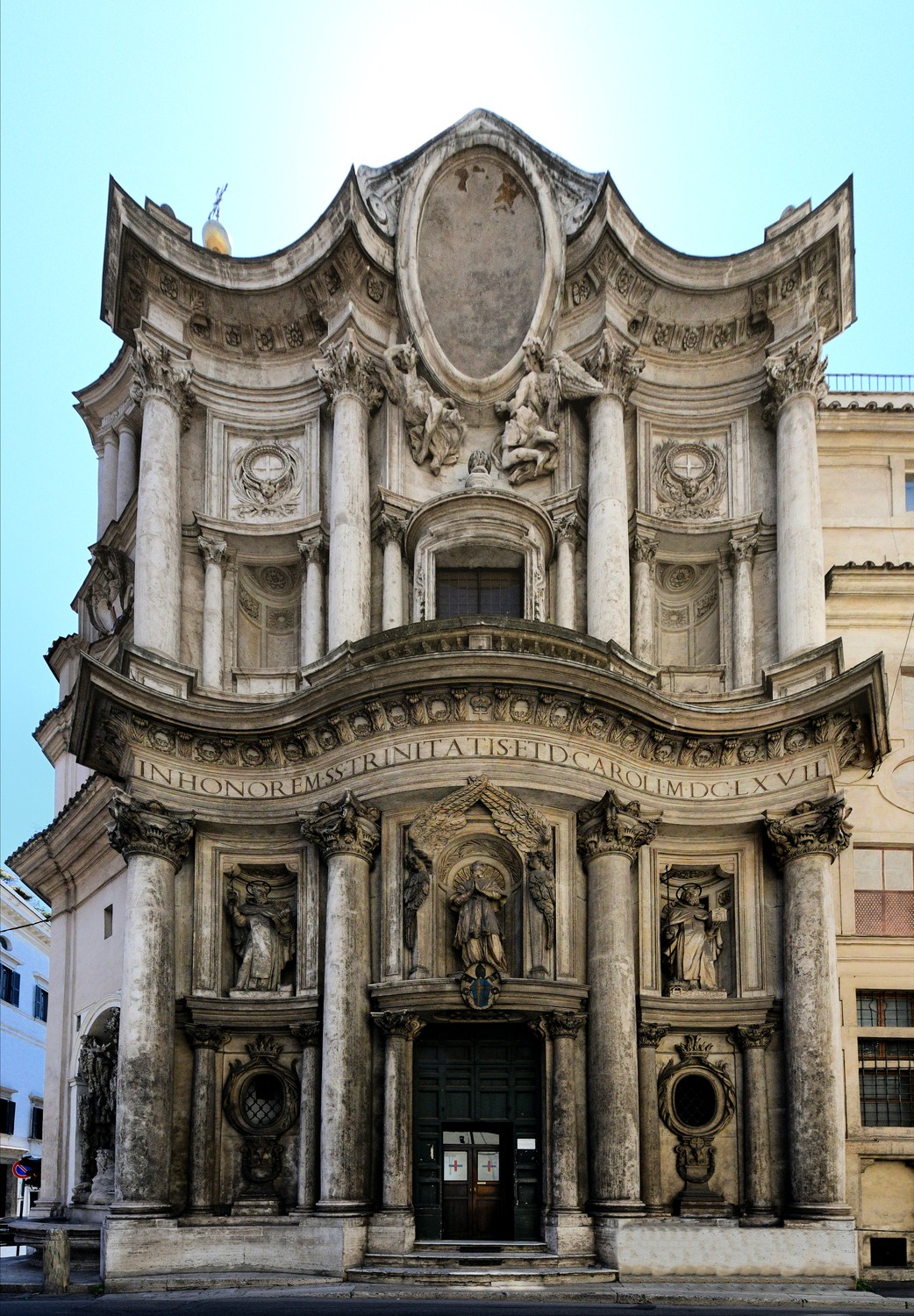
In the bustling heart of Rome, where the city's ancient streets converge at a historic crossroads, lies a sanctuary that defies the very laws of physics. Chiesa di San Carlo alle Quattro Fontane is not merely a building; it is a profound architectural manifesto, a testament to the audacious genius of Francesco Borromini . To approach this unassuming structure is to encounter one of the most daring achievements of the Baroque era. While its exterior presents an undulating, rhythmic façade that seems to breathe with the movement of the street, the true magic awaits within, where the boundaries between solid matter and ethereal light begin to dissolve into a singular, breathtaking experience.
The brilliance of Borromini’s vision lies in his mastery of spatial illusion. Faced with the daunting challenge of constructing a monumental space on a restricted, irregular site, the architect turned limitation into liberation. He abandoned the rigid, predictable geometries of the Renaissance in favor of a complex, mathematical dance of curves and intersections. As one gazes upward, the eye is drawn into an extraordinary elliptical dome, a structural marvel composed of a sophisticated arrangement of hexagons, octagons, and crosses that converge toward a central oculus. This masterful orchestration of form creates a sense of infinite expansion, tricking the senses into perceiving a vastness that far exceeds the church's physical footprint.
The Interplay of Light and Devotion
Inside this sacred vessel, light acts as a primary medium of art, much like the brushstrokes of a master painter. The dome is adorned with intricate stucco work and geometric patterns that catch the diffused sunlight, casting dramatic, shifting shadows that transform the interior throughout the day. This interplay of light and shadow serves a higher theological purpose, acting as a conduit for spiritual contemplation and reinforcing the symbolic depth of the architecture. The walls themselves tell stories through vibrant frescoes, weaving biblical narratives into the very fabric of the stone.
The history of San Carlo is one of perseverance and divine purpose. Commissioned by Cardinal Alessandro Farnese for the Trinitarian Order, the project was born from a mission to support the liberation of Christian slaves. Despite the financial constraints that often plagued Borromini’s most ambitious works, the architect’s unwavering commitment to his aesthetic and spiritual vision resulted in a masterpiece that fundamentally altered the trajectory of Baroque architecture. For the modern art lover, collector, or designer, San Carlo alle Quattro Fontane remains an essential pilgrimage—a place where the intellect meets the soul, and where the legacy of Borromini continues to inspire awe through its perfect harmony of geometry, light, and emotion.