

The History of Gallerie dell'Accademia di Venezia
The origins of the Gallerie dell'Accademia di Venezia are rooted in the year 1750, when the institution was established as an academy for artists and sculptors. This foundation was intended to nurture the creative talent of the Venetian Republic. During the Napoleonic era, the academy underwent significant changes, eventually becoming independent from the Academy of Fine Arts in 1879. This separation allowed the institution to focus on its role as a repository for the city's artistic legacy.
The doors of the gallery opened to the public on 10 August 1817. Since that time, the collection has grown to include works spanning several centuries. The institution focuses on pre-19th-century art, preserving the visual language of Venice and the Veneto region. The presence of these works within the historic complex provides a direct link to the artistic traditions of the past.
The Architecture of the Historic Complex
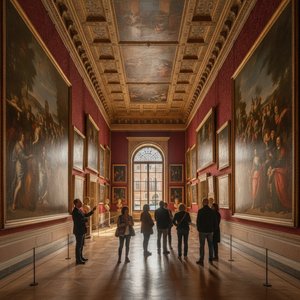
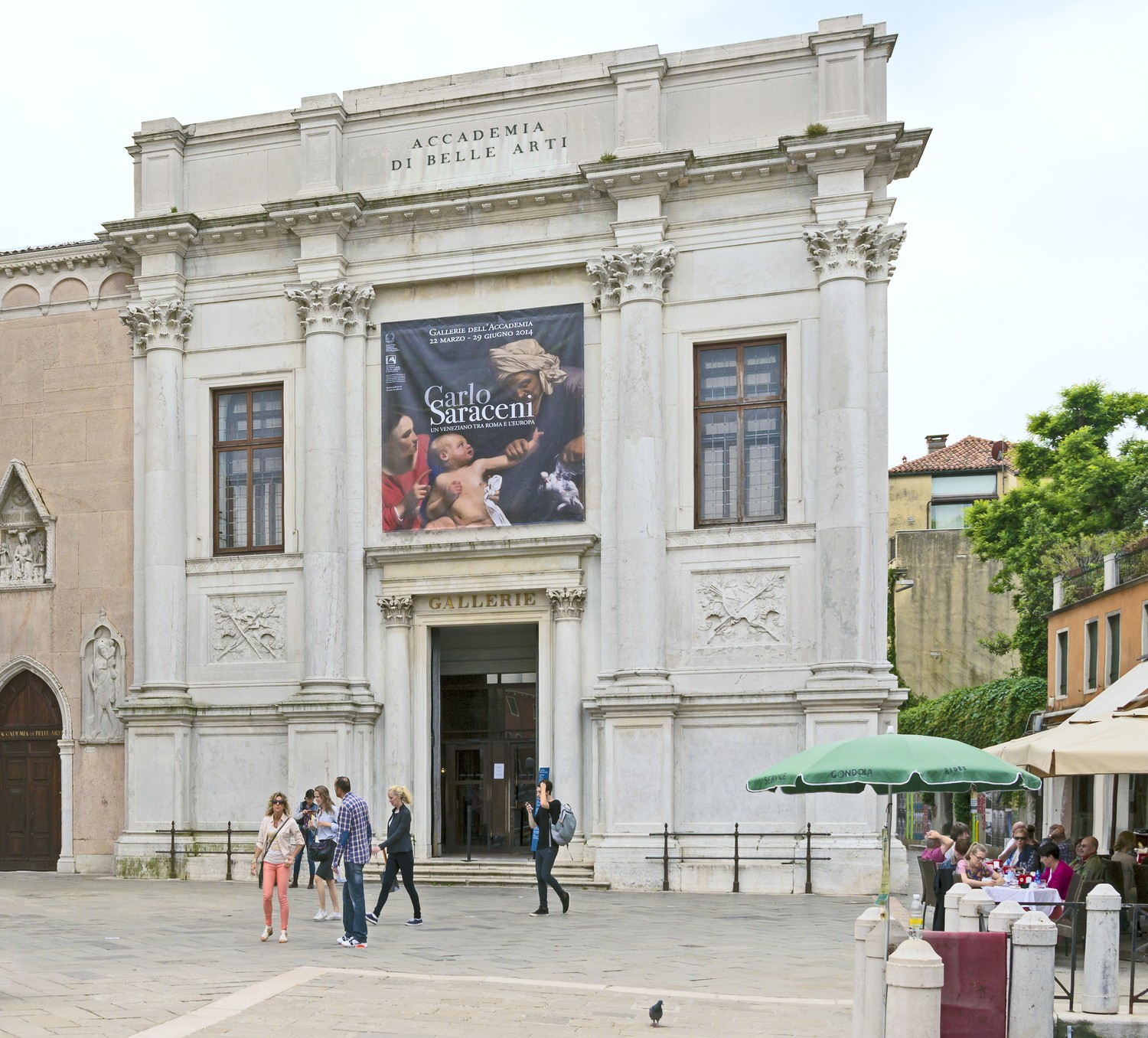
The physical presence of the Gallerie dell'Accademia di Venezia is defined by a complex of structures that have evolved through the centuries. The site comprises the former Scuola Grande, the church, and the convent of Santa Maria della Carità. These buildings form a cohesive whole, where the weight of stone and the geometry of the spaces reflect the long history of the sestiere of Dorsoduro. The Scuola della Carità, the oldest part of this assembly, dates back to the 14th century.
Architectural harmony is achieved through the integration of various historical layers, many of which bear the influence of Andrea Palladio. The architect's hand is visible in the design elements that unify the space, particularly within the convent of Santa Maria della Carità, which was started in 1561 by Palladio. The interplay between the medieval foundations and the Renaissance additions creates a sense of continuity. The buildings sit on the south bank of the Grand Canal, positioned at the foot of the Ponte dell'Accademia.
The structure itself acts as a vessel for the art it contains. The layout follows the original purpose of the Scuola Grande and the religious functions of the church and convent. This arrangement ensures that the light and the scale of the rooms remain tied to the original intent of the builders. The architecture does not merely house the collection; it provides the specific atmosphere required for the contemplation of Venetian painting.
A Vast Collection of Venetian Painting
The collection comprises more than 800 paintings spanning from the 1300s to the 18th century. The early layers of this assembly reflect the Gold and Gothic periods of 1300/1450. These works provide a foundation for the subsequent Renaissance era, which spans from 1450 to 1510. The progression of Venetian art continues through the period of Monumentality between 1510 and 1600, eventually reaching the Eighteenth-Nineteenth Century period from 1700 to 1880.
The presence of these works allows for a direct observation of how light and color evolved within the Venetian tradition. One can observe the shift from the earlier styles into the more dramatic compositions of the later centuries. The paintings are organized to reflect this chronological development, tracing the technical shifts in pigment and perspective over several hundred years.
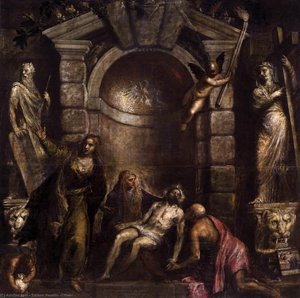
- The Pity, 1505 - Giovanni Bellini
- St Jerome, 1580 - Paolo Veronese
- Capriccio with Ruins and Porta Portello, Padua, 1750 - Canaletto
Masterpieces of the Accademia Collection
Leonardo da Vinci’s Vitruvian Man remains the most celebrated treasure within these walls. This remarkably preserved drawing has been part of the gallery since 1822. It exists as a profound symbol of the intersection between human anatomy and mathematical proportion. The presence of the work invites a quiet contemplation of the connection between knowledge and beauty.
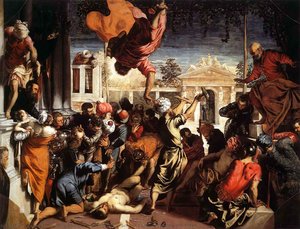
The collection offers encounters with the intense physicality of the Venetian school. Titian’s Bacchus and Ariadne presents a study in color and sensuality, where the pigment carries the weight of the myth. Nearby, Tintoretto’s Sacrifice of Isaac commands the space through its scale. This monumental depiction of religious narrative uses dramatic composition to pull the viewer into the center of the action.