

A Symphony of Stone and Light
To step into the Würzburg Residence is to transcend the boundaries of the modern world and enter a realm where the grandeur of the 18th century breathes through every gilded surface and marble vein. This architectural masterpiece, a UNESCO World Heritage site, stands as the ultimate testament to the artistic ambition of the Prince-Bishops of Franconia. Commissioned by Prince-Bishop Philipp Franz von Schönborn in 1720, the palace was conceived not merely as a seat of governance, but as an immersive stage for the display of absolute power and divine right. As one wanders through its corridors, the transition from the heavy, imposing structures of early Baroque to the light, airy elegance of Rococo becomes a palpable journey through the evolution of European taste.
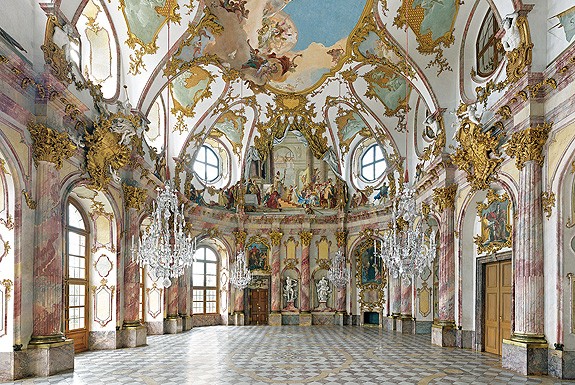
The true soul of the palace resides within the Imperial Hall , a chamber so vast and breathtaking that it defies simple description. Designed by the legendary architect Balthasar Neumann , the hall is a triumph of structural engineering and aesthetic vision. It serves as a monumental centerpiece where architecture and painting merge into a single, seamless experience of splendor.
The Celestial Canvas of Tiepolo
The most arresting feature of this grand space is the monumental ceiling fresco, a continuous celestial canvas executed by the Venetian master Giovanni Battista Tiepolo between 1751 and 1752. This work remains one of the largest and most significant frescoes in all of Europe. Looking upward, the viewer is met with a swirling vortex of light and color, where allegorical figures dance amidst clouds to celebrate the House of Habsburg. Tiepolo’s brushwork creates an illusionistic depth that dissolves the physical ceiling, replacing stone with a vibrant tapestry of history, justice, and imperial legitimacy.
Beyond the heights of the Imperial Hall, the Residence reveals itself as a collection of exquisitely decorated jewel boxes, each offering a unique sensory experience. For those drawn to the finer details of European mastery, certain areas offer profound encounters:
- The Venetian Room: An intimate encounter with international mastery, housing original paintings that reflect the sophisticated connections of the Prince-Bishops.
- Intricate Stucco Work: Decorative elements that crawl across the walls like frozen lace, showcasing unparalleled craftsmanship.
- Period Ornamentation: Meticulously carved details on furniture and doors that demonstrate how light, texture, and ornament can be woven together to create a space that feels both monumental and profoundly intimate.
The legacy of the Würzburg Residence is one of profound artistic patronage. By assembling a dream team of Europe’s finest architects, painters, and artisans, the Schönborn era created a cultural landmark that transcends its original political purpose. Today, it stands as a preserved fragment of an era when art was the primary language of diplomacy and prestige.