
The Origins and History of Kulturforum
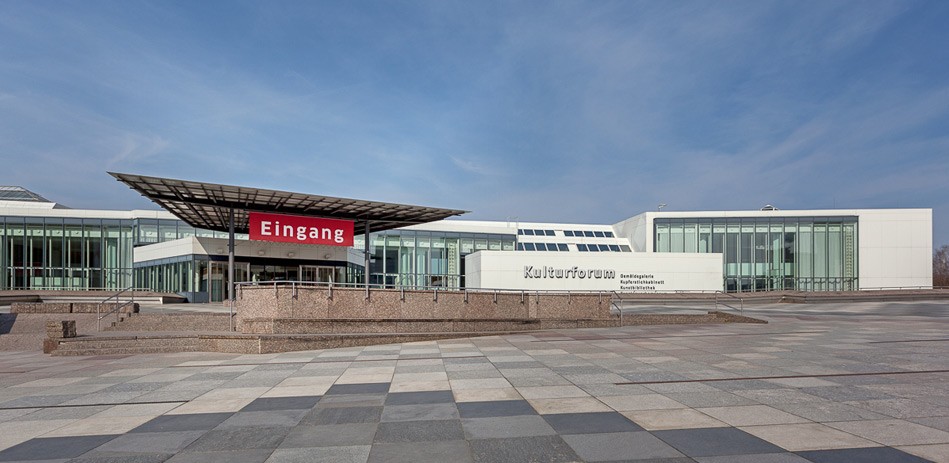
The Kulturforum emerged from the scarred landscape of postwar Berlin. Established during the 1950s and 1960s, the site was conceived as a deliberate counterpoint to the cultural losses inflicted by war and the subsequent division of the city. It was a response to a fractured urban reality, intended to reclaim a sense of purpose within the landscape. During the period when Germany was divided, this area was chosen as a primary location for the Foundation's activities.
The development of the complex was deeply tied to the political geography of the era. It was built as a visible symbol in view of the border between East and West Berlin. This placement ensured that the cultural presence of the institution remained a constant presence within the divided city. The site represents a period of reconstruction, where the physical environment was reshaped to accommodate new institutional needs amidst the tension of the Cold War.
Architectural Dialogue of Modernist Titans
The landscape of the Kulturforum is defined by a deliberate tension between two distinct philosophies of modernism. This architectural conversation unfolds through the presence of two monumental structures that respond to the space in opposing ways. One seeks to break from rigid formality, while the other embraces a radical, crystalline clarity.
The Berlin Philharmonie, designed by Hans Scharoun, moves away from traditional concert hall geometry. Its organic forms and playful asymmetry create a space that seems to breathe with musical energy. It is a structure that rejects the predictable, offering a sense of movement even in its stillness. As the home of the Berliner Philharmoniker, the building's internal logic is shaped by the requirements of sound and the presence of the orchestra.
In contrast, the Neue Nationalgalerie embodies a different kind of precision. This flat building, a landmark of modern architecture, utilizes steel and giant glass fronts to create a crystalline fortress. The design by Ludwig Mies van der Rohe emphasizes an open-plan, flexible space, eschewing the closed-off rooms of historical precedents. The structure relies on a minimal, detailed framework that allows light to define the volume of the interior.
The Gemäldegalerie Picture Gallery
The Gemäldegalerie offers a chronological progression through European painting, spanning from the 13th to the 18th centuries. This collection is one of the major European art holdings, presenting a dense accumulation of works that trace the evolution of visual language across several centuries. The permanent exhibition contains 1000 paintings, providing a space where the presence of historical pigments and textures can be observed in a continuous sequence. Beyond the main halls, the study gallery holds an additional 400 pictures, allowing for a more intimate encounter with the collection's breadth.
The selection includes significant works from the German masters of the late Gothic period and the early Renaissance. These paintings possess a specific weight, reflecting the shifts in technique and perspective that defined those eras. To stand before these canvases is to witness the development of European art through its most formative stages. The arrangement allows for a quiet observation of how light and form were handled by different hands across the centuries.
- Head of Christ, about 1648 - Rembrandt van Rijn
The Kunstbibliothek Art Library
Within the heart of the Kulturforum, the Kunstbibliothek functions as a scholarly sanctuary. It holds over 400,000 volumes, making it one of the largest museum libraries of its kind. This collection provides a comprehensive resource for the history of art literature in Germany. The atmosphere is one of quiet, intellectual inquiry, where the weight of history is felt through the sheer density of recorded knowledge.
The holdings extend far beyond standard texts. Extensive collections of architectural drawings, fashion designs, photography, and graphic arts are preserved here. These materials offer a tangible connection to the mechanics of artistic creation. For researchers, the library is a vital resource for studying the evolution of visual culture. It remains a place where the physical traces of design and thought are kept in careful proximity.
The Kunstgewerbemuseum Museum of Decorative Arts
The Kunstgewerbemuseum offers a multifaceted experience through a dual-location strategy. One part of the collection resides within the building completed in 1985 by architect Rolf Gutbrod, while the other is held at Köpenick Palace. This arrangement allows for a systematic overview of European design history, spanning from the shadows of Late Antiquity through the 20th century. The objects present a tangible record of craftsmanship and stylistic evolution across several eras.
Within these spaces, the collection moves from the medieval period into the modern age. Shimmering gold reliquaries from the Middle Ages exist alongside 20th-century design pieces. The transition from ancient forms to contemporary industrial aesthetics is marked by a continuous thread of material innovation. Each object remains a presence that reflects the specific technological and aesthetic sensibilities of its time.
Exhibitions and Interdisciplinary Research
The Kulturforum hosts a diverse range of exhibitions that examine the shifting boundaries between different creative mediums. Recent programming has featured retrospectives on photographers, while other installations have explored the intersection of art and technology. These displays transform the space into a living laboratory of ideas, where the presence of the Berlin State Library and the Ibero-American Institute fosters a continuous interdisciplinary exploration. Such proximity allows for a unique convergence of scholarly pursuit and visual inquiry.
The environment functions as a sanctuary for intellectual dialogue. Within these walls, the distinction between various fields of study often dissolves, allowing for a deep engagement with the history of artistic creation. This atmosphere encourages a rigorous examination of how different disciplines inform one another, moving beyond the simple observation of objects to a more profound understanding of their context.
Masterpieces of the Collection
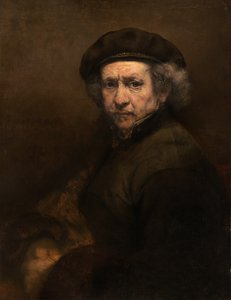
The Gemäldegalerie holds a profound presence through its assembly of European painting. The luminous brushstrokes of Albrecht Dürer meet the dramatic intensity of Rembrandt van Rijn within these halls. One finds the serene beauty of Johannes Vermeer alongside the works of Pieter Bruegel. These Dutch and Flemish masters define much of the visual experience here. The collection also includes the specific works of Canaletto, Jean-Antoine Watteau, Antoine Pesne, and Thomas Gainsborough.
Beyond the canvases, the Kunstgewerbemuseum preserves objects of significant craftsmanship. Among these is the arm of St. Caesarius, a piece that carries the weight of religious devotion and intricate detail. The presence of such artifacts allows for a direct encounter with the material history of the past.
- Head of Christ, about 1648


