A Gothic Masterpiece in the Heart of Ingolstadt
Standing as a profound testament to Bavarian piety and architectural ambition, the Liebfrauenmünster , or Church of Our Lady, is a magnificent example of 15th-century Gothic hall church architecture. Dominating the skyline of Ingolstadt, Germany, its twin towers rise with a commanding presence, reflecting the grandeur envisioned by its patron, Ludwig VII, Duke of Bavaria. The structure itself tells a story of transition and innovation; while it serves as a spiritual anchor for the community, its very silhouette is marked by a unique architectural quirk—the towers are positioned at an oblique angle, a stylistic choice that reveals the bold, experimental spirit of medieval builders.
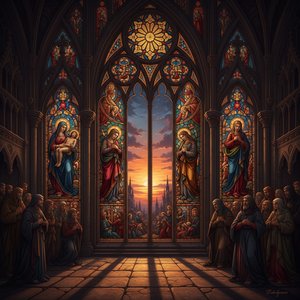
The history of this sacred edifice began in 1425, emerging from an earlier wooden structure to become a monumental stone achievement. As a hall church, it achieves a rare sense of spatial unity, where the nave and aisles reach equal heights to create a soaring, voluminous interior. This design fosters an atmosphere of solemn grandeur, inviting visitors to lose themselves in the rhythmic beauty of its vaulted ceilings and the ethereal light filtered through elaborate stained-glass windows. These windows do more than illuminate; they act as luminous tapestries, depicting biblical narratives that have inspired generations of faithful worshippers.
Artistic Splendor and Sacred Treasures
Beyond its structural brilliance, the Liebfrauenmünster houses profound artistic treasures that capture the intellectual and religious turbulence of the Renaissance. At the very heart of the church lies the High Altar , a breathtaking masterpiece crafted by Hans Mielich in 1560. This work is not merely decorative but deeply narrative, capturing a dramatic confrontation from the Reformation period. The central panel portrays St. Katharina engaged in a spirited theological debate with professors from Ingolstadt’s university—a deliberate and powerful artistic jab at the arguments of Luther, emphasizing the enduring strength of the Catholic faith through the lens of education.
The spiritual journey continues through the church's various layers of ornamentation and its precious Schatzkammer (Treasury). Visitors can encounter:
- Sacred Relics and Liturgical Objects: An extraordinary assemblage of items spanning centuries, showcasing exceptional craftsmanship and providing a window into historical religious practices.
- Intricate Sculptures: Meticulously crafted figures adorning the interior walls, embodying the spiritual ideals of the Gothic period through their detailed artistry.
- The Münsterkrippe: A remarkable nativity scene featuring over 260 individual figures that adds a layer of folk devotion to the church's high-art collection.
- The Klais Organ: A magnificent musical presence within the space, featuring an impressive array of pipes and registers that fills the nave with harmonious chants.
For the art lover and the historian alike, the Liebfrauenmünster offers a rare opportunity to witness a living monument where architecture, sculpture, and painting converge to tell the story of a changing Europe.