
A Legacy Etched in Wood and Stone
To step onto the grounds of Mount Vernon is to transcend the boundaries of time, entering a realm where the echoes of America's founding resonate through every manicured garden and architectural detail. Situated along the tranquil, sweeping banks of the Potomac River in Virginia, this National Historic Landmark is far more than a preserved estate; it is a profound, tangible connection to the life and character of George Washington . The story of this magnificent site begins with the humble acquisition of land in 1674, gradually evolving through decades of meticulous expansion and refinement. As one wanders the estate, the history of a nation unfolds—from the strategic military discussions held within its walls to the quiet moments of a statesman reflecting on the heavy mantle of leadership.
The mansion itself stands as a striking embodiment of Georgian architecture , subtly infused with the graceful proportions of Palladian influence . Constructed primarily from wood, the house exudes a dignified elegance that belies its organic evolution. The hipped roof, punctuated by charming dormers, slopes gracefully toward symmetrical wings connected by colonnades that define the distinctive Mansion Circle courtyard. Above this architectural masterpiece rises an octense octagonal cupola, crowned with a gilded dove that serves as a powerful symbol of peace and hope. What captivates the discerning eye is the house's beautiful irregularity; the slightly off-center main door speaks to a structure that grew alongside Washington’s own ambitions, reflecting a life of continuous growth and adaptation.
The Artistry of an Eighteenth-Century Estate
Beyond the architectural splendor of the main house, the estate offers an immersive journey through the functional beauty of the eighteenth century. The meticulously recreated gardens—including the Kitchen Garden, the Flower Garden, and the Fruit Garden & Orchard—are masterpieces of formal landscape art, reflecting the influence of Capability Brown’s principles of natural beauty balanced with geometric precision. These spaces were not merely ornamental but were vital to the estate's self-sufficiency. The Distillery & Gristmill provide a fascinating glimpse into Washington’s entrepreneurial spirit and his ventures into whiskey production and milling, showcasing a man of immense resourcefulness.
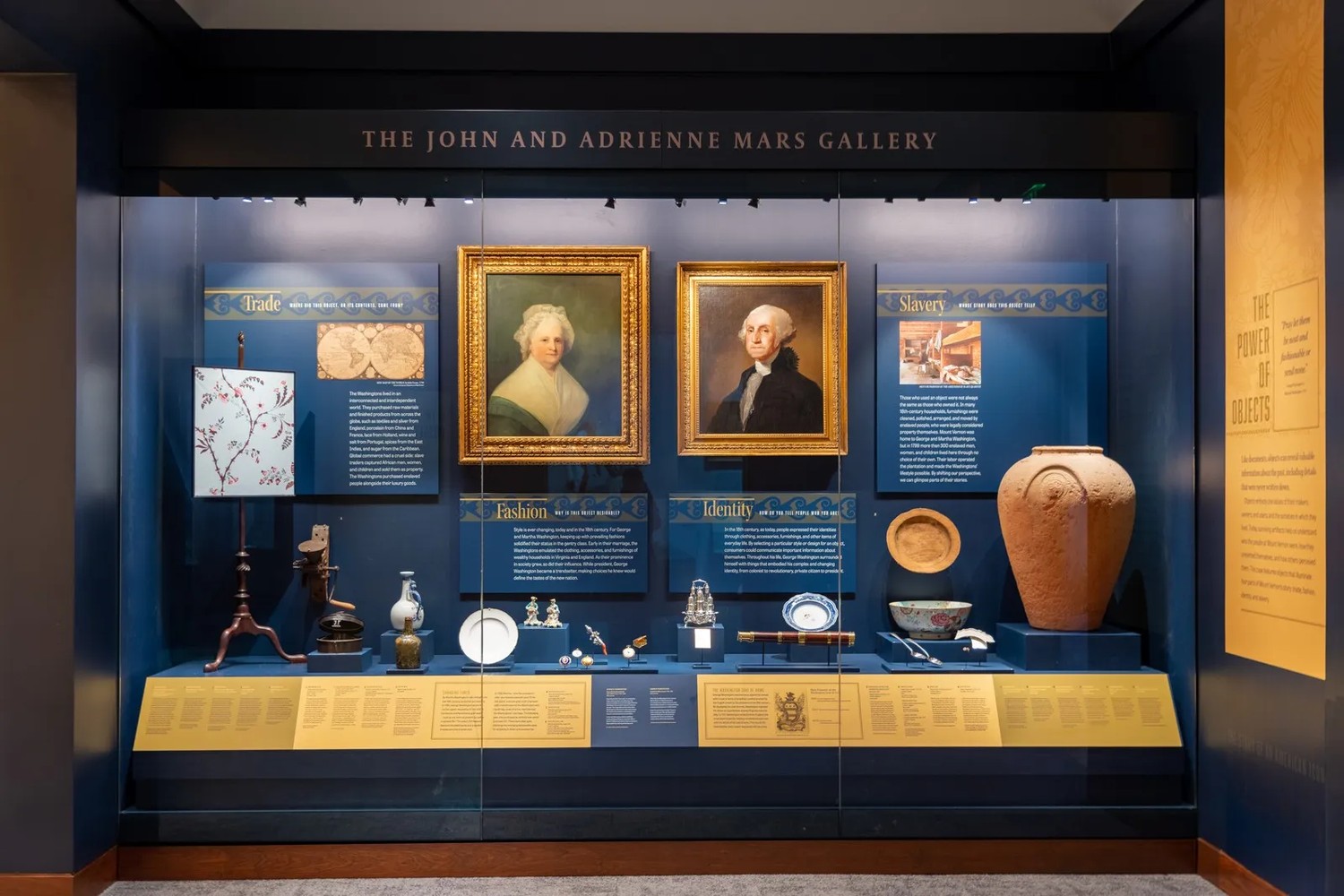
For collectors and historians alike, the collections housed within Mount Vernon offer an unparalleled window into Washington’s personal world. The mansion’s restored rooms feature detailed reproductions of period furnishings, textiles, and artwork that breathe life into the past. Notable highlights include the ability to witness the intersection of art and history through works such as Louis Remy Mignot’s 1859 oil painting , Washington & Lafayette at Mount Vernon , which captures the Neoclassical charm and historical gravity of the era. Yet, the estate also holds a deeper, more poignant history within the Pioneer Farm, where the lives of enslaved people are acknowledged with necessary gravity, providing a sobering look at the ethical complexities inherent in the era's foundation.