

A Sanctuary of Knowledge: Exploring the New York Public Library
Rising majestically on Fifth Avenue, the Stephen A. Schwarzman Building – more commonly known as the New York Public Library – is far more than just a repository for books; it’s a monumental expression of civic pride, architectural grandeur, and an enduring commitment to the pursuit of knowledge. Designed in the opulent Beaux-Arts style by Carrère and Hastings, this iconic landmark embodies the spirit of New York City itself: ambitious, dynamic, and perpetually open to new ideas. Stepping through its imposing entrance, guarded by the steadfast stone lions Patience and Fortitude, is akin to entering a sanctuary—a place where history breathes, stories unfold, and the very air hums with intellectual curiosity.
The story of the NYPL is one of remarkable convergence. Born from the strategic union of the Astor Library, founded by John Jacob Astor’s generous bequest, the Lenox Library fueled by James Lenox's passion for Americana, and the Tilden Foundation established through Samuel J. Tilden’s substantial endowment, it represents a powerful synergy of private philanthropy and public service. Completed in 1911, the Schwarzman Building wasn’t merely constructed; it was meticulously crafted to reflect the ideals of its founders – a testament to the belief that access to knowledge should be freely available to all. The facade itself is a breathtaking tapestry of Vermont marble, intricately sculpted with allegorical figures representing Poetry, Truth, Art, and Science—guardians diligently safeguarding the treasures within.
A Grand Interior: The Heart of the Library
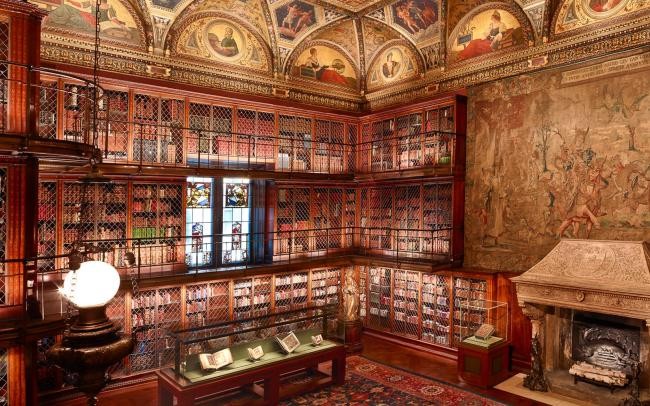
The interior of the Main Reading Room is an experience in itself. Measuring a staggering 78 by 297 feet and soaring to a height of 52 feet, it’s a space designed to inspire awe and facilitate deep study. Sunlight streams through enormous arched windows, illuminating the meticulously crafted murals that adorn the walls – each panel depicting scenes from literature, history, and philosophy. The sheer scale of the room is humbling, yet simultaneously inviting; it's a place where generations have sought inspiration, conducted research, and lost themselves in the pages of countless books. Beyond the Main Reading Room, the library houses an unparalleled collection encompassing rare manuscripts, historical documents, early American newspapers, and artistic masterpieces – a veritable time capsule offering glimpses into pivotal moments in human history.
Treasures Within: Exhibitions and Collections
The New York Public Library’s collections are as diverse and compelling as the city it serves. While its circulating books represent a cornerstone of its offerings, the library also houses an extraordinary array of rare materials, including the Polonsky Treasures gallery, which showcases illuminated manuscripts, ancient maps, and exquisite prints from around the world. Current exhibitions provide intimate encounters with these remarkable objects, inviting visitors to connect with the past on a personal level. From displays featuring the evolution of printing techniques to explorations of literary masterpieces, the library consistently curates engaging exhibits that cater to a wide range of interests. The art and photograph collection is particularly noteworthy, offering a visual chronicle of cultural history through paintings, illustrations, and photographic prints.
A Living Hub: Community Engagement
What truly distinguishes the New York Public Library is its unwavering commitment to being a vibrant community hub. It’s not simply a place for quiet study but also a dynamic center for learning, hosting lectures, workshops, and educational programs that engage people of all ages and backgrounds. The library actively embraces its role as an accessible resource, offering free access to information and fostering lifelong learning. This dedication extends far beyond the walls of the Schwarzman Building, with a network of branches throughout the Bronx, Manhattan, and Staten Island ensuring that knowledge is within reach for all New Yorkers. It stands as a powerful symbol of the enduring importance of knowledge, culture, and community—a beacon illuminating the path towards a brighter future.
Architectural Details & Historical Context
Architectural Style: Beaux-Arts Year Opened: 1911 Notable Features: Patience and Fortitude lions, Main Reading Room, Polonsky Treasures exhibition. The building’s design is a masterful example of the Beaux-Arts style, characterized by its grand scale, symmetrical composition, and elaborate ornamentation. The use of Vermont marble, combined with intricate sculptural details, creates a sense of timeless elegance and civic grandeur. The library's history reflects the progressive ideals of the late 19th and early 20th centuries, embodying the belief that public access to knowledge is essential for a thriving democracy.