

A Renaissance Masterpiece: The Soul of Palazzo Rucellai
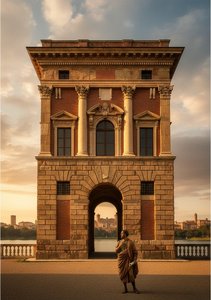
Nestled in the heart of Florence, a city synonymous with artistic brilliance and humanist ideals, stands Palazzo Rucellai , a profound testament to the visionary genius of Leon Battista Alberti. Completed between 1446 and 1451, this palace is far more than a mere structure of stone and mortar; it is an embodiment of Florentine architectural history, representing a pivotal moment when the city transitioned from medieval grandeur toward a new era of modern elegance. To walk past its facade is to witness the very dawn of the Renaissance, where the heavy, fortified styles of previous centuries were abandoned in favor of a revolutionary clarity that would redefine European urban living.
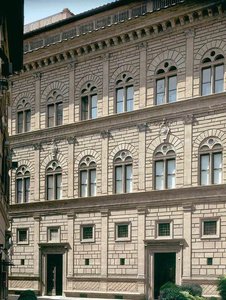
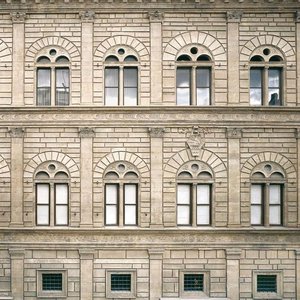
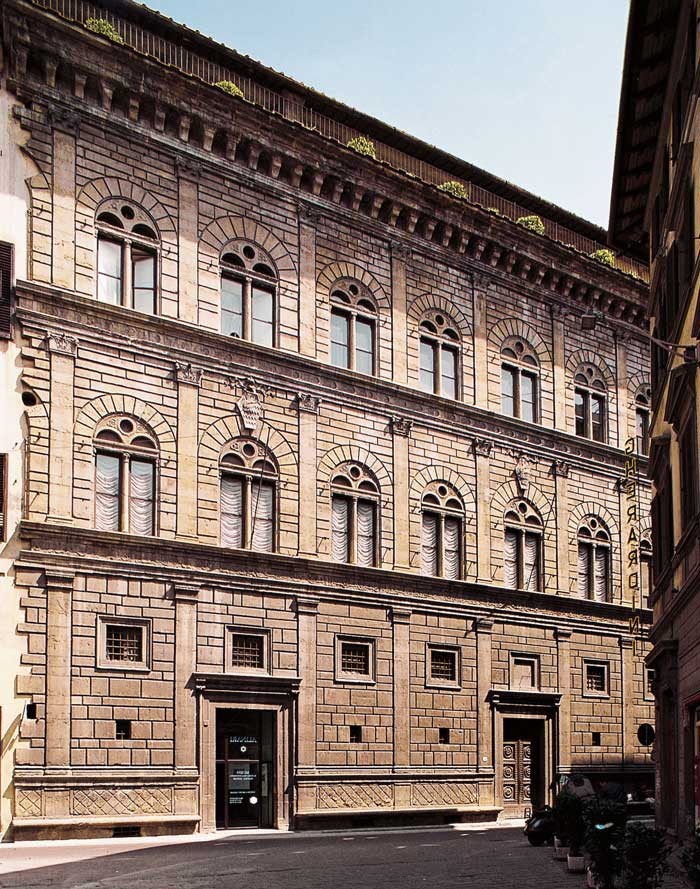
The architecture of the palazzo serves as a masterclass in classical revival and mathematical harmony. Alberti, driven by his humanist belief in reason and observation, meticulously applied the classical orders to create a balanced composition that mirrors the intellectual currents of the fifteenth century. The ground floor presents a sturdy Doric foundation, which gracefully ascends to an Ionic second story, culminating in a sophisticated Corinthian third level. This deliberate use of trabeated articulation —a grid-like scheme of columns and beams—achieved a sense of rational beauty that was entirely unprecedented. For the art lover or the interior designer, the palazzo offers a profound lesson in how proportion and symmetry can evoke a sense of eternal stability and grace.
Legacy of the Florentine Elite
Beyond its structural innovation, Palazzo Rucellai tells a story of family legacy and Florentine prosperity. Commissioned by the influential Rucellai family, specifically through the partnership of Giovanni di Paolo Rucellai’s wool merchant associates, the palazzo was designed to be a prestigious townhouse that reflected the family's immense social standing. It stands as a symbol of an era where wealth and intellect converged, allowing for the patronage of works that celebrated human creativity.
The facade itself is a marvel of Renaissance originality, demonstrating the impact of the antique revival through its use of pilasters and entablatures. The stone veneer is given a channeled rustication that serves as a textured background for the smooth-faced elements, dividing the facade into a series of three-story bays. Within its walls, one can sense the spirit of the early Renaissance—a period defined by a desire to recapture the grandeur of classical antiquity while simultaneously elevating the human intellect through art and architecture. The palace continues to command attention on the vibrant Via della Vigna Nuova, serving as an enduring emblem of Florence's magnificent artistic rebirth.
The interior of this architectural jewel offers further delights for those who appreciate historical depth:
- The Piano Nobile: The second floor serves as the main formal reception floor, embodying the elegance of noble life.
- The Courtyard: An off-center court that reflects a design potentially adapted from Brunelleschi's loggia at his Spedale degli Innocenti.
- Frescoed Ceilings: Exquisitely preserved vaulted ceilings that depict mythological figures and motifs, transporting visitors back to the splendor of the 1740 refurbishment.
- The Street Benches: Long stone benches flanking the main doorways, a typical feature of fifteenth-century buildings that once provided a resting place for passers-by.