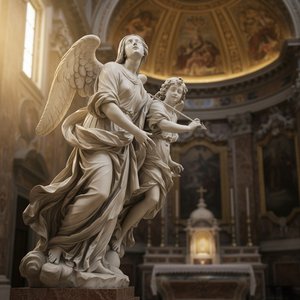

A Sacred Chronicle in Stone
Along the ancient, cypress-lined stretches of the Via Appia Antica, where the echoes of Roman legions once resonated, lies a sanctuary that transcends the mere boundaries of architecture. San Sebastiano fuori le Mura is not simply a basilica; it is a living chronicle of faith, an evocative journey through the layers of Roman history and spiritual transformation. Originally established in the fourth century as the Basilica Apostolorum to honor Saints Peter and Paul, the site underwent a profound metamorphosis around 900 AD when it became dedicated to Saint Sebastian. This transition marked its evolution from a foundational Christian outpost into a vital destination for pilgrims, a role it continues to hold with solemn grace today.
The very bones of the basilica tell a story of resilience and rebirth. For centuries, the structure weathered the turbulent tides of Roman history, enduring devastating Saracen raids that left scars upon its walls, only to be resurrected through the ambitious visions of powerful patrons like Cardinal Scimione Borghese. The architecture we behold today is a magnificent testament to the 17th-century Baroque redesign, a period that infused the space with a sense of theatrical grandeur and light. As one enters through the welcoming portico, the eye is drawn into a spacious nave where the interplay of shadow and illumination creates a celestial atmosphere, inviting the visitor to lose themselves in the quiet majesty of the sacred space.
Masterpieces of Baroque Devotion
Within its hallowed walls, the collection serves a breathtaking gallery of Baroque mastery and religious devotion. The Albani Chapel stands as a jewel of this era, showcasing the exquisite skill of Carlo Maratta, whose work embodies the fervor and elegance of papal patronage. Yet, perhaps no single piece captures the imagination quite like Gian Lorenzo Bernini's Salvator Mundi . Rediscovered in 2001 after decades of being lost to history, this monumental bust is a triumph of sculptural technique; Bernini’s ability to breathe life into marble—capturing the subtle movement of emotion and the tactile reality of flesh—remains unparalleled.
This sense of tangible divinity is further echoed in the Chapel of Relics, where a stone imprinted with the footprints of Jesus serves as a profound, physical connection to the biblical narrative of the “Quo Vadis?” episode. What truly distinguishes San Sebastiano from the many churches of Rome, however, is its subterranean soul. The basilica is inextricably linked to the Catacombs of Saint Sebastian , an ancient labyrinth of underground burial chambers that lie beneath the feet of the faithful. To descend into these cool, silent corridors is to step back into the formative years of Christianity, witnessing the funerary practices and the quiet courage of early martyrs. This connection between the celestial heights of the Baroque basilica and the earthy depths of the catacombs creates a unique spiritual duality that offers an immersive encounter with the enduring power of human devotion.