A Sacred Legacy in the Heart of Milan
In the vibrant tapestry of Milan, the Basilica of Sant'Eustorgio stands as a profound testament to centuries of devotion and architectural evolution. Nestled within the tranquil Basilicas Park, this ancient complex is far more than a mere place of worship; it is a spiritual landmark that has served as a vital sanctuary for pilgrims traveling toward Rome or the Holy Land. The very air within its walls seems to whisper stories of the 4th century, an era when the foundations of this sacred site were first laid. For generations, the basilica has been intimately linked to the legend of the Three Magi , acting as a custodian of their precious relics. It was believed that the great Bishop Eustorgius I brought these holy remains from Constantinople to Milan, establishing the church as a destination of immense spiritual significance and making it known to many as the city of the Three Kings.
The architecture of Sant'Eustorgio is a captivating dialogue between different eras, blending the strength of the Romanesque style with later reconstructions. While much of the current facade reflects a 19th-century vision, the interior reveals a deeper, more complex history. Visitors wandering through the nave and its two aisles can encounter the remnants of an Early Christian building and parts of an ancient apse that speak to the site's deep roots. The structure is characterized by its graceful groin vaults and a sense of enduring permanence, even as it has been rebuilt and transformed through the centuries, most notably under the influence of the Dominican Order from the 13th century onwards.
Artistic Treasures and Devotional Splendor
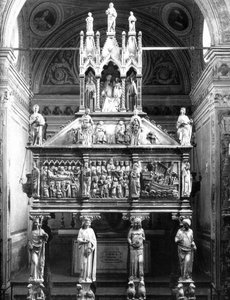
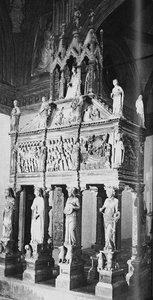
Beyond its structural grandeur, the Basilica of Sant'Eustorgio houses an extraordinary collection of sacred art that captivates the soul of every observer. The side chapels, commissioned by Milan’s most prominent families from the 14th century, serve as intimate galleries of Renaissance and medieval mastery. One can find oneself lost in the quiet beauty of a triptych by Ambrogio Bergognone or marveling at the ancient frescoes that carry the delicate touch of the Giotto school . These works are not merely decorations but are deeply integrated into the liturgical life of the basilica, offering a window into the artistic patronage and religious fervor of Milanese nobility.
The spiritual heart of the complex is found in its altars, where history and divinity converge. The high altar itself is an imposing marble polyptych from the early 15th century, a masterpiece that commands reverence. Nearby, the Three Kings altar holds fragments of bone and garments that were returned to the basilica in the early 20th century, restoring a sense of wholeness to the site's long-lost connection to the Magi. Even the bell tower pays homage to this unique heritage; instead of a traditional cross, it is surmounted by a star, a celestial symbol that remains a permanent reminder of the Three Kings' journey. For the art lover and the historian alike, Sant'Eustorgio offers an unparalleled encounter with the layers of Milanese identity.