
Origins and History of Szépművészeti Múzeum
The establishment of the Szépművészeti Múzeum was formalized by the Millennium Law of 1896. This legislative decision sought to create a dedicated institution for fine arts within Budapest, Hungary. The chosen site for this purpose was the location previously occupied by the Rotunda pavilion, a structure built to display the Feszty-körkép.
Construction of the palace proceeded through the turn of the century. The building was inaugurated in the presence of Franz Joseph I, marking its official entry into the city's cultural landscape. Following its opening, the institution focused on building an international collection, intentionally prioritizing a survey of European art to establish a cosmopolitan perspective from its earliest years.
The museum opened its doors to the public on December 5, 1906. Since that time, the institution has functioned as a repository for diverse collections, ranging from ancient Egyptian artifacts to the works of the Dutch Masters. The museum's development has been shaped by its strategic decision to look outward toward the broader European tradition.
The Grand Neoclassical Palace and Architecture
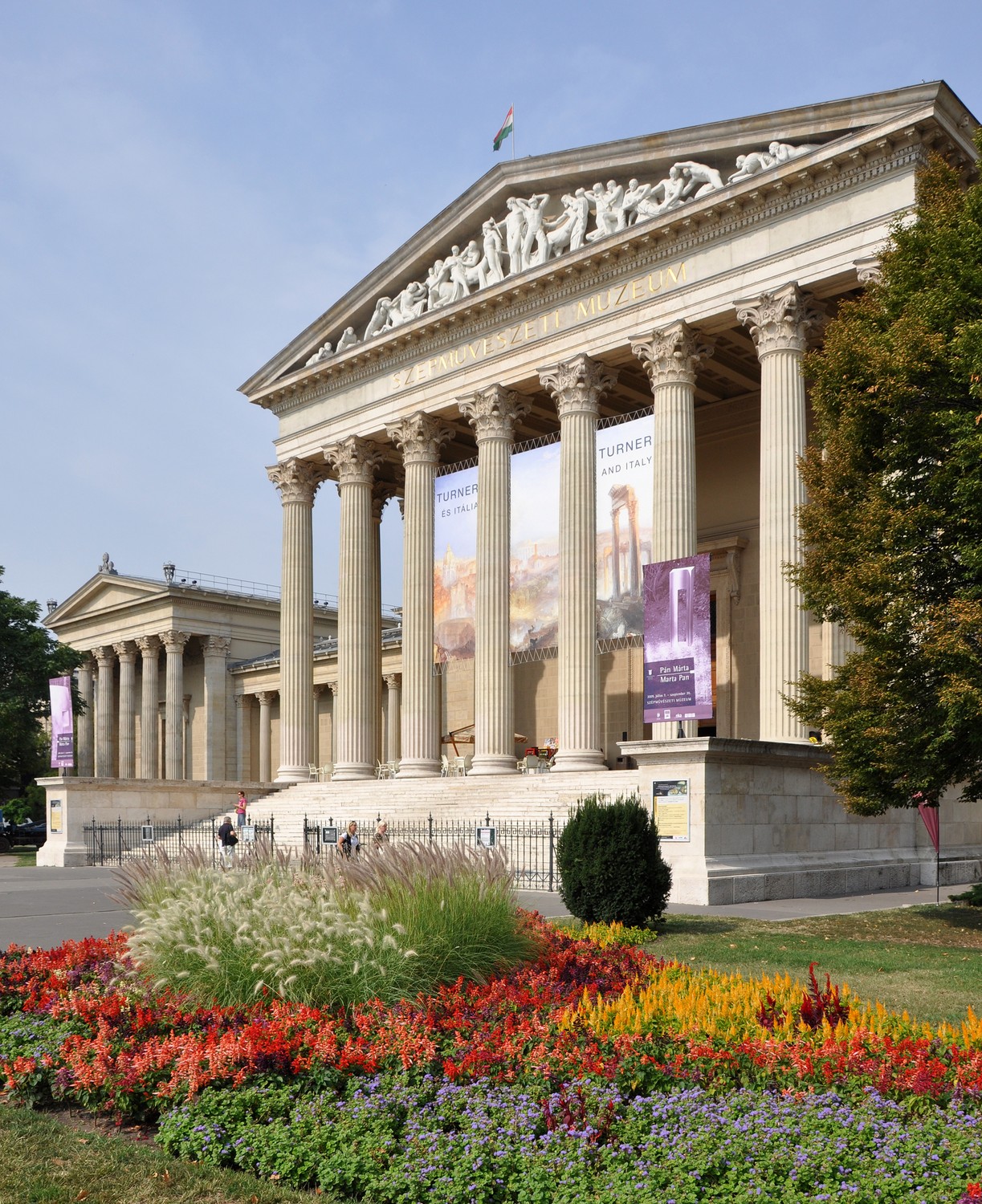
The Szépművészeti Múzeum occupies a prominent position within the monumental Heroes' Square in Budapest. Completed in 1906, the building was the result of designs by architects Albert Schickedanz and Fülöp Herzog. The structure was conceived in a neoclassical and neo-Renaissance style, intended to establish an international presence within the city. As a protected monument of Budapest, the palace maintains its original architectural integrity.
The exterior facade functions as a visual record of art history. Sculpted figures representing various artistic movements are integrated into the stone, creating a permanent exhibition of European styles on the building's skin. This deliberate use of sculpture ensures the architecture communicates its purpose before a visitor even enters the halls. The design emphasizes symmetry and proportion, adhering to the classical ideals favored by its architects.
Inside, the spatial organization follows the grand traditions of European palace architecture. The interior is defined by soaring ceilings and marble floors. The layout includes several distinct halls, such as the Renaissance Hall, which utilizes semicircular arcades and classical columns to evoke the atmosphere of an Italian palazzo. These spaces were designed to provide a formal setting for the permanent collections, moving from the heavy, solemn character of the Roman Hall to the more decorative Baroque spaces.
Ancient Egyptian and Classical Antiquity Collections
The Egyptian Collection is organized as a miniature replica of the halls of Cairo. Visitors encounter monumental sarcophagi and intricate hieroglyphic inscriptions that detail the religious and funerary practices of the Nile Valley. These artifacts are housed within a space designed to reflect the scale of the original Egyptian funerary architecture.
The museum’s antiquity holdings focus on the Greek-Etruscan-Roman cultural triad. This selection provides a view of the foundational elements of Western artistic tradition through a collection of Greek and Roman sculptures. The works represent the evolution of form and classical ideals from these distinct Mediterranean cultures.
Renaissance and Baroque Art Departments
The Renaissance Hall is defined by its architectural dialogue with the past, featuring eighty-five frescoes that once decorated Italian churches. These works provide a sense of the scale and spiritual intent of their original settings. Alongside these wall paintings, the Venetian cauldrons remain a significant presence within the hall, offering a specific material connection to the artistic traditions of the region.
The Baroque Hall presents a selection of works from the 17th and 18th centuries. This department integrates the Old Painting Collection with the Old Sculpture Collection, allowing for a direct comparison between two-dimensional and three-dimensional expressions of the era. The arrangement focuses on the formal qualities and stylistic shifts characteristic of these centuries.
- The Supper at Emmaus, 1542 - Jacopo Tintoretto
- The Disrobing of Christ, 1600 - El Greco
- Apostle St Andrew, 1610 - El Greco
- The Penitent Mary Magdalene, 1577 - El Greco
Masterpieces of the Art Collection
The collection comprises over 100,000 pieces, spanning from antiquity to the modern era. Within the Renaissance and Baroque departments, Raphael’s Esterházy Madonna remains a central work. The museum also holds significant examples of El Greco’s religious intensity, including The Disrobing of Christ and Mary Magdalen in Penitence. These works reflect the specific stylistic shifts that define the institution's holdings.
The transition into later movements is represented by Paul Cézanne’s The Buffet. This painting sits alongside a diverse array of European art, from the Old Masters to the 19th century. The breadth of the collection allows for a direct comparison between the structured compositions of the Renaissance and the evolving perspectives of the modern age.
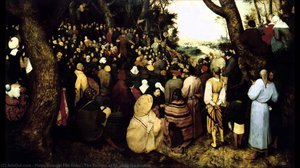
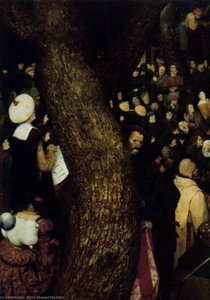
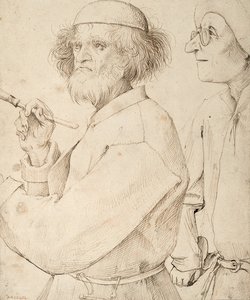
- The Sermon of St. John the Baptist, 1566 - Pieter Bruegel the Elder
- Annunciation, 1595 - El Greco
- Plum Trees in Blossom, 1879 - Claude Monet
- The Parsonage Garden at Nuenen in Winter, 1884 - Vincent Willem Van Gogh
Recent Restoration and Modern Projects
The museum recently underwent its largest renovation as part of the Liget Budapest Project. This extensive undertaking focused on returning the institution to its original curatorial intent while modernizing its infrastructure. A significant outcome of these efforts was the reopening of the Roman Hall to the public. For seventy years, this space had been utilized as a warehouse, hidden from view.
The restoration of the Roman Hall required a dedicated team of 70 restorators. Their work focused on the intricate details of the interior, including the recovery of significant decorative elements. During this process, 5 kilograms of gold were used to restore the hall's surfaces. This meticulous work has returned the space to its intended function within the museum's permanent layout.
Visiting: What to See First
Upon entering the museum, visitors arrive in the grand entrance hall. This space functions as the primary point of orientation, housing both the information desk and the ticket office. From here, the layout directs movement toward the interior galleries.
The Renaissance Hall acts as the heart of the museum. It is a central space that connects the various departments. Nearby, the Roman Hall offers one of the most imposing environments within the building. This hall features a large, 900-square-meter space that evokes the atmosphere of a medieval basilica, characterized by its frescoes and heavy architectural lines.
For those seeking specific works, the following pieces are held within the permanent collections: