

A Sanctuary of Scottish Vision: The Soul of Hill House
Nestled along the tranquil shores of Gare Loch, where the water meets the edge of Helensburgh, lies a profound testament to the power of architectural intent. The National Trust for Scotland’s presence here is not merely about the preservation of stone and mortar, but about safeguarding a living dialogue between humanity and the landscape. To step into this domain is to enter a realm where the boundaries between the interior spirit and the external world begin to dissolve. It is a place defined by the enduring legacy of Charles Rennie Mackintosh , a visionary whose work serves as the heartbeat of this coastal sanctuary. Here, the air seems thick with the weight of artistic innovation, inviting every visitor—from the wandering art lover to the discerning collector—to witness the birth of a modern aesthetic.
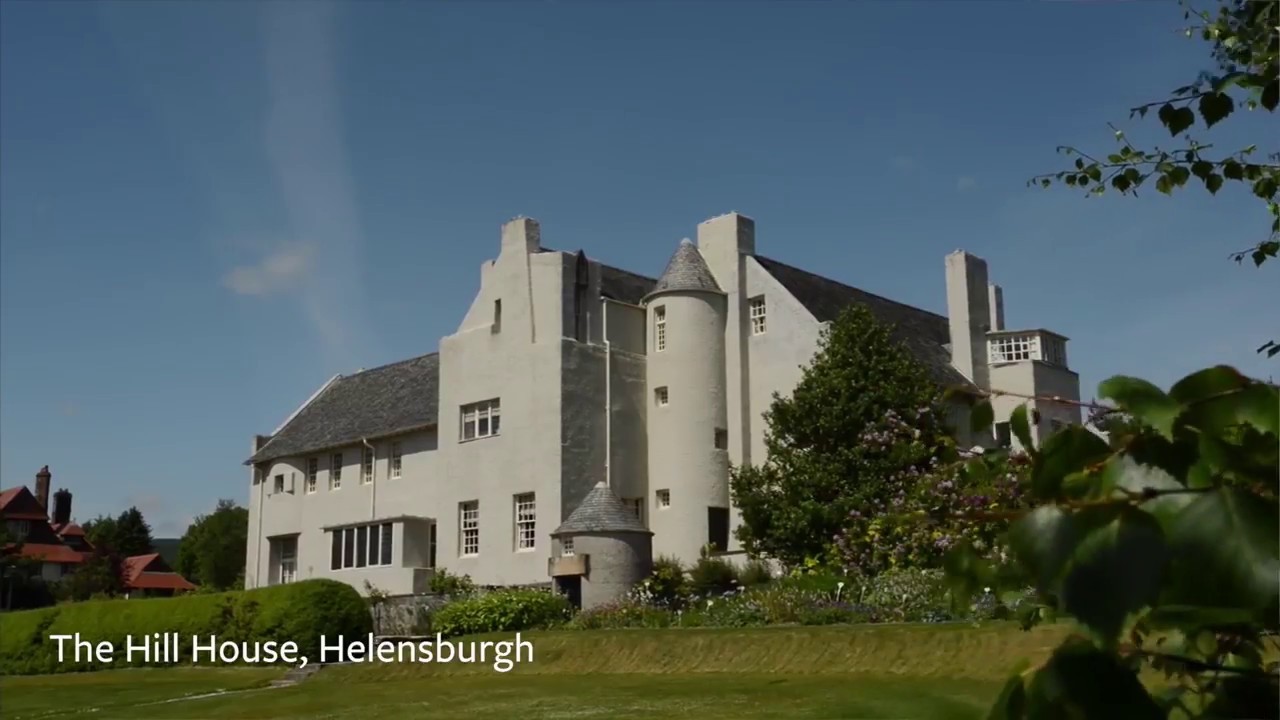
At the very center of this cultural constellation stands Hill House , an architectural marvel that remains one of Mackintosh’s most audacious experiments in spatial design. Constructed between 1907 and 1910, the house was conceived as much as an experience as it was a dwelling. Its undulating walls and meticulously crafted interiors are bathed in a diffused, ethereal light that seems to dance across every surface, highlighting the delicate interplay of shadow and form. The architecture does not merely sit upon the land; it emerges from it. Through a profound respect for nature, Mackintosh harmonized the structure with its environment, creating a seamless transition from the rugged Scottish landscape to the refined elegance of the Glasgow Style.
The Legacy of the Glasgow Style and Artistic Innovation
The essence of this site is deeply rooted in the Glasgow Style , a movement that rejected the excessive ornamentation of the Victorian era in favor of a deliberate, functional beauty. Within these walls, one finds the echoes of Celtic traditions reimagined through an industrial lens—a fusion of ancient soul and modern precision. For the interior designer, Hill House offers an unparalleled masterclass in how geometric forms and muted color palettes can create a sense of profound tranquility and structural rhythm.
The collection and the architecture itself celebrate this duality, showcasing how light, wood, and stone can be orchestrated to tell a story of cultural identity. Recent exhibitions have further enriched this narrative, pulling back the curtain on Mackintosh’s broader creative universe by presenting his intricate furniture designs and breathtaking stained glass windows. These displays often highlight his collaborations with luminaries such as John Singer Sargent , weaving a tapestry of interconnected artistic lives that once flourished in this very region.
A Living Landscape of Preservation
What truly distinguishes this destination is its ability to offer an immersive journey through time. It is not a static repository of relics, but a vibrant landscape where conservation efforts allow the past to breathe alongside the present. As visitors wander through the meticulously landscaped gardens—designed as a deliberate, peaceful counterpoint to the chaos of urban existence—they find themselves part of a continuous cycle of preservation and discovery.
The National Trust for Scotland continues to serve as a beacon of inspiration, reminding us that true art is found where form, function, and the natural world become one. Whether drawn to the allure of Art Nouveau principles or the structural integrity of early 20th-century design, the experience remains an essential pilgrimage for those who seek beauty in the harmony of the built and natural environments.