

The History and Origins of the Vatican Grotto
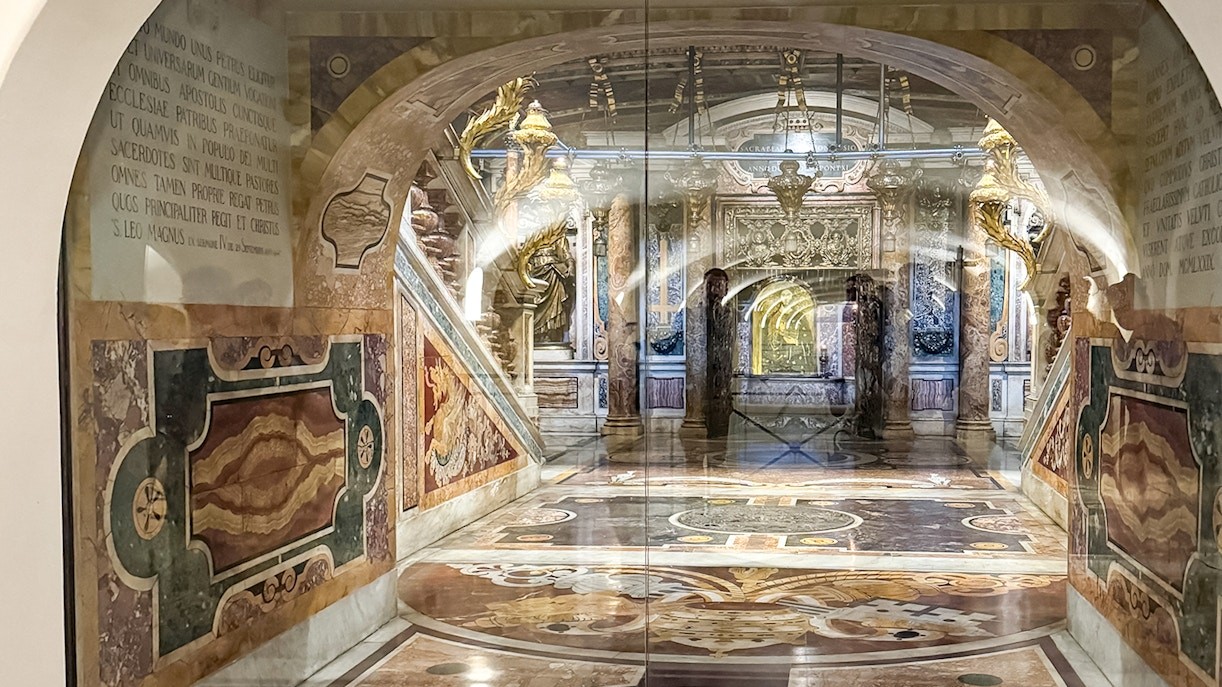
Located on the lower level of Saint Peter’s Basilica, the Vatican Grotto occupies a space shaped by both structural necessity and religious devotion. The origins of this subterranean area trace back to a design variation presented to Pope Leo X by the architect Antonio da Sangallo the Younger after 1520. What began as a response to the architectural requirements of the growing basilica eventually transformed into a complex network of chambers. The system of vaults currently in place was constructed between 1590 and 1591 to provide the necessary support for the Renaissance building floor above.
The evolution of the space continued through significant interventions in the late sixteenth and early seventeenth centuries. In 1592, Pope Clement VIII undertook major expansion and restoration works. During this period, the medieval crypt was renovated and given the name Clementine. This era of development helped establish the layout of the corridors and chapels that define the site today. The presence of these older structures beneath the current floor creates a physical layering of history, where the foundations of the Renaissance basilica rest upon the work of earlier centuries.
Architectural Features and Structural Development
The architecture of the Grottoes is defined by a system of vaults situated three meters below the current floor of the basilica. This subterranean network extends from the high altar to approximately halfway down the aisle. The spatial organization was shaped by successive structural needs, including the construction of vaults between 1590 and 1591 to support the Renaissance floor above. In 1979, a large archway was opened in the central part of the Grottoes, altering the visual connection to the Confessio.
The layout underwent significant expansion through the centuries. Between 1616 and 1617, Pope Paul V added two straight corridors that lead toward the Confessio of Saint Peter. During the reign of Pope Urban VIII, between 1623 and 1644, four small oratories were established at the base of the large pillars that support the dome. These oratories were designed by Gian Lorenzo Bernini, creating a specific rhythm of small, enclosed spaces within the larger subterranean structure.
The Collection of Papal and Royal Tombs
The subterranean space functions as a final resting place for a significant lineage of leadership, containing the tombs of 91 popes. These burials are arranged within a central area that resembles a lower basilica, organized into three distinct naves. The presence of these figures creates a quiet continuity through the stone corridors, where the remains of kings and queens are also interred alongside prominent historical figures. Among these royal burials are the tombs of Queen Christina of Sweden and the Queen of Cyprus.
The layout follows a deliberate progression toward the most sacred site. The area closest to the tomb of Saint Peter is surrounded by a series of chapels dedicated to Our Lady. These spaces form a crown around the Apostle's resting place, marking the spiritual center of the complex. The arrangement of these monuments reflects a long history of burial and remembrance within the walls of the basilica.
Artistic Treasures and Religious Chapels
The walls of this subterranean space hold fragments of the past, featuring frescoes, mosaics, and sculptures salvaged from the older Constantinian basilica. These elements create a visual dialogue between the ancient structure and the later additions. Within the chapels, hagiographic paintings by Giovanni Battista Ricci da Novara provide a focused study of religious narrative. The Chapel of the Salvatorello and the Chapel of the Madonna of Bocciata, both added by Pope Paul V, remain significant points of interest within the network of chambers.
The layout of the Grottoes has expanded through the centuries, incorporating chapels that reflect a global presence. The Irish chapel was established in 1954, followed by the Lithuanian chapel in 1970. The Polish chapel saw additions in 1958 and 1982. More recent devotion is seen in the Patron Saints of Europe chapel, added in 1981, and the Mexican chapel, which was incorporated in 1992.
Masterpieces of the Collection
Within the quietude of these subterranean chambers, the Navicella (mosaic fragment) remains a singular presence. Created about 1305 by Giotto di Bondone, this early Renaissance work offers a concentrated dose of genius. It depicts a turbulent sea and the resolute figure of Christ walking upon the water. The scene captures a profound tension between the movement of the waves and the stillness of the divine.
The fragment radiates with an almost otherworldly serenity despite the chaos of the elements it portrays. To stand before it is to encounter a pivotal moment in the development of Western art. The intricate details of the ripples and the expressions of the onlookers provide a tangible connection to the artistic sensibilities of the 13th century.