
Introduction
The landscape of the young American republic found its soul through a profound shift in perception, as artists began to look beyond the rigid structures of European neoclassicism toward the untamed spirit of the New World. During the 19th century, American romantic painters sought to capture the sublime—the overwhelming power of nature and the intense, often turbulent, emotional response it evokes in the human spirit. This movement was not merely a stylistic choice but a cultural awakening, as painters moved away from calm, ordered compositions to embrace the wildness of the frontier, the dramatic play of light across vast territories, and the deep psychological weight of the individual experience.
These artists acted as visual chroniclers of a nation in flux, translating the awe of the wilderness and the complexities of human character into evocative canvases. By prioritizing feeling and intuition over strict academic rules, they helped define a unique national identity through art. Today, their works remain vital, offering a window into a period of intense discovery and the eternal tension between man and the natural world. The following selection explores ten pivotal figures of this era, from those who documented the vastness of the American wilderness to those who mastered the intimate nuances of portraiture and light.
George Catlin
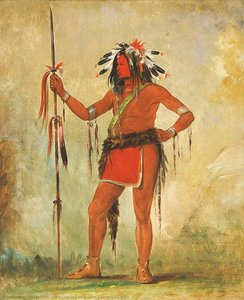
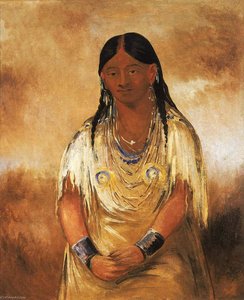
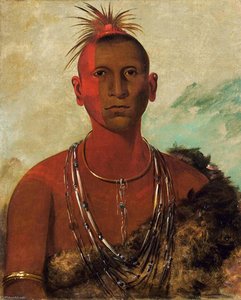
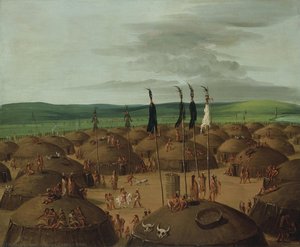
George Catlin (1796–1872) stands as a pivotal figure in American Romanticism, driven by a profound impulse to capture the raw, untamed spirit of the American frontier. Moving beyond his formal legal training in Litchfield, Catlin abandoned a career in law to pursue a visceral connection to the West—a passion deeply rooted in his family history. His work is defined by an urgent, documentary passion, seeking to preserve the dignity and essence of Native American cultures before they were irrevocably transformed by westward expansion.
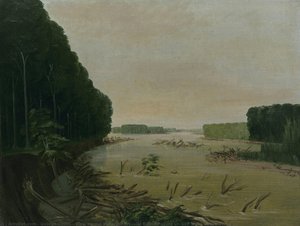
A visitor recognizes Catlin’s hand through his sweeping, evocative landscapes and his meticulous, ethnographic precision in portraiture. His brushwork often balances the grand scale of nature with an intimate, emotional depth, utilizing light and color to convey the sublime power of the wilderness. This is masterfully demonstrated in his 1832 work, View on the Missouri, Alluvial Banks Falling in, 600 Miles above St. Louis. In this piece, he moves beyond mere topography to create a poignant, tranquil elegy, using confident strokes to depict the dramatic interplay of water and land. By prioritizing this subjective, emotional response to the landscape, Catlin perfectly embodies the Romantic ideal of finding the sublime within the wildness of the natural world.
Samuel Finley Breese Morse
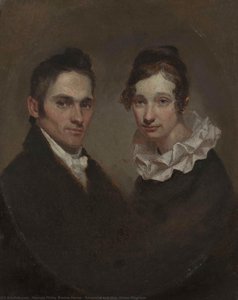 Reverend and Mrs. Hiram Bingham - Samuel Finley Breese Morse
In the quiet, commanding presence of “Reverend and Mrs. Hiram Bingham,” one finds a profound window into the soul of early nineteenth-century American values. This 1819 masterpiece captures the subjects not simply as likenesses, but as embodiments of an era defined by piety and familial devotion. Through a masterful use of expressive brushwork and subtle tonal gradations, Morse achieves a nuanced portrayal that transcends simple representation, inviting the viewer to contemplate the weight of character and the quiet strength of domestic harmony.
Samuel Finley Breese Morse (1791–1872) stands as a pivotal figure among American romantic painters, bridging the gap between rigorous academic tradition and the emotional intensity of the Romantic movement. While widely remembered as the inventor of the telegraph, his artistic journey was deeply shaped by his studies in England under the esteemed Washington Allston. Under Allston’s influence, Morse embraced the Romantic emphasis on dramatic compositions and psychological depth, moving away from rigid idealism toward a style that prioritized emotional resonance. His work often explored historical scenes and portraits that sought to capture the burgeoning national identity of the United States, utilizing a palette that emphasized the dignity and humanity of his subjects.
Washington Allston
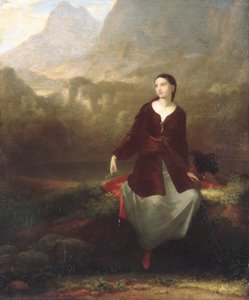 The Spanish Girl in Reverie - Washington Allston
Washington Allston stands as a pivotal figure in the development of American art, embodying the core tenets of the Romanticism movement through his emphasis on emotion, imagination, and the sublime. Born in 1779 on a South Carolina plantation, Allston’s artistic journey took a transformative turn in 1801 when he traveled to Europe. Studying at the Royal Academy Schools under Sir Benjamin West, he became deeply immersed in the traditions of the Old Masters. His time in Italy and France allowed him to absorb the mastery of light and atmospheric color characteristic of the Venetian Renaissance, a technique that would define his unique approach to both landscape and figure painting.
His representative work, The Spanish Girl in Reverie (1831), exemplifies the Romantic preoccupation with internal psychological states and literary themes. Rather than providing a literal portrait, Allston uses the figure to explore a profound sense of yearning and melancholy, inspired by the poem "Sweet Inez." By placing his subject on a rocky precipice and utilizing a luminous, ethereal style, he successfully bridges the gap between the tangible world and the realm of dreams. This ability to capture the feeling of a scene, rather than just its physical form, secures his legacy as a pioneer of American Romanticism.
Titian Peale
 Alfonso d'Este (1486–1534), Duke of Ferrara - Titian Peale
Titian Ramsay Peale II occupied a unique position in the American Romanticism movement, acting as a bridge between the meticulous precision of scientific documentation and the emotional depth of formal art. Born in 1799 into a renowned Philadelphia dynasty of intellectuals and artists, Peale’s life was defined by a restless curiosity that drove him from the controlled environments of museums to the unpredictable, wild terrains of scientific expeditions. This duality is central to his identity as a Romantic painter; he did not merely seek aesthetic beauty but sought to capture the structural reality and the sublime essence of the natural and human world through rigorous observation.
His representative work, Alfonso d'Este (1486–1534), Duke of Ferrara, exemplifies this sophisticated approach. In this portrait, Peale moves beyond simple likeness to evoke a sense of historical grandeur, utilizing a High Renaissance style that echoes the masters of the Venetian school. Through a masterful layering of pigments, he achieves a luminous quality that breathes life into the subject. By blending the disciplined eye of a naturalist with the expressive potential of oil painting, Peale remains a vital figure among American Romanticism painters, capturing the intersection of empirical truth and dramatic, classical elegance.
Chester Harding
 Chester Harding Self-Portrait - Chester Harding
Chester Harding stands as a towering figure of the American frontier, a self-taught visionary whose life mirrored the rugged expansion of the nineteenth-century United States. His journey from a tradesman—working as a turner and sign painter—to a sophisticated portraitist exemplifies the Romantic ideal of the self-made individual driven by passion rather than formal academic tradition. Harding’s work is characterized by a profound psychological depth and a dramatic use of light that bridges the gap between American realism and European sensibility.
In his Chester Harding Self-Portrait, one observes the artist’s mastery of chiaroscuro. The composition utilizes a somber palette of deep browns and blacks to pull the subject from a dark, indistinct background, focusing the viewer's attention on the textured white beard and the weathered lines of the face. This intense interplay of light and shadow creates a sense of three-dimensional volume and emotional gravity, a hallmark of the Romantic movement's focus on individual character and dramatic expression. His ability to capture the essence of a nation in transition through striking, emotive portraiture ensures his place among the significant Romantic painters of the United States.
Alfred Jacob Miller
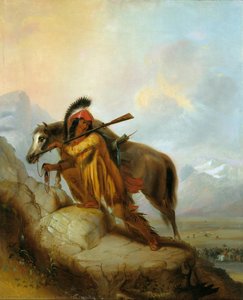 The Scalplock - Alfred Jacob Miller
In his evocative work <The Scalplock, Alfred Jacob Miller captures a profound sense of transition and the raw vitality of the American frontier. This piece exemplifies his ability to blend meticulous observation with the emotional depth characteristic of the Romantic movement. Miller’s position among American Romantic painters stems from his unique ability to elevate the untamed spirit of the West, moving beyond mere documentation to capture the sublime power of nature and the dignity of its inhabitants.
Born in 1810, Miller’s artistic journey was shaped by a rigorous foundation in life drawing at the École des Beaux-Arts in Paris. This technical precision allowed him to serve as a vital visual chronicler during his transformative expeditions into the Rocky Mountains. Accompanying Sir William Drummond Stewart, he immersed himself in the lives of the Sioux, Crow, and Shoshone, translating his sketches into powerful depictions of Native American customs and the vast, wild landscapes of the fur trade era. His palette and composition often reflect a melancholic beauty, immortalizing a vanishing world through a lens of profound respect and dramatic realism.
Henry Inman
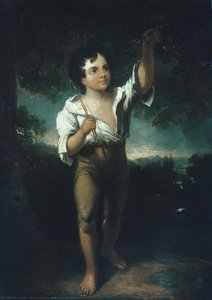 The Young Fisherman - Henry Inman
In The Young Fisherman, Henry Inman captures a serene, pastoral moment that epitomizes the American Romantic movement's fascination with the untamed beauty of the natural world. Painted in 1829, the work depicts a youth amidst a lush, verdant landscape, where the light falls with a soft, natural grace to highlight a gesture of innocent curiosity. This piece showcases Inman's ability to blend genre painting with a sense of burgeoning life, transforming a simple act of fishing into a meditation on the harmony between humanity and the wild.
A pivotal figure in nineteenth-century American art, Inman was born in 1812 in Utica, New York, and later refined his technical precision in New York City under the mentorship of John Wesley Jarvis and John Quidor. His inclusion in the American Romanticism movement stems from his profound ability to prioritize emotional character and the sublime power of nature over rigid academic rules. Whether through his psychological portraits of influential leaders or his evocative documentation of Native American heritage, Inman utilized a meticulous application of light and shadow to reveal the inner dignity of his subjects. His work serves as a vital visual record of a young nation's evolving identity, capturing both the quiet rhythms of daily life and the vast, sweeping landscapes of the American experience."
John Neagle
 Joseph Clay Neal - John Neagle
John Neagle stands as a quintessential figure among American romantic painters due to his ability to infuse formal portraiture with a profound sense of individual character and psychological depth. Moving beyond mere likeness, Neagle’s work embraced the Romantic emphasis on the essence of the human spirit, capturing the vitality of a developing nation through a style defined by dazzling, expressive brushwork. His technical mastery, which evolved from an early apprenticeship in decorative painting to the sophisticated realm of fine art under the influence of Thomas Sully, allowed him to balance formal dignity with an intimate, emotive presence.
In his 1837 work, Joseph Clay Neal, Neagle demonstrates this Romantic sensibility through a masterful interplay of light and shadow. This bust-length portrait presents the subject with a quiet, steady composure, meeting the viewer's gaze with a subtle expression that suggests a complex inner life. By utilizing a sophisticated chiaroscuro effect, Neagle elevates the sitter from a simple social figure to a study of character, embodying the movement's focus on the power of individual personality and the dramatic potential of light.
Jacob Eichholtz
 Mr. Benjamin Schaum - Jacob Eichholtz
Jacob Eichholtz stands as a compelling figure among American Romanticism painters due to his ability to infuse formal portraiture with a profound sense of individual character and psychological presence. While many of his contemporaries focused on rigid, idealized forms, Eichholtz’s self-taught origins—beginning as an apprentice coppersmith in Lancaster, Pennsylvania—granted him a unique, tactile understanding of form and a grounded perspective on the human condition. His work captures the spirit of the early American frontier, moving beyond mere likeness to evoke the inner dignity of his subjects.
In his representative work, Mr. Benjamin Schaum, this Romantic sensibility is expressed through a masterful use of light and shadow. The portrait utilizes a somber, restrained color palette of deep browns and blacks to create a dramatic contrast against the subject's pale features. By employing a profile view within an intimate oval vignette, Eichholtz directs the viewer's focus toward the sitter's contemplative expression. This emphasis on the emotional weight of the individual, rather than just social status, exemplifies the Romantic movement's shift toward prioritizing feeling and the authentic essence of the human experience.
Samuel Colman
 The Hill of the Alhambra, Granada - Samuel Colman
In his 1865 masterpiece, The Hill of the Alhambra, Granada, Samuel Colman captures a panoramic vision of Moorish majesty that epitomizes the Romantic fascination with the sublime. This sweeping landscape does more than document the iconic Spanish palace complex; it evokes a sense of nostalgia and awe, inviting the viewer to experience the intersection of monumental architecture and rugged, untamed nature. Through a masterful use of atmospheric haze and light, Colman transforms the fortress into a silent witness to history, emphasizing the emotional weight of the Andalusian terrain.
As a prominent figure within the American Romanticism movement, Colman expanded the boundaries of the Hudson River School. While his early training under Asher Durand instilled in him a meticulous devotion to the American landscape, his adventurous spirit led him far beyond domestic shores. His extensive travels through Europe, North Africa, and the Middle East allowed him to infuse his work with a global sensibility, blending the meticulous detail of his American roots with an emotive, painterly approach to light and color. Whether depicting the wildflowers of New England or the ancient vistas of Spain, his work remains a testament to the Romantic pursuit of capturing the soul of a place.
Conclusion
The legacy of American Romanticism lies in its ability to capture the untamed spirit of a developing nation, translating the vastness of the wilderness and the intensity of human emotion into visual poetry. From the ethnographic precision of George Catlin to the dramatic landscapes of Washington Allston, these artists moved beyond mere documentation to evoke the sublime power of the natural world. Whether through the intimate portraiture of John Neagle or the sweeping vistas of Samuel Colman, each painter contributed a unique layer to this movement, defining a visual language that prioritized feeling and awe over rigid classical constraints.
For those looking to bring this sense of historical grandeur and emotional depth into their own living spaces, Mus3ums.com offers a way to connect with these masters. Our full collection allows you to explore a wide array of American talent. We specialize in museum-quality, hand-painted oil reproductions that preserve the authentic texture and soul of these original works, allowing you to live with the sublime beauty of American Romanticism every day.


