
The Celestial Hierarchy: Understanding the Symbolism of Angels in Sacred Art
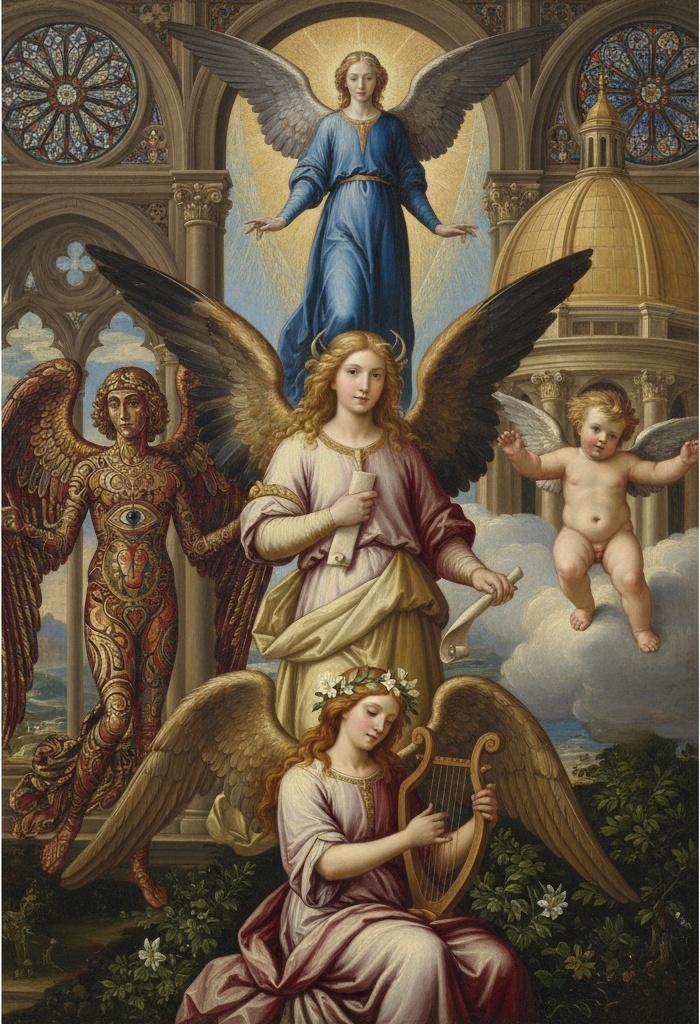
To gaze upon the angelic figures of the Old Masters is to witness a profound attempt by humanity to bridge the chasm between the terrestrial and the divine. Throughout the annals of art history, angels have never been mere decorative flourishes; they are the architects of spiritual narrative, serving as messengers, protectors, and conduits of grace. In the medieval and early Renaissance periods, these beings were often depicted with a rigid, hierarchical precision, reflecting the structured cosmos understood by theologians of the era. Each wing, each halo, and each gesture was imbued with a specific theological weight, designed to instruct the faithful and evoke a sense of awe before the unseen realms.
The symbolism inherent in these figures often transcends simple beauty, touching upon the very essence of the soul's journey. When we observe the intricate details of works such as Simon Marmion’s A Choir of Angels, we see more than just a collection of celestial beings; we encounter a meticulously crafted vision of the heavenly court. The rich colors and detailed artistry serve to ground the ethereal in a tangible reality, allowing the viewer to contemplate the complex layers of divine order. Through the careful use of iconography, artists transformed flat panels into windows through which the light of heaven might momentarily shine upon the mortal world.
Harmonies of Heaven: The Musicality of Angelic Figures from the Renaissance to the Baroque
There exists a profound, almost palpable connection between the concept of divine perfection and the mathematical purity of music. This intersection finds its most exquisite expression in the depiction of musician angels, a motif that flourished during the height of the Renaissance. In these works, the celestial realm is not silent; it is a vibrant, resonant space where the harmony of the spheres is made audible through the visual medium of paint. The presence of lutes, harps, and violins held by angelic hands suggests that the very fabric of the universe is woven from melody.
Consider the breathtaking mastery found in Hans Memling’s 1485 masterpiece, Musician Angels. Here, a portion of a triptych reveals angels immersed in a state of divine musical harmony, set against a vibrant, fiery background that suggests the intense energy of the heavens. The meticulous rendering of each instrument and the serene expressions of the figures invite the observer to participate in a silent symphony. This tradition of musicality serves to elevate the viewer's spirit, using the sensory familiarity of sound to guide the mind toward the contemplation of eternal, incorruptible beauty.
Divine Interventions: The Annunciation and the Presence of Messengers in Masterworks
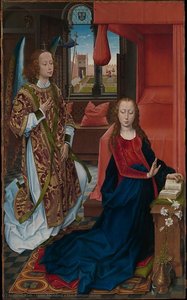
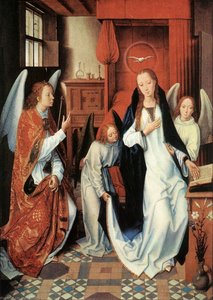
Perhaps no subject in art history captures the tension between the human and the divine as poignantly as the Annunciation. This pivotal moment, where the Archangel Gabriel delivers the message of incarnation to the Virgin Mary, represents the ultimate intersection of heaven and earth. In these compositions, the angel is not merely a visitor but a transformative force, an agent of destiny whose arrival alters the course of human history forever. The stillness of the scene often belies the profound cosmic significance of the encounter.
In the Early Renaissance masterpiece The Annunciation of Mary by Le Perugino, we witness this divine intervention rendered with exquisite grace and symbolic depth. The artist utilizes a delicate balance of light and space to emphasize the sanctity of the moment, where every detail—from the tilt of a head to the placement of a lily—contributes to a narrative of profound reverence. Such works remind us that the angelic presence is often characterized by a quiet, overwhelming power, a subtle intrusion of the infinite into the finite, leaving an indelible mark on the landscape of both art and faith.
Light, Grace, and Form: Technical Mastery in Depicting the Ethereal
The challenge for any master painter attempting to depict the angelic is the paradox of making the invisible visible. How does one capture the weightless, the translucent, and the eternal using only pigment and oil? This required a level of technical virtuosity that pushed the boundaries of the medium. Artists employed sophisticated glazing techniques, layering thin, transparent coats of oil to create a luminous depth that seems to emanates from within the canvas itself. This luminosity is essential to conveying the "aura" or the divine light that surrounds these sacred beings.
The mastery of form and texture plays an equally vital role. The soft, feathered edges of a wing must contrast with the solid, human-like anatomy of the angel's face to suggest a being that is both relatable and otherworldly. Through the careful manipulation of chiaroscuro—the dramatic interplay of light and shadow—painters could sculpt these figures out of the darkness, giving them a three-dimensional presence that commands the viewer's attention. It is through this rigorous application of technique that the ethereal becomes tangible, allowing the grace of the heavens to be felt through the very texture of the paint.
The Evolution of the Divine: From Medieval Iconography to Romantic Transcendence
As art history progressed from the structured iconography of the Middle Ages toward the emotive depths of the Baroque and eventually the sublime reaches of Romanticism, the depiction of angels underwent a profound metamorphosis. The early, more symbolic and static figures gave way to beings of intense movement, passion, and drama. The heavens were no longer just a hierarchical court to be observed with reverence; they became a theater of cosmic struggle and overwhelming emotion, where angels could weep, fight, and soar in turbulent skies.
This evolution reflects a broader shift in the human psyche—a move from a collective, dogmatic understanding of the divine toward a more personal, subjective experience of transcendence. While the medieval angel offered stability and order, the later iterations offered inspiration and awe. Yet, despite these stylistic shifts, the core essence remains unchanged: the angel continues to serve as our most potent symbol for the aspiration of the human spirit to reach beyond its earthly limitations and touch the face of the eternal.
At Mus3ums.com, we celebrate this enduring legacy of human creativity. Our mission is to make these profound moments of art history accessible to all, offering meticulously hand-painted reproductions that preserve the soul, texture, and luminous depth of the Old Masters. Whether through a bespoke oil commission or a curated collection of fine prints, we invite you to bring the majesty of the divine into your own space.