The Life and Art of Ferdinand Victor Léon Roybet
Ferdinand Victor Léon Roybet was a master of the brush whose life unfolded through the vibrant landscapes of France, from his early years in Uzès to his eventual prominence in Paris. Born in 1840, he was the son of a café owner and liqueur manufacturer, a background that saw his family relocate to Lyon in 1846. His artistic journey began with the disciplined study of engraving at the École nationale des beaux-arts de Lyon, laying a foundation of technical precision that would later define his celebrated works. Following the passing of his father in 1863, Roybet moved to Paris with his new wife and infant, seeking to establish himself in the heart of the art world. It was here, under the guidance of Jean-Georges Vibert and through the profound experience of copying the Old Masters at the Louvre, that his distinctive voice began to emerge.
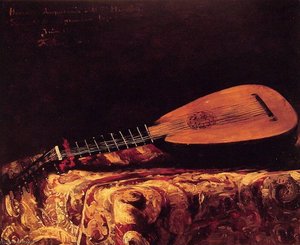
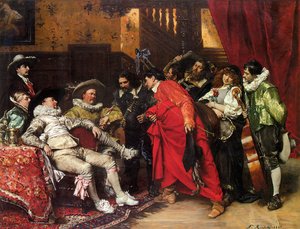
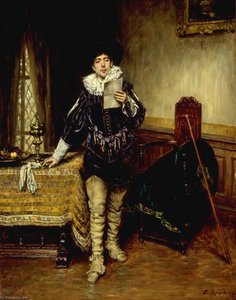
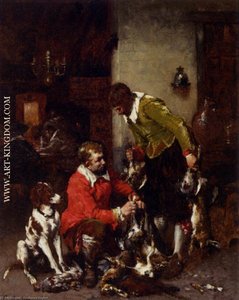
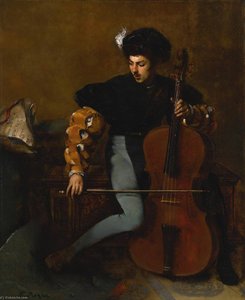
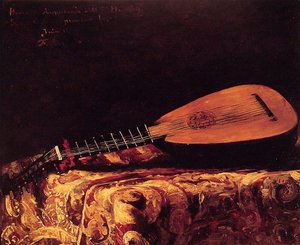
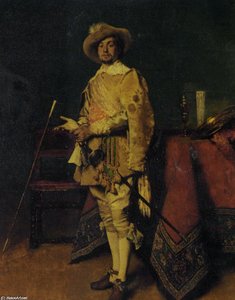
Roybet’s artistic evolution was deeply rooted in a reverence for the past, drawing significant inspiration from the Dutch and Flemish masters of the 17th century. He possessed a particular affinity for the dramatic realism and masterful use of color found in the works of Diego Velázquez. This influence manifested in his ability to breathe life into historical and costume genre scenes, where he captured the exquisite textures of lavish fabrics and the intricate details of 18th-century dress. His talent for portraying costumed figures with an engaging narrative quality allowed him to create worlds that felt both opulent and deeply human, a skill that earned him rapid acclaim among the elite collectors of his era.
A Career of Grandeur and Achievement
The trajectory of Roybet's career was marked by extraordinary successes and high-profile patronage. His ascent began in earnest in 1865 when he presented works at the Salon, followed by a landmark moment in 1866 when Mathilde Bonaparte purchased one of his paintings for 5,000 francs. This success paved the way for a period of immense productivity and financial stability, including a prestigious contract to produce three canvases per month. His reputation reached even greater heights through his connections with some of the most influential figures of the age, such as Cornelius Vanderbilt, who famously purchased a work from him for 100,000 francs at the Palais de l'Industrie in 1893. Other notable clients included Count Robert de Montesquiou and Madame Henriette Poincaré, reflecting his status as a painter of choice for the aristocracy.
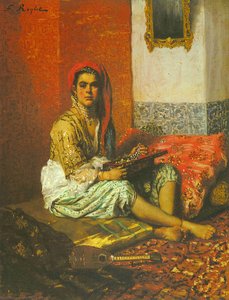
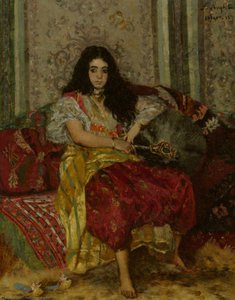
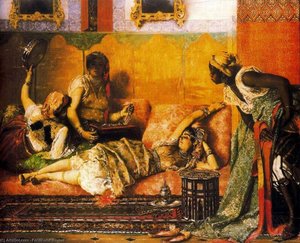
Beyond his genre scenes, Roybet’s artistic range extended into the realms of Orientalism and religious devotion. His travels through Belgium and Algeria enriched his palette and subject matter, contributing to works like The Algerian Beauty. In the later stages of his life, he turned his focus toward profound spiritual themes, producing a monumental tableau of 22 paintings depicting the Passion of Christ. This period of intense religious dedication was showcased at the Salon in 1921, shortly after his passing. His legacy was further cemented by the establishment of the Musée Roybet Fould in Courbevoie, a testament to the enduring impact of his vision and the devotion of those who cherished his art.
Throughout his life, Roybet’s work remained characterized by:
- Technical Mastery: An exceptional ability to manipulate light and color to create depth and atmosphere.
- Historical Detail: A meticulous approach to the depiction of period costumes and textures.
- Narrative Depth: The creation of engaging scenes that invite viewers into a storied past.
- Versatility: A seamless transition between historical genre painting, Orientalist themes, and religious subjects.
Küsimused ja vastused
Mille teiste nimetega on Ferdinand Victor Léon Roybet tuntud?
Ferdinand Victor Léon Roybet tuntub ära ka nime all Ferdinand Roybet, Ferdinand Victor Leon Roybet.