The Soul of New Orleans and a Virtuoso’s Ascent
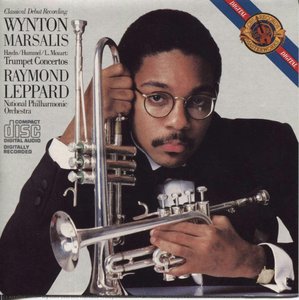
Born in the vibrant, rhythmic heart of New Orleans in 1961, Wynton Marsalis emerged from a lineage deeply rooted in the very essence of American music. His journey began not merely as a student of the trumpet, but as an heir to a rich cultural tapestry where jazz and classical traditions intertwine. From his earliest years, the influence of his surroundings provided a profound foundation, allowing him to develop a technical precision that would later become his hallmark. This early immersion in the sounds of his birthplace instilled in him a deep respect for the historical weight of jazz, a sentiment that would eventually guide his mission to preserve and expand the genre's boundaries.A Master of Dual Realms
What truly distinguishes Marsalis within the pantheon of great musicians is his unprecedented ability to navigate the distinct, often polarized worlds of classical music and jazz improvisation. He achieved a rare feat, mastering the rigorous, disciplined demands of the classical trumpet repertoire while simultaneously breathing life into the spontaneous, soulful language of jazz. This duality is not merely a technical achievement but a profound artistic statement, proving that the precision of the conservatory and the grit of the jazz club are two sides of the same musical coin. His career is marked by this seamless transition, where the structured elegance of a classical composition meets the unpredictable brilliance of a solo improvisation.His extraordinary versatility is reflected in his monumental achievements:
- The historic feat of winning Grammy Awards in both jazz and classical categories within the same year.
- The prestigious Pulitzer Prize for Music, awarded for his profound oratorio, Blood on the Fields.
- A total of nine Grammy Awards that underscore a lifetime of excellence.
Legacy and the Preservation of Jazz
Beyond his individual brilliance as a performer, Marsalis has acted as a vital architect for the future of American music. As the artistic director of jazz at Jazz at Lincoln Center, he has dedicated much of his life to education and the promotion of the art form to new generations. His work transcends simple performance; it is an act of cultural stewardship. Through composition, teaching, and leadership, he ensures that the complex history of jazz remains a living, breathing entity. By bridging the gap between the past and the future, Marsalis has secured his place as one of the most significant musical figures of our time, ensuring that the trumpet's voice continues to resonate with both historical depth and contemporary relevance.Küsimused ja vastused
Millises linnas ja riigis on Wynton Learson Marsalis sündinud?
Wynton Learson Marsalis sündis linnas New Orleans, riigis United States of America.
Millest riigist pärit on Wynton Learson Marsalis?
Wynton Learson Marsalis sündis riigis United States of America.
Mis on Wynton Learson Marsalis sünnipaik ja sünnahöstua?
Wynton Learson Marsalis sündis New Orleans linnas aastal 1961.