The Rediscovered Master of the Flemish Woods
In the grand tapestry of Flemish Baroque art, some names shine with eternal brilliance, while others linger in the shadows, waiting for the light of history to find them once more. Jasper van der Lanen, also known as Jasper van der Laanen or Kasper van der Lanen, is a profound example of such a rediscovery. Born in Antwerp around 1585, his life and artistry were woven into the vibrant, industrious fabric of the Flemish Golden Age. For centuries, much of his legacy remained obscured, with many of his finest contributions mistakenly attributed to more famous contemporaries like Jan Brueghel the Younger. It was not until the mid-20th century that art historians, through the careful study of newly discovered signed works, began to peel back the layers of time, allowing Van der Lanen’s unique hand to emerge from the anonymity of the past.
The early years of Van der Lanen’s career were marked by a formal apprenticeship under the painter Nicolaas Geerts, a period that likely instilled in him the technical discipline required for the meticulous detail seen in his later landscapes. By 1615, he had achieved the prestigious status of master within the Antwerp Guild of St. Luke, a testament to his skill and standing among the city's elite craftsmen. His personal life was equally intertwined with the artistic community; in 1624, he married Elisabeth Rombouts, a union witnessed by his close friend, the landscape painter Abraham Govaerts. This bond between artists suggests a shared creative atmosphere, one where techniques and thematic inspirations were likely exchanged freely over shared canvases and studio discussions.
A Vision of Myth and Nature
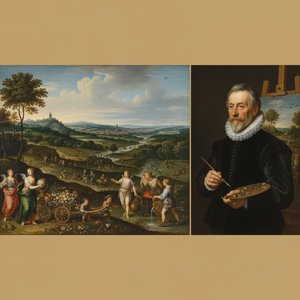
Van der Lanen’s oeuvre is defined by a captivating ability to merge the wild, untamed beauty of nature with the structured narratives of human myth and scripture. He specialized in wooded landscapes, where dense thickets and dappled sunlight create a stage for much more than mere scenery. Within these verdant settings, one might encounter figures from biblical epics or characters from classical mythology, moving through pastoral scenes that feel both timeless and deeply intimate. His brushwork possessed the ability to breathe life into the foliage, creating a sense of depth and atmosphere that draws the viewer into the very heart of the forest.
The artist’s technical prowess is particularly evident in his handling of light and composition. He had a remarkable talent for:
- Atmospheric Depth: Using subtle shifts in tone to create the illusion of receding woodland paths and distant horizons.
- Narrative Integration: Placing mythological figures, such as Diana and her nymphs, within landscapes so seamlessly that the natural world feels like an active participant in the story.
- Textural Detail: Capturing the ruggedness of tree bark, the fluidity of streams, and the delicate movement of riders on a path.
Legacy and Historical Significance
The historical significance of Jasper van der Lanen lies not only in his individual paintings but in what his rediscovery teaches us about the fluidity of art history. His life was one of service to the artistic community; following the untimely death of Abraham Govaerts in 1626, Van der Lanen was among a select group of skilled painters tasked with completing Govaerts' unfinished works. This collaborative spirit highlights the interconnectedness of the Antwerp school, where the preservation of beauty was a collective responsibility. Although his precise date of death remains a subject of scholarly debate—believed to be sometime between 1626 and 1644—his impact on the Flemish landscape tradition is undeniable.
Today, as we look upon his surviving works, we see more than just old master paintings; we see the recovery of a lost voice. The movement of his figures through sun-drenched glades and the quiet drama of his forest scenes continue to evoke an emotional response, reminding us that even when an artist is forgotten by time, the truth of their vision remains etched in the pigment and oil they left behind. His work stands as a bridge between the structured landscapes of the late Renaissance and the more emotive, atmospheric explorations of the Baroque era.
Kysymykset ja vastaukset
Millä muilla nimillä tai nimimerkeillä Jasper van der Lanen tunnetaan?
Jasper van der Lanen tunnetaan myös nimellä Jaspe van der Lamen, Jasper Van Der Laanen, Van Lanen, Vanderlande, Gasper Van Lanen.
Missä kaupungissa ja maassa Jasper van der Lanen on syntynyt?
Jasper van der Lanen on syntynyt Antwerp, Belgium.
Missä ja minä vuonna Jasper van der Lanen on syntynyt?
Jasper van der Lanen syntyi Antwerpssä vuonna 1585.