


A Legacy Etched in Stone: The Andalusian Archives of Seville
Seville, a city that breathes with the echoes of empires and the warmth of Spanish passion, holds within its heart a treasure unlike any other – the Archivo General de Indias. More than just a building filled with documents, it’s a monumental testament to Spain's global ambition, a tangible record of conquest, diplomacy, and the intricate dance between cultures that shaped an entire era. Designated as a UNESCO World Heritage site alongside Seville’s magnificent Cathedral and Alcázar, this archive stands as a powerful symbol of history itself, inviting us on a journey through centuries of exploration and governance.
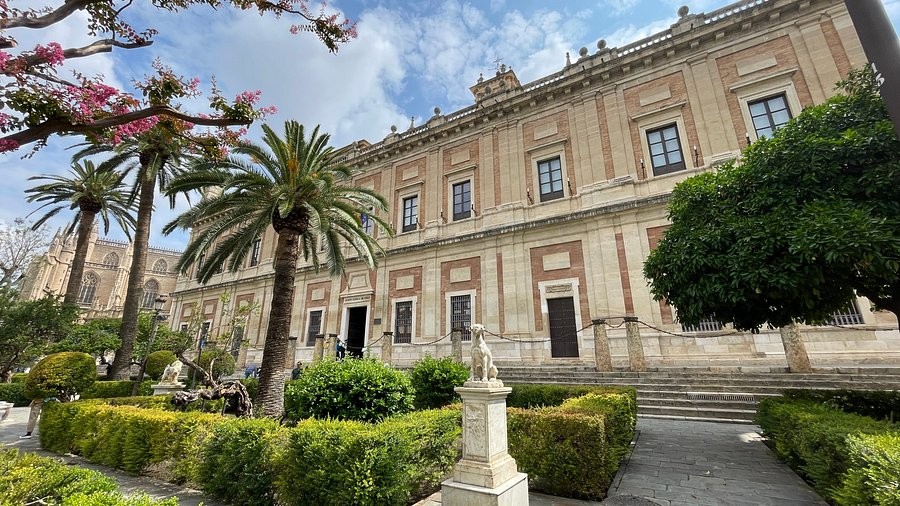
The building's very structure tells a story. Conceived by the masterful architect Juan de Herrera, famed for his work at the Escorial monastery, the Archivo General de Indias is a deliberate statement of royal authority. Its imposing Renaissance design – a square edifice stretching fifty-six meters on each side – exudes an undeniable sense of stability and grace. But beneath the grand façade lies remarkable engineering ingenuity. The architects employed innovative vaulting techniques to manage the immense weight of the roof, a feat of Spanish Enlightenment brilliance that speaks volumes about the skill and ambition of its builders. Stepping inside is akin to entering a sanctuary, where sunlight streams through arched windows, illuminating not just documents but also the very spirit of those who meticulously preserved them.
Established in 1785 by King Charles III, the archive’s origins are rooted in a practical need: to consolidate and safeguard the scattered records of Spain's vast colonial empire. This wasn’t merely an act of organization; it was a strategic move – a declaration of dominion over territories spanning continents. Within its walls reside royal decrees that dictated governance, meticulously crafted maps charting expeditions into uncharted lands, and personal correspondence revealing the delicate nuances of diplomatic relations. The collection is breathtaking in its scope, encompassing not only the grand narratives of empire but also the intimate details of daily life during those turbulent times. Imagine tracing the voyages of Columbus through accounts penned by Luis de Santángel, a fervent supporter who championed the expedition, or encountering manuscripts attributed to Cervantes himself – glimpses into the literary world alongside legal documents shaping colonial law.
However, the true power of the Archivo General de Indias lies in its ability to offer multiple perspectives. While predominantly reflecting the Spanish viewpoint, the archive also holds invaluable records that illuminate the experiences and cultures of indigenous populations. These documents provide a nuanced understanding of the complex interactions between civilizations – insights into social customs, religious beliefs, and artistic expressions. Recent exhibitions have brilliantly explored these themes, showcasing artifacts and interpretations that shed light on pivotal moments in Spanish imperial history, particularly the impact of Baroque art and the dynamics of religious conversion. The archive isn’t simply a static collection; it's a living resource, constantly evolving as scholars and researchers delve deeper into its rich contents.
A Window to the World: Key Collections
The heart of the Archivo General de Indias beats within its vast collection of documents. Among the most prized holdings are detailed accounts of Columbus’ voyages, including a meticulously annotated copy of his almanac – a testament to the influence of Abraham Zacuto, a brilliant astronomer who aided the explorer in calculating latitude. The archive also houses extensive records relating to the Spanish conquest of Mexico and Peru, offering unparalleled insights into the administration of these vast territories. Furthermore, you'll find personal letters, diaries, and legal documents that paint a vivid picture of colonial life – from royal decrees dictating governance to intimate accounts of daily routines.
Notable collections include:
- Columbus’ Documents: The original almanac annotated by Columbus himself is a truly remarkable artifact.
- Cervantes Manuscripts: Rare manuscripts attributed to the renowned Spanish writer, offering glimpses into his literary world.
- Royal Correspondence: Detailed letters and documents revealing the inner workings of the Spanish court and its colonial administration.
- Maps & Charts: A stunning collection of maps charting expeditions into uncharted lands, providing a visual record of Spain’s expanding empire.
Architectural Majesty: The Building Itself
The building that houses the Archivo General de Indias is as impressive as its contents. Designed by Juan de Herrera in the Renaissance style, it stands as a powerful symbol of royal authority and scholarly pursuit. Constructed between 1584 and 1598, the structure’s imposing square shape – stretching fifty-six meters on each side – exudes stability and grandeur. The architects employed innovative vaulting techniques to manage the immense weight of the roof, showcasing remarkable engineering skill.
The building's design is a masterful blend of functionality and aesthetics. It features a central courtyard surrounded by two quadrangular naves, creating a sense of spaciousness and light. The use of stone throughout the structure lends it an air of permanence and solidity. The intricate details – from the arched windows to the monumental staircase – reflect the wealth and power of the Spanish Empire.
Exhibitions & Ongoing Research
The Archivo General de Indias is not a static museum; it’s a dynamic center for historical research and public engagement. Regular exhibitions bring these fascinating documents to life, offering visitors a deeper understanding of Spain's colonial past. These exhibits often explore specific themes – such as the impact of Baroque art or the dynamics of religious conversion – providing fresh perspectives on familiar events.
The archive also actively promotes research by scholars and historians from around the world. Digital access to many documents is increasingly available, allowing researchers to delve into the collection remotely. The Archivo General de Indias continues to evolve as a vital resource for understanding our shared past – a place where history breathes within the walls of one of Europe’s most magnificent palaces.