![Black Circle [1913] State Russian Museum, — Kazimir Malevich](/media/artworks/images-thumb/62/67/6267e452b0c8476772a6511e19ce1616.jpg)
The Genesis of Order: Defining the Constructivist Manifesto
To understand the seismic shift that occurred within the early 20th-century art world, one must look beyond the mere canvas and into the very soul of a revolution. Constructivism was not simply an aesthetic choice; it was a profound ideological departure from the decorative traditions of the past. Emerging from the turbulent atmosphere of the Russian Avant-Goded, this movement sought to strip away the romanticized illusions of representational art, replacing them with a rigorous devotion to structure, logic, and the industrial spirit. For the discerning collector, Constructivism represents a moment where art ceased to be a window into another world and instead became a building block for a new reality.
The movement’s essence lay in its rejection of "art for art's sake." Instead, the Constructivists embraced the concept of construction—the idea that an artist is akin to an engineer, assembling elements to create a functional, impactful whole. This was a period defined by the belief that art should serve the needs of a modern, technological society. By prioritizing the inherent properties of materials and the clarity of geometric relationships, these pioneers laid the groundwork for much of the modern design language we inhabit today. It was an era where the line, the plane, and the circle were no longer mere shapes, but the fundamental vocabulary of a new social order.
Architectural Abstraction: The Interplay of Geometry and Form
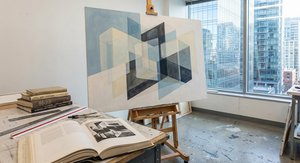
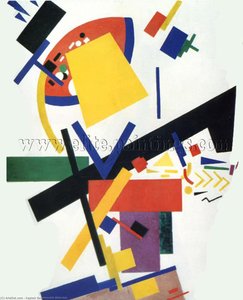
In the realm of Constructivist thought, geometry serves as the ultimate language of truth. There is an undeniable elegance in how a single, sharp diagonal can disrupt a field of color, creating a sense of kinetic energy that feels almost palpable. This architectural approach to abstraction relies on the tension between weight and lightness, stability and motion. When we observe these works, we are not merely looking at shapes; we and witnessing a carefully orchestrated dialogue between mass and void. The use of overlapping planes and intersecting lines creates a depth that is not illusory, but structural, inviting the viewer to navigate the composition as if walking through a three-dimensional space.
This mastery of form allows for a unique psychological impact. A perfectly balanced square provides a sense of profound stillness, while a fragmented, multi-layered arrangement can evoke the frantic pulse of an industrial city. For those who curate spaces with an eye for architectural precision, these works offer a way to introduce intellectual rigor into an interior. The beauty of this abstraction lies in its ability to remain intellectually stimulating through its complexity, yet visually soothing through its mathematical clarity. It is a sophisticated dance of geometry that demands both contemplation and admiration.
Masters of the Movement: From Malevich’s Suprematism to Popova’s Dynamism
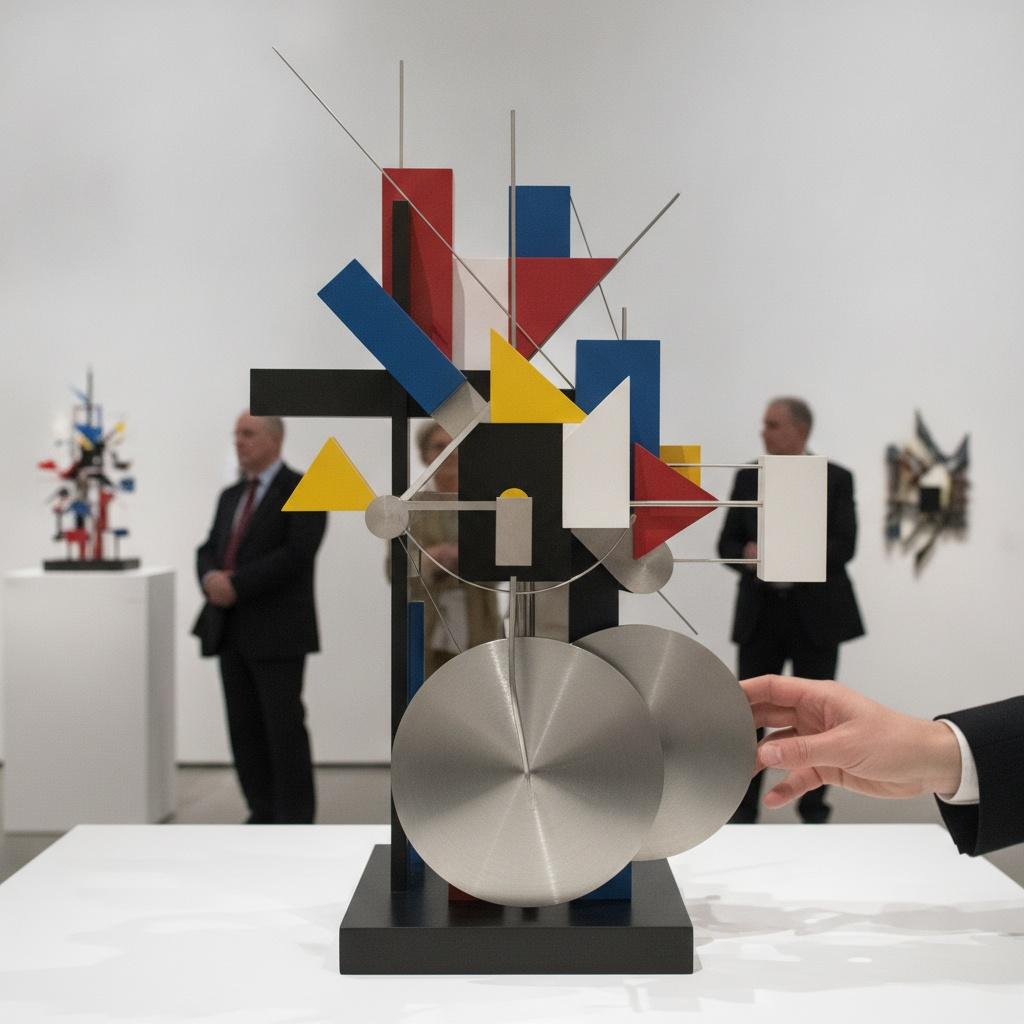
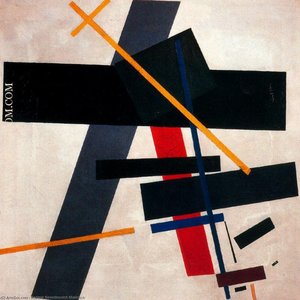
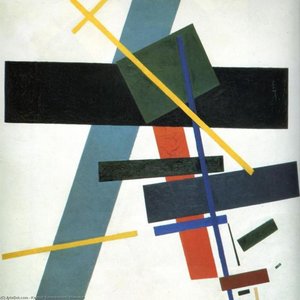
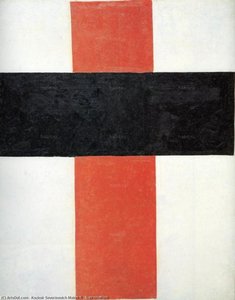
The history of this movement is best told through the hands of its most visionary practitioners, whose individual styles contributed to a collective revolution. While often overlapping with the related school of Suprematism, the distinction lies in the application of pure feeling versus structural utility. Kazimir Malevich, a titan of the era, pushed abstraction to its absolute limit. His works, such as those found in the profound collections of the Krasnodar museum, utilize geometric forms and vibrant colors to evoke a spiritual depth that transcends the physical plane. In his hands, the square becomes a vessel for cosmic significance.
Contrasting this spiritual abstraction is the more tactile, rhythmic energy found in the works of Lyubov Popova. Her Painterly Architectonics serve as a brilliant bridge between Cubist fragmentation and Constructivist structure. In her compositions, we see a dynamic dialogue where vibrant geometric forms collide against neutral backdrops, creating a sense of layered, architectural movement. Similarly, the influence of Wassily Kandinsky, particularly in works like Transverse Line, demonstrates how the introduction of energetic, sweeping lines can explode a composition with color and direction. To collect these influences is to possess pieces of a larger historical narrative—a lineage of artists who dared to redefine the very boundaries of human perception.
The Industrial Aesthetic: Engineering Art for a New Social Reality
Constructivism was inextricably linked to the rise of the machine age. The movement drew its inspiration from the factory, the blueprint, and the steel girder. This fascination with the industrial aesthetic brought a new materiality to fine art. Artists began to look at the texture of metal, the transparency of glass, and the strength of heavy pigments as essential components of their work. There was a deliberate effort to move away from the "preciousness" of traditional oil painting toward something that felt more robust, more permanent, and more integrated with the burgeoning urban landscape.
This engineering mindset transformed the artist's role into that of a designer. The principles of Constructivism bled into typography, poster design, and even textile production, creating a cohesive visual environment for the modern citizen. For the contemporary collector, this historical connection to industry provides a fascinating layer of meaning. These artworks are not just aesthetic objects; they are artifacts of an era that believed technology and art could merge to create a more efficient, beautiful, and equitable world. The ruggedness of the forms reflects the strength of the materials, making each piece a testament to the enduring power of structural integrity.
Constructivism in Modern Interiors: Curating Geometric Sophistication
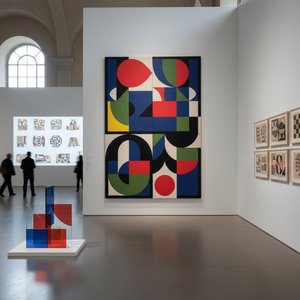
Integrating Constructivist-inspired art into a modern collection requires an appreciation for balance and spatial awareness. Because these works are characterized by bold lines and high-contrast geometries, they act as powerful focal points within a room. In a minimalist setting, a single, large-scale abstract piece can provide the necessary "anchor," preventing a space from feeling sterile. Conversely, in more complex architectural environments, a series of multi-panel or "group set" paintings can guide the eye through a hallway or across a wide wall, creating a rhythmic flow that mimics the movement of the art itself.
When curating such a collection, one must consider the interplay between the artwork and the surrounding textures. The sharp edges of a geometric print or oil painting pair exquisitely with the smooth surfaces of modern glass, polished stone, or matte metals. For those seeking to bring this historical energy into their homes, we recommend exploring the depth of hand-painted reproductions. Unlike flat prints, a hand-painted canvas offers visible brushstrokes and an impasto texture that captures the light, providing a tactile dimension that honors the original spirit of the movement. Whether through a single masterpiece or a curated series, Constructivism allows a collector to infuse their space with a sense of timeless, intellectual, and architectural sophistication.
At Mus3ums.com, we are dedicated to making these profound moments in art history accessible to the global community. From meticulously hand-painted oil reproductions that capture every nuance of the masters to custom commissions that allow you to reimagine your own memories through a Cubist or Constructivist lens, our mission is to preserve human creativity for the modern collector. Whether you are seeking an expert consultation to place a new piece in your home or looking for a professional appraisal of an inherited treasure, our team of academy-trained artists and art historians is here to guide your journey into the heart of fine art.