The Dutch Golden Age: A Crucible of Light and Prosperity
 Dutch Baroque Masters: 10 Paintings That Shaped an Era | Mus3ums
Introduction To gaze upon the masterpieces of the Dutch Baroque is to step into a world illuminated by both unprecedented wealth and profound introspection. This was an era—the 17th century—where the Netherlands, newly independent and flourishing thr...
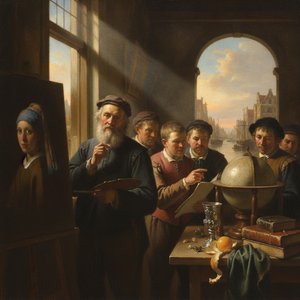
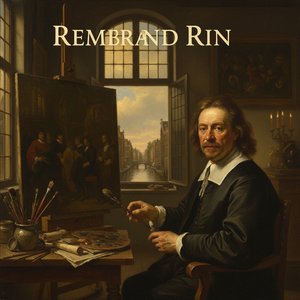
To understand the brilliance of Rembrandt van Rijn, one must first understand the world that breathed life into his brush. The seventeenth century in the Netherlands was not merely a period of time; it was a cultural earthquake, a moment when a young republic, having shaken off Spanish rule, emerged as a global titan of commerce and intellect. This was the Dutch Golden Age, an era defined by unprecedented prosperity fueled by maritime trade and a burgeoning middle class. Unlike the rest of Europe, where art often served the grand, sweeping narratives of the Catholic Church or the absolute authority of monarchs, the Dutch landscape was shaped by a new, democratic spirit of patronage.
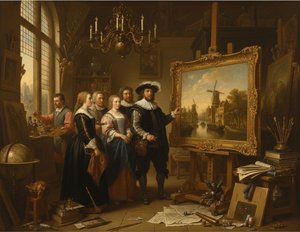
In this vibrant atmosphere, art turned its gaze inward. The wealth flowing through the canals of Amsterdam and Leiden did not just build grand houses; it built an appetite for the tangible, the domestic, and the profoundly human. This period saw a shift from idealized mythological grandeur toward the beauty found in everyday life—the quiet dignity of a merchant, the symbolic abundance of a still life, and the rugged honesty of a landscape. It was within this crucible of scientific discovery and economic flourishing that Rembrandt was born, inheriting a world where light was not just a physical phenomenon to be studied, but a metaphor for the very soul of a nation.
Defining Chiaroscuro: The Art of Contrast and Volume
 Chiaroscuro
In art, chiaroscuro (English: kee-AR-ə-SKOOR-oh, -SKURE-, Italian: [ˌkjaroˈskuːro]; lit. 'light-dark') is the use of strong contrasts between light and dark, usually bold contrasts affecting a whole composition. It is also a technical term used by a...
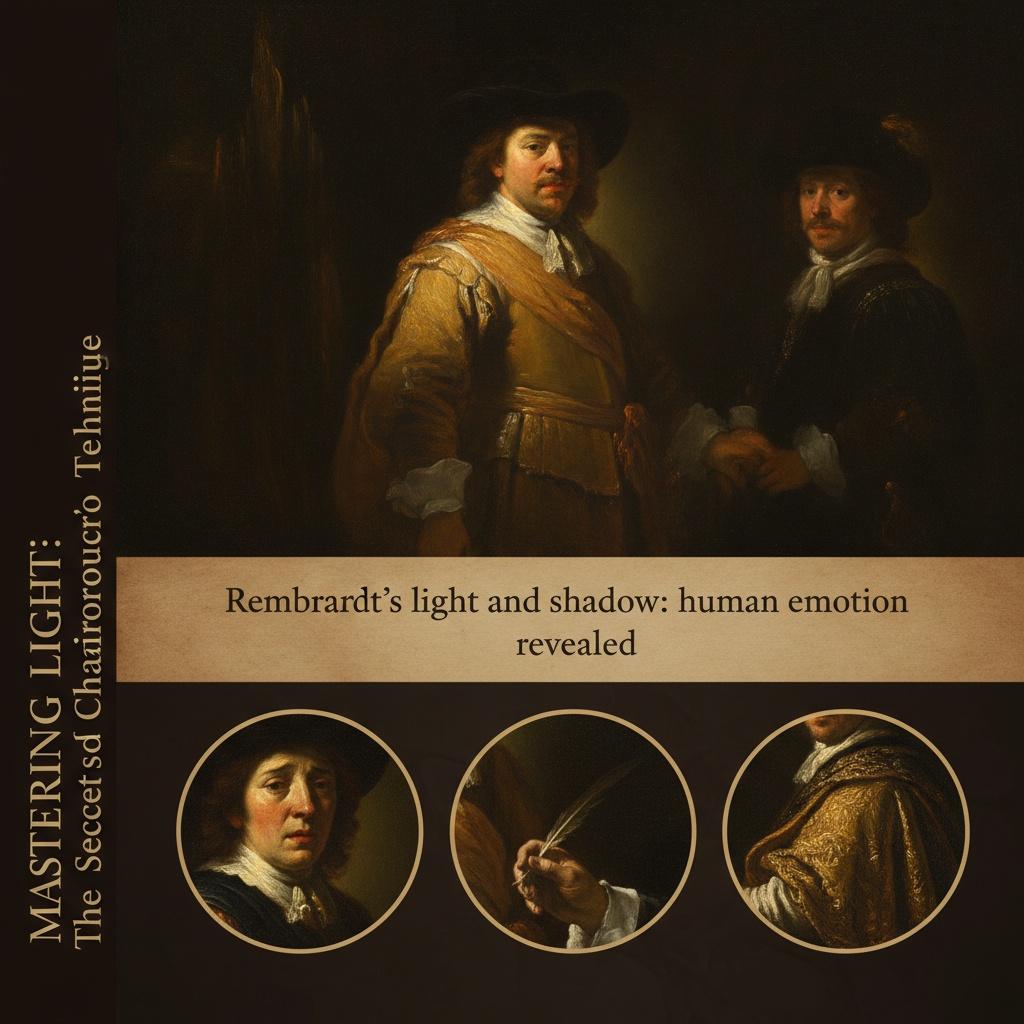
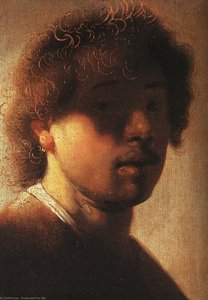
At the heart of this era’s aesthetic revolution lies a technical term that has become synonymous with dramatic intensity: chiaroscuro. Derived from the Italian words for "light" and "dark," chiaroscuro refers to the deliberate use of strong contrasts between illumination and shadow to achieve a sense of three-dimensional volume. While the technique had its roots in the Renaissance, it reached a fever pitch during the Baroque period. It is a method that refuses to let the eye wander aimlessly; instead, it directs the viewer’s gaze with surgical precision, using pools of light to anchor the composition.
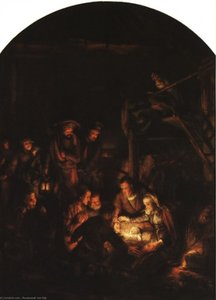
When we observe the mechanics of chiaroscuro, we see more than just a trick of lighting. We witness the artist modeling form through the interplay of luminance and obscurity. By plunging large portions of the canvas into deep, velvety shadows, the artist creates a stage upon which the illuminated subjects appear to emerge from the darkness, possessing a tactile, sculptural presence. In its most extreme form, known as tenebrism, the shadows become so dominant that they swallow the background entirely, leaving only the essential, brightly lit figures to tell their story. This technique transforms a flat surface into a visceral, breathing space, where light acts as the primary architect of reality.
The Narrative Power of Shadow: Rembrandt’s Emotional Depth
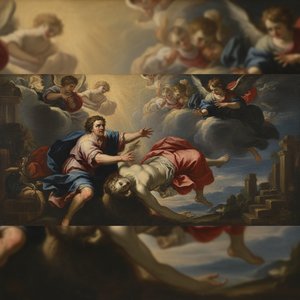 The Visceral Stage: Exploring Dramatic Narratives & Emotional Intensity in Baroque Art
The Baroque Embrace of Emotion: A Shift from Renaissance Rationality Wikipedia: Baroque painting Baroque painting is the painting associated with the Baroque cultural movement. The movement is often identified with Absolutism, the Counter Reformation...
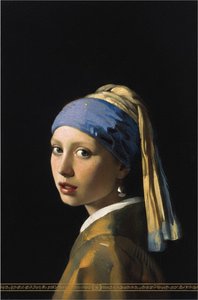
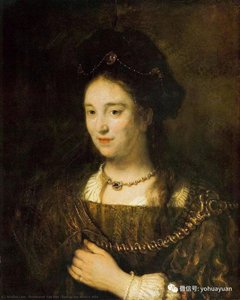
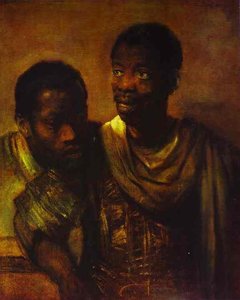
While many masters utilized contrast, Rembrandt van Rijn elevated chiaroscuro from a technical achievement to a profound narrative device. For Rembrandt, shadow was never merely an absence of light; it was a reservoir of mystery, emotion, and psychological truth. He understood that what remains unseen is often as vital to the story as what is revealed. In his hands, the darkness became a space for contemplation, allowing the viewer to feel the weight of a character's grief, the flicker of doubt in an eye, or the quiet dignity of a moment of prayer.
His mastery lay in his ability to use light to focus attention on key emotional crescendos. He did not simply illuminate faces; he sculpted them with light to reveal the textures of experience—the wrinkles of age, the sheen of perspiration, and the vulnerability of the human spirit. Through this dramatic interplay, Rembrandt’s works became windows into the human condition. He moved beyond the mere depiction of likenesses to capture the inner life of his subjects. Whether painting a biblical scene or a contemporary portrait, he used the encroaching shadows to suggest the complexities of faith, mortality, and the search for meaning in an uncertain world.
From Leiden to Amsterdam: The Evolution of a Master's Technique
A Life Illuminated: The World of Rembrandt van Rijn Rembrandt Harmenszoon van Rijn, a name synonymous with the Dutch Golden Age and a master of light and shadow, was born in Leiden, Netherlands, on July 15, 1606. He wasn’t simply a painter; he was a ...
The journey of Rembrandt’s artistry was one of continuous refinement and geographic expansion. Born in Leiden in 1606, his early training under masters like Jacob van Swanenburg and the influential Pieter Lastman provided him with a foundation in dramatic historical composition. His time in Amsterdam, beginning in the late 1620s, proved to be the pivotal catalyst for his mature style. The bustling, cosmopolitan energy of Amsterdam offered a wealth of commissions from a class of people eager to see themselves reflected in art—not as idealized icons, but as real, complex individuals.
As he moved from the academic rigors of his youth toward the experimental freedom of his maturity, Rembrandt’s brushwork became increasingly bold and textured. He began to embrace the impasto technique, applying thick layers of paint that caught the light physically on the canvas, adding a tactile dimension to his work. This evolution mirrored his personal growth; as he moved from a rising star in Leiden to an established master in Amsterdam, his art transitioned from meticulous detail toward a more atmospheric, emotive, of which his later self-portraits remain the most hauntingly beautiful testament.
The Legacy of the Brush: How Rembrandt Redefined Portraiture
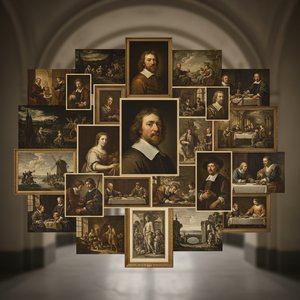 Rembrandt's Masterpieces: Explore 25 Iconic Paintings & Prints | Mus3ums
Introduction To gaze upon Rembrandt van Rijn’s canvases is to encounter not merely paintings, but windows into the very soul of humanity. This collection—a curated selection of twenty-five masterpieces—represents the breadth and depth of an artist wh...
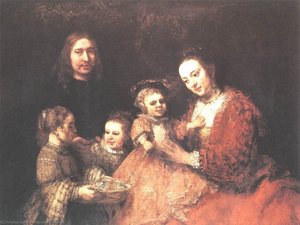
Rembrandt’s impact on the genre of portraiture cannot be overstated. Before him, portraiture often functioned as a tool for social signaling—a way to display wealth, status, and lineage through stiff, formal arrangements. Rembrandt shattered this convention. He introduced a level of psychological intimacy that had never before been seen in Western art. His portraits do not just present a face; they present a biography. Through the subtle manipulation of light across a cheekbone or the soft glow within an eye, he captured the very essence of character.
This revolutionary approach allowed him to bridge the gap between the individual and the universal. A portrait of a wealthy Amsterdam merchant could simultaneously serve as a study of human mortality. His ability to portray vulnerability alongside strength set a new standard for all who followed. Even today, his influence persists in everything from classical oil painting to the low-key lighting of modern cinema. He taught us that the most profound truths are often found not in the bright light of certainty, but in the soft, flickering shadows of the human experience.
Preserving the Masterpiece: Bringing Rembrandt into the Modern Home
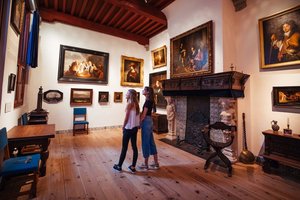 Museum het Rembrandthuis
A Window into the Soul of a Master: Exploring Museum Het Rembrandthuis Amsterdam’s Jodenbreestraat holds a secret—a tangible connection to one of history's most profound artistic voices. Museum Het Rembrandthhuis isn’t merely a repository for paintin...
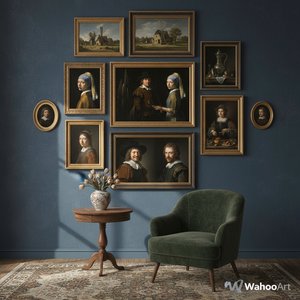
The enduring power of Rembrandt’s work lies in its ability to resonate across centuries. His paintings are not mere historical artifacts; they are living dialogues with the present. For the modern collector and art enthusiast, owning a piece that evokes this era is an opportunity to invite that same sense of depth, drama, and introspection into one's own environment. The heavy textures, the rich tonal ranges, and the emotional gravity of the Dutch Baroque offer a profound counterpoint to the often-fleeting nature of contemporary digital imagery.
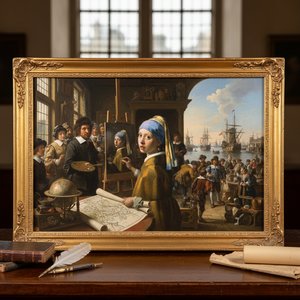
At Mus3ums.com, we believe that the majesty of the Old Masters should be accessible to all who cherish them. We specialize in creating museum-quality, hand-painted oil reproductions that honor the technical brilliance of artists like Rembrandt. Our master artists use traditional methods—painting by hand on 100% cotton canvas with visible brushstrokes and deep tonal layers—to ensure that each piece captures the true soul of the original. Whether you seek a grand multi-panel composition for a modern space or a custom "period shift" to transform a personal memory into a 17 of the Golden Age, our mission is to preserve human creativity for generations to come.