Introduction
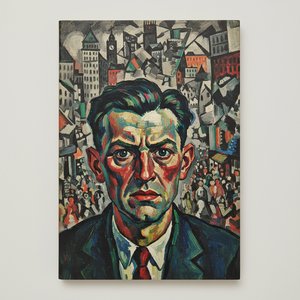
To step into the world of Ernst Ludwig Kirchner is to step into a whirlwind of raw emotion, where the quiet stability of the past dissolves into the jagged, vibrant energy of the modern age. There is a certain restlessness in his brushstrokes, a rhythmic tension that pulls at the soul, much like the pulsing streets of Berlin or the sun-drenched, yet psychologically complex, landscapes of the Moritzburg Lakes. As we wander through this curated selection of his most profound works, we are not merely looking at paint on canvas; we are witnessing a life lived at the edge of an artistic revolution.
Born in the heart of Germany during a period of profound transformation, Kirchner became a leading light of Die Brücke —The Bridge. This group of rebels sought to span the distance between traditional academic beauty and the visceral, unvarnished truth of human experience. Influenced by the primal strength of African art and the emotive color palettes of Van Gogh, Kirchner’s work captures the very essence of German Expressionism. His canvases vibrate with a unique language of sharp angles, clashing colors, and a sense of movement that reflects both the exhilarating speed of urban life and the deep-seated anxieties of a world on the brink of monumental change.
These twenty-five masterpieces remain deeply resonant today because they speak to the universal complexities of the human condition. In his depictions of crowded city boulevards, we find echoes of our own modern alienation; in his intimate portraits and vibrant landscapes, we encounter a profound search for connection and authenticity. Kirchner’s ability to translate internal psychological states into external visual rhythms continues to captivate collectors and dreamers alike.
As you prepare to journey through this collection, allow yourself to be moved by the intensity of his vision. From the electric tension of his street scenes to the soulful depth of his figures, each work serves as a window into a spirit that refused to be silenced. Let us begin our exploration of these twenty-five essential pillars of Expressionist mastery.
The Judgement of Paris - Ernst Ludwig Kirchner
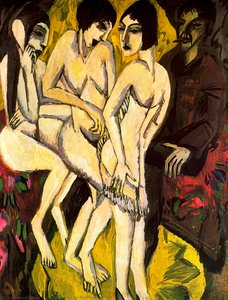
In The Judgement of Paris , Ernst Ludwig Kirchner captures a moment of raw, pulsating intimacy that vibrates with the restless energy of German Expressionism. As you gaze upon the intertwined nude figures, you are not merely observing a scene; you are drawn into a visceral embrace of warm ochres, fiery reds, and deep, shadowy blacks. The composition, heavy with thick, impasto brushstrokes, creates a tactile landscape where flesh and emotion merge into one.
This masterpiece stands as a cornerstone in our collection of the top 25 artworks of Ernst Ludwig Kirchner because it serves as a profound mirror to the human condition—exploring the delicate tension between desire and vulnerability. The angular lines and distorted perspectives evoke a sense of beautiful unrest, inviting a deep psychological connection. Bringing this powerful emotional resonance into your home can transform a quiet corner into a sanctuary for reflection, where the dramatic interplay of light and shadow inspires a sense of profound, soulful presence.
Self Portrait with Cat - Ernst Ludwig Kirchner
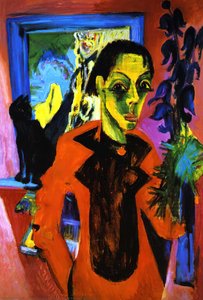 Self Portrait with Cat - Ernst Ludwig Kirchner
In Self Portrait with Cat , Ernst Ludwig Kirchner invites us into a moment of profound psychological intimacy, where his piercing, intense gaze confronts the viewer with an unshielded vulnerability. Painted in 1919 amidst his retreat to Switzerland, this work is a hauntingly beautiful distillation of an artist seeking solace after the tremors of war. The canvas vibrates with a restless energy, characterized by thick impasto brushstrokes and a striking palette: the bold, commanding red of his jacket clashes with sun-drenched yellow curtains and deep, melancholic blues.
The presence of the black cat on the windowsill serves as a symbolic anchor of quiet companionship, offering a tender counterpoint to the artist's evident isolation. As one of the top 25 artworks of Ernst Ludwig Kirchner , this piece transcends mere portraiture to become a universal mirror of the human struggle for peace. Bringing such powerful emotional resonance into your home can transform a personal sanctuary into a space for deep reflection, allowing the vibrant, expressive textures of German Expressionism to breathe life and soulful contemplation into your walls.
Portrat Gewecke - Ernst Ludwig Kirchner
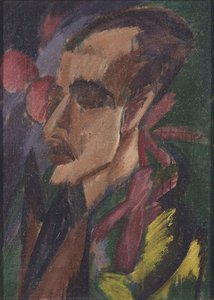 Portrat Gewecke - Ernst Ludwig Kirchner
There is a gaze in Portrat Gewecke by Ernst Ludwig Kirchner that follows you—not with judgment, but with a profound, haunting understanding . Painted in 1914, on the precipice of a world changing forever, this work transcends mere portraiture; it acts as a mirror to the human soul. Within its thick, tactile impasto and jagged, expressive brushstrokes, we find the very essence of German Expressionism.
As you stand before this masterpiece, the somber palette of earthy browns and muted greens pulls you into a space of quiet introspection. Kirchner uses distorted features and flattened perspectives to reveal an inner landscape of vulnerability and tension. The flashes of crimson and yellow pierce through the shadows, much like sudden flickers of emotion in a darkened room. To possess such a piece is to invite a powerful reminder into your home: that even in our moments of isolation, we are seen. This work remains a cornerstone of the top 25 artworks of Ernst Ludwig Kirchner because it makes the invisible weight of the human experience visible, turning an intimate moment of 1914 into a timeless, breathing presence in your collection.
The Red Tower at Halle - Ernst Ludwig Kirchner
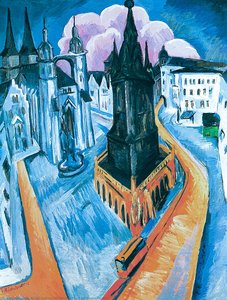 The Red Tower at Halle - Ernst Ludwig Kirchner
To encounter The Red Tower at Halle by Ernst Ludwig Kirchner is to step directly into the pulsing, electric heartbeat of a modernizing Europe. As one of the most arresting entries in our collection of the top 25 artworks of Ernst Ludwig Kirchner, this 1914 masterpiece serves as a breathtaking window into the soul of German Expressionism. Kirchner abandons traditional perspective for a dizzying, high-angle view that captures the raw energy of the street, anchored by the imposing, historic tower.
The painting breathes through its masterful use of impasto technique ; thick, gestural brushstrokes create a tactile landscape where deep blues and purples collide with warm, glowing oranges. This vibrant, contrasting palette does more than depict a city; it evokes the very tension and vitality of urban life. For the discerning collector or interior designer, this work offers an unparalleled sense of drama and historical weight. Its bold, distorted forms and luminous light make it a profound statement piece, perfect for bringing a legacy of avant-garde sophistication and emotional depth to a refined, contemporary space.
Die tanzende Mary Wigman - Ernst Ludwig Kirchner
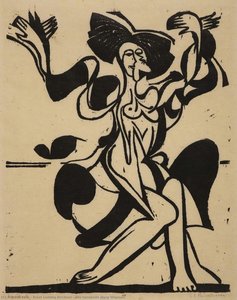 Die tanzende Mary Wigman - Ernst Ludwig Kirchner
In Die tanzende Mary Wigman , Ernst Ludwig Kirchner does not merely capture a dancer; he captures the very pulse of a soul in motion. As you stand before this striking woodcut, you feel the rhythmic tension of the 1920s—a period of profound social upheaval and raw emotional searching. The light here is not soft or Impressionistic; instead, it is a stark, dramatic interplay of deep blacks and creamy beige that carves Mary Wigman’s form out of the void.
Kirchner uses bold, decisive lines to elongate the dancer's limbs, creating a silhouette that feels both sculptural and ethereal. There is a haunting beauty in her exaggerated gestures, where every sharp angle and sweeping curve speaks to the psychological depth of modern dance. This piece remains one of the most essential works among the top 25 artworks of Ernst Ludwig Kirchner because it transcends mere portraiture. It is a visceral, monochromatic symphony that invites you to feel the vibration of movement and the beautiful, unsettling energy of the human spirit caught in a moment of eternal flight.
The Drinker (self-portrait) - Ernst Ludwig Kirchner
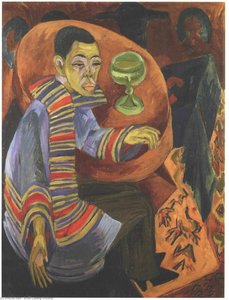 The Drinker (self-portrait) - Ernst Ludwig Kirchner
To stand before “The Drinker (self-portrait)” is to witness a soul caught in the tremors of a changing world. Painted in 1914, on the very precipice of the Great War, this work by Ernst Ludwig Kirchner serves as a hauntingly intimate window into the artist's psyche. Here, we do not merely see a man at a table; we feel the heavy, restless energy of German Expressionism manifesting in every jagged line.
The composition is a masterclass in psychological tension. Kirchner utilizes a strikingly fragmented, almost Cubist-influenced perspective, where the sitter’s form is broken into sharp, angular geometries. Notice the jarring, emotive palette: the cool, somber blues and greens of his attire clash against warm, unsettling oranges, mirroring the internal friction of the era. His gaze, distant and mask-like, seems to look through the viewer, lost in a moment of profound, solitary contemplation. Through thick, visible brushstrokes and a flattened sense of space, Kirchner transforms a simple moment of indulgence into a powerful symbol of urban alienation and the fragmented spirit of the early 20th century.
Toilette, Frau vor Spiegel - Ernst Ludwig Kirchner
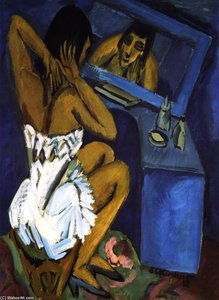 Toilette, Frau vor Spiegel - Ernst Ludwig Kirchner
In Toilette, Frau vor Spiegel , we step into a moment of profound psychological intimacy. Painted in 1913, this masterpiece serves as a haunting window into the soul of German Expressionism. As you stand before this canvas, the first thing that captures your senses is the tension within the brushwork; Kirchner utilizes a thick, urgent impasto technique that makes the paint feel alive with movement and unrest.
The scene depicts a woman engaged in the quiet ritual of grooming, yet there is nothing tranquil about it. Through bold, angular lines and a palette of muted yellows, deep blues, and earthy browns, Kirchner captures the fragmentation of identity. The mirror does not merely reflect her physical form; it symbolizes a fractured self-awareness, mirroring the anxieties of a modernizing Europe. Her averted gaze and the distorted proportions of the room create an atmosphere of beautiful isolation. To possess such a work is to invite a gallery of the soul into your home, transforming a simple space into a sanctuary of deep, emotional reflection.
Bridge in Wiesen - Ernst Ludwig Kirchner
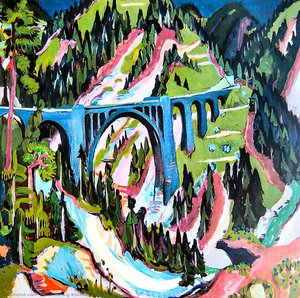 Bridge in Wiesen - Ernst Ludwig Kirchner
What story does the rugged landscape of Bridge in Wiesen by Ernst Ludwig Kirchner tell us about the fragile peace of a post-war world? As we stand before this 1926 masterpiece, we are transported to the Alpine heights of Davos, where the monumental Landwasser Viaduct arches over the valley like a silent sentinel. This work is essential among the top 25 artworks of Ernst Ludwig Kirchner because it captures a profound psychological threshold; it is where the industrial strength of man meets the trembling uncertainty of the human spirit.
Kirchner utilizes thick, emotive impasto strokes to render the bridge’s parabolic forms, weaving vibrant reds and stark whites against the muted, melancholic blues of the river valley. The presence of a solitary car near the tracks introduces a sense of modern movement, yet the atmosphere remains heavy with the tension characteristic of German Expressionism. For the discerning collector, bringing such a piece into a home offers more than mere decoration; it provides a curated escape into a historical moment of profound depth, inviting a sense of contemplative history and architectural grandeur into your private sanctuary.
Varieté, Englisches Tanzpaar - Ernst Ludwig Kirchner
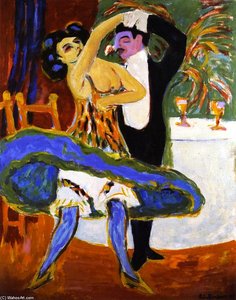 Varieté, Englisches Tanzpaar - Ernst Ludwig Kirchner
What if I told you that Varieté, Englisches Tanzpaar by Ernst Ludwig Kirchner was born from a moment of rebellion—a stroke of defiance against the ordinary? To gaze upon this 1910 masterpiece is to feel the electric pulse of a dance floor vibrating with raw, unbridled life. This work earns its place among the top 25 artworks of Ernst Ludwig Kirchner because it does not merely depict a dance; it captures the very heartbeat of German Expressionism through jagged, energetic brushstrokes and a palette of clashing, emotive hues.
The figures move with a rhythmic intensity, their forms blurring into a swirling atmosphere of light and shadow that mirrors the sensory overload of modern urban existence. It is a visual manifesto of movement and tension. At Mus3ums.com, we believe such profound energy should not be confined to museum walls. Imagine this vibrant spectacle as a living centerpiece in your own sanctuary—a bold statement piece that transforms a quiet room into a theater of historical emotion. Bringing this Kirchner masterpiece into your home is an invitation to surround yourself with the beautiful, restless spirit of art history.
The Three Old Women - Ernst Ludwig Kirchner
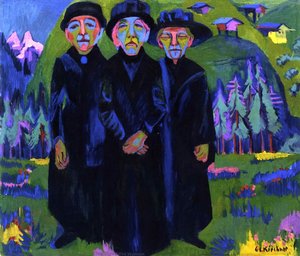 The Three Old Women - Ernst Ludwig Kirchner
In the profound landscape of German Expressionism, The Three Old Women by Ernst Ludwig Kirchner stands as a hauntingly beautiful testament to resilience. Created in 1925, this masterpiece captures a moment of quiet strength amidst the psychological tremors of the post-war era. As one of the most significant entries in our collection of the top 25 artworks of Ernst Ludwig Kirchner, it transcends mere portraiture to explore the very essence of mortality and endurance.
The painting breathes with a raw, visceral energy; Kirchner utilizes a striking palette where dark, somber figures are set against vibrant, almost electric landscapes. The heavy impasto and deliberate distortions do not merely depict aging, but rather celebrate the textured wisdom of life itself. To gaze upon these figures is to confront the beautiful tension between human vulnerability and the timelessness of nature. For the discerning collector, integrating such a powerful work into a modern space offers more than decor; it invites a soulful, permanent conversation about the enduring spirit of humanity, making it an incomparable centerpiece for any curated gallery.
Straße - Ernst Ludwig Kirchner
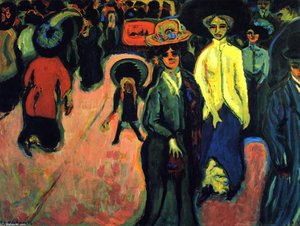 Straße - Ernst Ludwig Kirchner
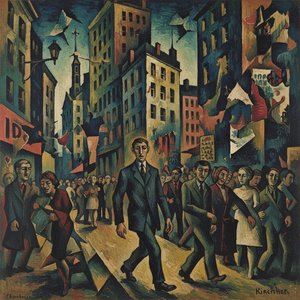
In Straße , Ernst Ludwig Kirchner orchestrates a profound tension between chaotic movement and structural rhythm. The composition is defined by sharp, angular geometries and jagged, intersecting lines that guide the eye through a crowded German thoroughfare. While the subject matter captures the frantic pulse of urban life, there is an underlying architectural balance found in the way the figures are layered; their elongated forms create a rhythmic cadence that prevents the scene from dissolving into pure disorder. This deliberate arrangement of shapes provides a sense of structural permanence amidst the fleeting energy of the crowd.
For the modern collector, this work offers a fascinating bridge to contemporary aesthetics. The painting’s use of flattened perspective and bold, non-naturalistic color patches mirrors the clean, impactful principles of modern minimalist design . By stripping away unnecessary detail in favor of emotive, graphic strength, Kirchner creates a piece that grounds a sophisticated, contemporary interior with its raw, structural elegance. As one of the top 25 artworks of Ernst Ludwig Kirchner , Straße remains an essential study in how emotional intensity can be contained within a powerful, balanced framework.
Hoffmann and Wife - Ernst Ludwig Kirchner
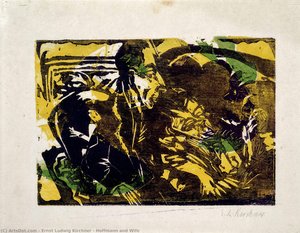 Hoffmann and Wife - Ernst Ludwig Kirchner
In Hoffmann and Wife , Ernst Ludwig Kirchner captures a profound sense of shared solitude that lingers long after the first glance. The painting presents an intimate tableau of the German Romantic author E.T.A. Hoffmann and his wife, enveloped in a hazy, amber light that feels both warm and hauntingly transient. As you observe the figures, their bodies almost merging within a muted palette of ochre, yellow, and deep green, you feel the weight of unspoken anxieties and the quiet beauty of a connection forged in introspection.
Kirchner’s signature Expressionist technique—characterized by thick, visible brushstrokes and a deliberate distortion of space—transforms this domestic scene into a universal mirror of human vulnerability. The palpable melancholy in Hoffmann's averted gaze and his wife's gentle, sorrowful smile invites us to contemplate our own complexities of love and loss. Bringing such an emotionally resonant masterpiece into your home can transform a personal sanctuary into a space for profound reflection, where the raw, textured energy of one of the top 25 artworks of Ernst Ludwig Kirchner serves as a quiet, prestigious anchor for deep thought and calm.
Sitzende Frau mit Holzplastik - Ernst Ludwig Kirchner
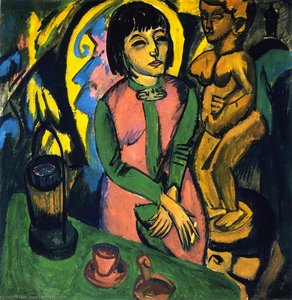 Sitzende Frau mit Holzplastik - Ernst Ludwig Kirchner
In the quiet, fractured moments of 1912, Ernst Ludwig Kirchner captured something far more profound than a mere domestic scene in his masterpiece, Sitzende Frau mit Holzplastik . As you stand before this work, you are invited into a private, introspective sanctuary where the raw emotional truths of German Expressionism reside. The subject, a woman seated at a table, exists in a state of deep immersion; her downward gaze and slightly slumped posture evoke a quiet melancholy that resonates through the decades.
Kirchner utilizes bold, flattened planes of muted reds, earthy yellows, and somber blues to reject traditional depth, creating a rhythmic, almost claustrophobic space. The inclusion of two wooden sculptures acts as silent sentinels, providing a heavy, sculptural counterpoint to the woman's palpable vulnerability. This painting is not merely a portrait of an individual, but a window into the fractured psychological landscape of an era gripped by uncertainty. To possess such a piece is to transform your space into a gallery of the soul , surrounding yourself with the visceral energy of one of the top 25 artworks of Ernst Ludwig Kirchner.
The Visit - Couple and Newcomer - Ernst Ludwig Kirchner
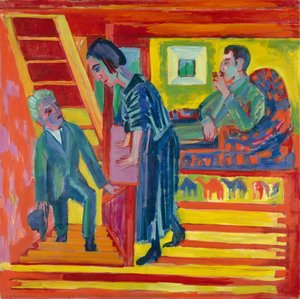 The Visit - Couple and Newcomer - Ernst Ludwig Kirchner
In The Visit - Couple and Newcomer by Ernst Ludwig Kirchner, the light does not merely illuminate; it vibrates with a restless, psychological energy. Rather than traditional chiaroscuro, Kirchner employs a fractured, emotive radiance that dances across the figures, casting sharp, angular shadows that seem to pulse with the anxieties of the Weimar era. This masterful command of light—where brilliant yellows clash against deep, unsettling blues—is precisely what secures this work's place among the top 25 artworks of Ernst Ludwig Kirchner . The way the illumination catches the edges of a vase or the spine of a book creates a sense of fragmented reality, pulling the viewer into a moment of profound social tension.
When brought into a modern home through our hand-painted oil reproductions , this sophisticated interplay of light and shadow offers more than mere decoration. The visible, impasto brushstrokes capture the flickering luminosity of the original, adding a layer of intellectual depth and tactile luxury to any contemporary wall. It is an invitation to experience the raw, luminous soul of German Expressionism every time the light hits the canvas.
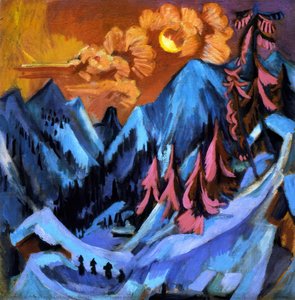
Winter lunar landscape - Ernst Ludwig Kirchner
 Winter lunar landscape - Ernst Ludwig Kirchner
In Winter lunar landscape , Ernst Ludwig Kirchner orchestrates a celestial dance of light that transcends mere scenery, moving into the realm of pure emotion. The work is defined by its surreal, moonlit illumination, where the lunar glow does not simply rest upon the snow but seems to pulse through a palette of feverish magentas, deep oranges, and electric blues. This masterful command of light—a departure from traditional realism toward an expressive, symbolic radiance—is precisely what secures this piece among the top 25 artworks of Ernst Ludwig Kirchner . The way the moonlit sky bleeds into the silhouettes of figures and the stark mountain ranges creates a chiaroscuro of color rather than mere shadow, capturing the profound psychological shifts of the post-war era.
For the discerning collector, bringing such a vibrant, light-drenched masterpiece into a home offers more than decoration; it introduces a transformative energy. When reproduced as a handmade oil painting , the visible, gestural brushstrokes catch the ambient light of your room, adding a tactile depth and a luxurious, luminous soul to any contemporary wall.
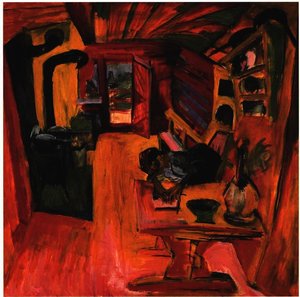
Kitchen in an Alpine Hut - Ernst Ludwig Kirchner
 Kitchen in an Alpine Hut - Ernst Ludwig Kirchner
To step into Kitchen in an Alpine Hut by Ernst Ludwig Kirchner is to enter a sanctuary of fractured light and profound resilience. At Mus3ums.com, we believe that the soul of a masterpiece should not be confined to museum walls; it belongs in the intimate spaces where we live and breathe. This work earns its place among the top 25 artworks of Ernst Ludwig Kirchner because it captures a pivotal moment of human vulnerability and recovery following the Great War.
The painting vibrates with the raw, gestural energy of the Die Brücke movement, utilizing jarring yellows and deep, emotive shadows to transform a simple domestic scene into a psychological landscape. Through thick, tactile impasto, Kirchner invites us to feel the weight of the atmosphere—a delicate balance between the claustrophobia of memory and the warmth of a mountain retreat. Its ability to evoke such intense, sensory storytelling makes it an incomparable treasure for any collection. By commissioning a high-fidelity, hand-painted oil reproduction, you can bring this transformative presence into your own home or office, allowing Kirchner’s powerful legacy of light and shadow to inspire your personal gallery for generations.
Landscape with blue rocks - Ernst Ludwig Kirchner
 Landscape with blue rocks - Ernst Ludwig Kirchner
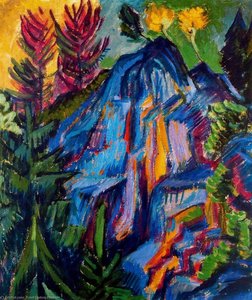
To step into the world of 1919 is to encounter a landscape where the earth itself seems to pulse with a restless, psychological weight. In Landscape with blue rocks by Ernst Ludwig Kirchner , we find ourselves far beyond the tranquil vistas of the Impressionists; instead, we are submerged in a visceral, emotional topography. This masterpiece stands as a cornerstone of our collection because it perfectly captures the raw, jagged spirit of German Expressionism and the profound anxieties of a post-war era.
The canvas is dominated by monumental, blocky formations of deep indigo and cerulean, rendered with an impasto technique so thick and energetic that the rocks feel almost oppressive. Kirchner rejects naturalistic light, opting instead for a jarring, rhythmic dance of fiery reds, acid yellows, and bruised purples within the stylized foliage. The flattened perspective and sharp, diagonal lines create a sense of beautiful disorientation, pulling the viewer into a dreamscape of tension and movement. It is a work that does not merely show us nature, but makes us feel its underlying tremors—a timeless reminder of how art can transform a silent room into a profound emotional encounter.
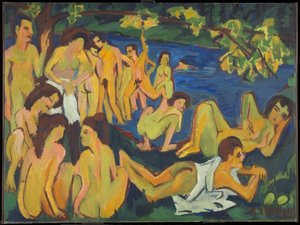
Bathers on the Lawn - Ernst Ludwig Kirchner
 Bathers on the Lawn - Ernst Ludwig Kirchner
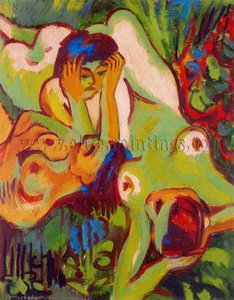
Imagine standing before a canvas where the very air feels charged with a restless, electric pulse. In Bathers on the Lawn , Ernst Ludwig Kirchner invites us into a world where the boundary between nature and psyche dissolves. Painted during the profound shifts of 1918-1919, this masterpiece captures more than a tranquil afternoon; it embodies the raw, vibrating tension of an era caught between peace and upheaval.
As you gaze upon the figures, you are met with a symphony of jarring, brilliant hues—emerald greens clashing against sun-drenched yellows and startling scarlet accents. Kirchner’s signature impasto technique creates a tactile landscape, where thick, agitated brushstrokes mirror the internal tremors of the human spirit. This work earns its place among the top 25 artworks of Ernst Ludwig Kirchner because it refuses to be mere decoration; it is an emotional confrontation. By bringing such profound expressive energy into our homes, we do not just hang a painting; we invite a transformative dialogue between modern stillness and the beautiful, uncontainable intensity of life itself.
old hut - Ernst Ludwig Kirchner
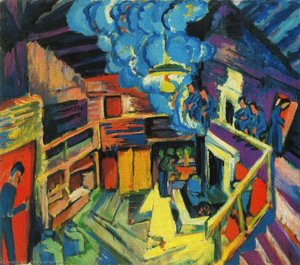 old hut - Ernst Ludwig Kirchner
In Old Hut by Ernst Ludwig Kirchner, a piercing, artificial yellow light pierces through the shadows, setting a mood of profound psychological tension and restless energy. This vibrant, almost unsettling glow acts as the heartbeat of the piece, clashing violently against deep purples and bruised blues to create a visual dissonance that is quintessential to the top 25 artworks of Ernst Ludwig Kirchner . His mastery lies in this refusal of harmony; by using color not to mimic nature but to provoke a visceral, emotional response, he captures the fragmented anxiety of the pre-war era.
For the discerning collector, integrating such a powerful work into a modern interior offers a unique opportunity to curate a space of dramatic depth. The painting’s jagged, angular forms and intense color palette can serve as a bold focal point in a contemporary dining room, where the interplay of light and shadow can be echoed through sculptural furniture or dark, moody accents. Bringing this piece into your home allows you to embrace the raw, emotive spirit of Die Brücke , transforming a quiet corner into a sanctuary of profound, expressive storytelling.
Rhätische Bahn, Davos - Ernst Ludwig Kirchner
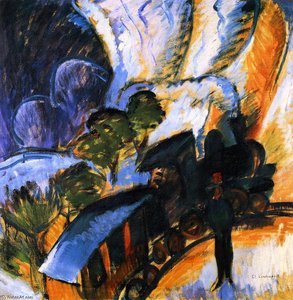 Rhätische Bahn, Davos - Ernst Ludwig Kirchner
In the quietude of 1917, amidst a period of profound personal and global upheaval, Ernst Ludwig Kirchner captured a moment of rhythmic motion in Rhätische Bahn, Davos . This oil on canvas is far more than a depiction of a train traversing the Swiss landscape; it is an evocative window into the artist's soul during his time in Switzerland. The composition vibrates with the raw energy of German Expressionism, utilizing bold, jagged brushstrokes and a palette that feels both grounded and electric.
As you gaze upon the tracks stretching through the scene, your eye is drawn to the tension between the mechanical presence of the train and the solitary figure standing in the foreground. A single bird drifts through the sky, adding a delicate, fleeting layer of life against the backdrop of sturdy trees. To possess such a work is to invite a sense of dynamic movement into your home—a transformation that turns a mere wall into a gallery of the human spirit, where the anxieties and beauties of modern existence converge.
- Key Features: Dynamic composition, vibrant color tension, and expressive textures
- Mood: A blend of industrial energy and natural serenity
Fehmarn Coast - Ernst Ludwig Kirchner
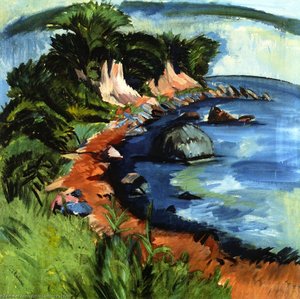 Fehmarn Coast - Ernst Ludwig Kirchner
In Fehmarn Coast , there is a rhythm that follows you—not with the frantic energy of Kirchner’s urban scenes, but with a profound, rhythmic understanding . This 1913 masterpiece does not merely depict a Baltic shoreline; it acts as a mirror for the soul, reflecting the delicate tension between natural tranquility and internal unrest. As you wander through this essential piece in our collection of the top 25 artworks of Ernst Ludwig Kirchner , you encounter a landscape where jagged rocks and sparse trees are rendered with a visceral, emotional pulse.
Kirchner employs a striking palette of deep blues and earthy ochres, using thick, textured impasto to create a surface that feels alive under the light. The sea and sky merge in a way that transcends mere scenery, capturing the very essence of German Expressionism . To have this work in your home is to invite a moment of deep contemplation; it does not just watch over your space, but reminds you that even amidst the jagged edges of modern life, there is a breathtaking, raw beauty to be found.
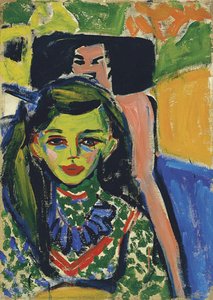
Doris with high neck - Ernst Ludwig Kirchner
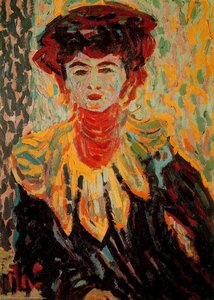 Doris with high neck - Ernst Ludwig Kirchner
In the haunting gaze of Doris with High Neck , Ernst Ludwig Kirchner captures a moment where raw emotion meets the fractured light of a changing world. This masterpiece stands as a cornerstone among the top 25 artworks of Ernst Ludwig Kirchner because it transcends mere portraiture, offering instead a visceral window into the psychological tremors of the early 20th century.
The canvas breathes with an intense, rhythmic energy; thick, impasto brushstrokes of fiery oranges, sun-drenched yellows, and deep, bruised blues create a surface that feels alive to the touch. Kirchner abandons the comfort of realistic perspective, using angular, distorted lines to evoke a sense of beautiful unease. The subject’s high-necked attire suggests a protective shield against the encroaching anxieties of modernity, while her direct, piercing stare creates an intimate confrontation with every viewer. For the modern collector, bringing this work into a home offers more than just a striking visual; it introduces a profound, sophisticated dialogue between historical tension and contemporary elegance, inviting a soulful depth that lingers long after the first glance.
Variety Dancer - Ernst Ludwig Kirchner
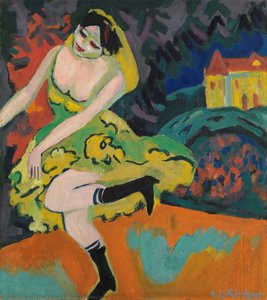 Variety Dancer - Ernst Ludwig Kirchner
In Variety Dancer , created in 1910, Ernst Ludwig Kirchner invites us into a moment of theatrical enchantment that feels both nostalgic and profoundly raw. There is a gaze in this work that follows you—not with judgment, but with understanding . As we observe the performer in her vibrant yellow dress, hands poised on her hips, we are not merely looking at a vaudeville dancer; we are witnessing a mirror of the era's fleeting, electric energy.
The painting captures the essence of a stage performance, where the warmth of the costume clashes beautifully with the deeper, more somber tones of the background. Kirchner uses his signature Expressionist touch to breathe life into the scene, making the dancer feel as though she might step right out of the canvas. This piece stands among the top 25 artworks of Ernst Ludwig Kirchner because it captures a soul in motion. Now, imagine that luminous presence in your own space. Not watching you, but reminding you : you are seen. You are part of the story.
Sertigweg - Ernst Ludwig Kirchner
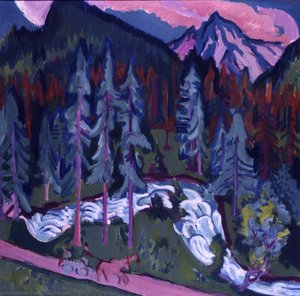 Sertigweg - Ernst Ludwig Kirchner
In Sertigweg , Ernst Ludwig Kirchner masterfully manipulates the cold, diffused light of a Bavarian winter to evoke a profound sense of psychological introspection. Rather than traditional illumination, we encounter a stark, atmospheric clarity where the pale light reflects off snow-dusted peaks, creating a chilling interplay between the bright, frozen surfaces and the deep, shadowed recesses of the mountain valleys. This command over light and shadow—capturing the biting chill of the landscape—is precisely what secures its place among the top 25 artworks of Ernst Ludwig Kirchner .
The painting breathes with a restless energy; the muted blues and earthy browns are punctuated by sudden, emotive flashes of color that mirror the artist's inner turbulence. When brought into a modern home as a hand-painted oil reproduction, the thick, textured impasto and the dramatic contrast of light offer an unparalleled sense of luxury and depth. It is more than a landscape; it is a window into the soul of German Expressionism, inviting a sophisticated layer of emotional resonance to any contemporary wall.
Street Scene - Ernst Ludwig Kirchner
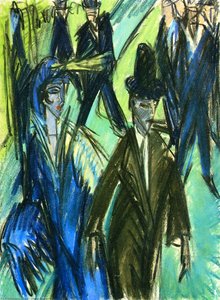 Street Scene - Ernst Ludwig Kirchner
To possess a piece inspired by Street Scene by Ernst Ludwig Kirchner is to invite a profound legacy of German Expressionism into one’s private collection, marking a sophisticated investment in the history of modern emotion. As a cornerstone of the Die Brücke movement, this 1913 masterpiece commands its place among the top 25 artworks of Ernst Ludwig Kirchner due to its unparalleled ability to capture the psychological tremors of Berlin's urban pulse. The composition vibrates with jagged, angular lines and a restless energy, where deep blues and acidic greens collide with sudden flashes of orange. Through distorted figures and a compressed, claustrophobic perspective, Kirchner masterfully translates the alienation of the modern era into a visual symphony of tension.
For the discerning collector, a high-quality, hand-painted oil reproduction of this work offers more than mere decoration; it provides an anchor of aesthetic authority. The palpable texture of the impasto brushstrokes and the luminous, emotive palette bring the raw spirit of 1913 into the contemporary home, lending a striking, avant-garde character to modern luxury interiors and creating a conversation piece that resonates with timeless status.
Conclusion
As we draw the curtain on this journey through Kirchner’s vibrant, often turbulent vision, we are left with more than just images of a bygone era; we carry with us the restless pulse of a soul that dared to see the world in its rawest form. To gaze upon these works is to realize that great art does not merely sit behind museum glass—it breathes. It acts as a bridge across the decades, connecting the jagged anxieties of early 20th-century Berlin to our own modern sensibilities. Each deliberate, expressive brushstroke serves as a silent, timeless conversation between Kirchner’s hand and our own hearts, reminding us that the human experience—in all its tension, beauty, and fragmentation—remains eternally shared.
These masterpieces are living presences, capable of transforming a quiet corner of a home into a space of profound reflection and electric energy. They do not just decorate a wall; they invite a dialogue, shaping the very atmosphere of our lives and inspiring a renewed sense of creativity within us all. Whether through the sharp silhouettes of his urban scenes or the emotive depth of his figures, Kirchner’s legacy continues to move, provoke, and enchant. We invite you to continue this intimate exploration and find a piece of this enduring spirit for your own collection by wandering through our full collection . May these colors and forms stay with you, long after the lights have dimmed.