The Architecture of Order: Reclaiming Classical Restraint
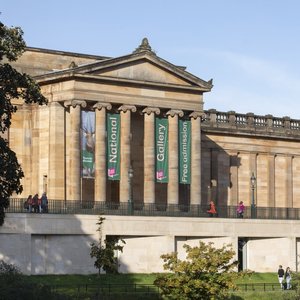 Scottish National Gallery
A Window Into Scotland’s Soul: The Scottish National Gallery Nestled within the heart of Edinburgh, on the historic Mound overlooking the city, lies the Scottish National Gallery – more than just a repository of art, it's a profound reflection of Sco...
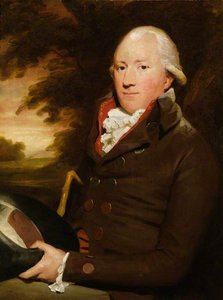
The Neoclassical movement emerged not merely as a stylistic preference, but as a profound philosophical reclamation. It was a deliberate departure from the perceived frivolity and ornate excess of the Rococo period, seeking instead to restore moral gravity and intellectual clarity to the canvas. This era viewed the classical past not as a collection of silent ruins, but as a living blueprint for virtue, reason, and aesthetic perfection. By looking toward the stoic ideals of antiquity, painters aimed to capture the essence of their subjects through a lens of permanence, transforming the individual portrait from a simple likeness into a monumental statement of character and civic duty.
This pursuit of order finds its historical echo in the very structures that housed such ideals. The Scottish National Gallery, designed by William Henry Playfair, embodies this same Neoclassical architecture with its imposing Corinthian columns and graceful symmetry. Just as the movement sought to strip away superficiality, Playplay's design provides a sense of quiet reverence, mirroring the structured approach to composition found in the era's finest paintings. The architectural discipline of the building serves as a physical manifestation of the period's commitment to clarity and proportion.
Anatomical Precision: From Roman Verism to Neoclassical Bronze
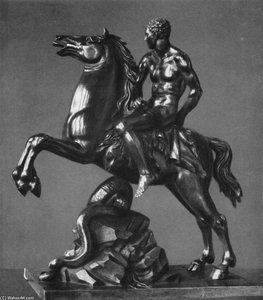 Hercules on Horseback
Hercules on Horseback by Mikhail Kozlovsky – A Study in Classical Heroism Mikhail Ivanovich Kozlovsky’s “Hercules on Horseback,” completed in 1799, stands as a powerful testament to the enduring appeal of classical mythology and the burgeoning neocla...
The mastery of form in Neoclassicism relies heavily on an uncompromising dedication to anatomical accuracy. This precision is perhaps most evident when examining the transition from the rugged realism of Roman portraiture to the refined musculature of later eras. While Roman Republican portraiture often embraced a veristic style—intentionally including imperfections to convey strength and leadership—the Neoclassical era sought a more idealized, yet physically grounded, perfection. The focus remained on the tangible reality of the human body, rendered with a surgical intent that allowed the viewer to sense the weight and tension of every limb.
A profound example of this technical rigor is Mikhail Kozlovsky’s 1799 work, Hercules on Horseback. In this bronze sculpture, the musculature of both the hero and his mount is sculpted with an almost photographic realism, reflecting the influence of pioneers like Antonio Canova. The diagonal thrust of the rearing horse guides the eye through a composition defined by anatomical truth. This sculptural precision finds its counterpart in the Roman tradition, where even the most realistic death masks and busts were designed to capture the essential nature of the subject, establishing a foundation of physical integrity that Neoclassical masters would later refine.
Mythological Narratives: The Continuity of Legend in Paint and Clay
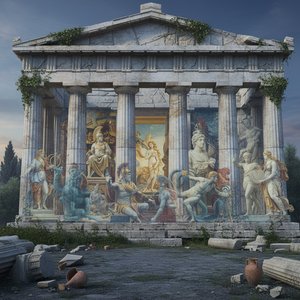 Echoes of Olympus: Mythological Narratives in Western Art Through the Ages
The Ancient Roots: Mythology's Genesis in Greek & Roman Art The very foundations of Western artistic expression are inextricably linked to the myths of ancient Greece and Rome. Before history as we know it was meticulously recorded, stories—passed do...
Beyond the technical execution lies the narrative power of myth, which provides the emotional scaffolding for much of this period's art. Artists did not simply illustrate ancient fables; they breathed life into them, using the struggles of deities to mirror human triumphs and tragedies. These mythological protagonists—warriors, adventurers, and gods—offered a language for the inexplicable, allowing painters to explore themes of courage, transformation, and destiny. The use of myth allowed for a controlled exploration of intense emotion within a framework of classical decorum.
This continuity is visible in the works of Herbert James Draper, whose mythological narratives reimagined ancient Greek stories through a personal, aesthetic lens. His approach, blending Neoclassical form with a subtle sensuality, echoes the way earlier artists like Jean Pierre Granger utilized scenes from mythology to resonate with the aesthetic sensibilities of the 18th century. Whether through the dramatic tension of a battle or the quiet grace of a goddess, the medium of oil and bronze remains the primary vehicle for preserving these legends, ensuring that the heroic deeds of the past continue to find resonance in the present.
Light as Structure: The Technical Rigor of the Neoclassical Line
 Lady Hamilton as a Bacchante
A Vision of Myth and Sensuality: Henry Bone’s ‘Lady Hamilton as a Bacchante’ Henry Bone's “Lady Hamilton as a Bacchante,” painted in 1803, is more than just a portrait; it’s a carefully constructed tableau vivant – a staged moment plucked from the re...
The visual vocabulary of Neoclassicism is defined by a rigorous discipline where line holds supremacy over color. Unlike the soft, blurred edges of later movements, Neoclassical masters utilized sharp, precise contours to define form, ensuring that every figure and drapery fold possessed a sculptural weight. This emphasis on linear clarity was complemented by a sophisticated approach to light and shadow. Lighting in these works is rarely accidental; it is directed with intent to reveal anatomical accuracy and create a sense of structural integrity within the frame.
This technical mastery is evident in the layered glazing techniques used by artists such as Henry Bone. In his depiction of Lady Hamilton as a Bacchante, the light pools dramatically across the figure, highlighting her form while deep shadows hint at a contemplative mood beneath the surface. This controlled use of illumination finds its historical parallel in the way Roman portraiture utilized light to define the features of political leaders, emphasizing their presence and authority. The interplay of light and shadow does not merely decorate the subject; it constructs the very reality of the scene.
Enduring Legacies: Preserving Heroic Grandeur in Modern Collections
 Heroic Landscape with Rainbow
Explore Joseph Anton Koch’s ‘Heroic Landscape.’ A Baroque masterpiece featuring a dramatic rainbow & mountainous scene. Discover this 1815 Austrian landscape painting.
The preservation of these heroic traditions requires a commitment to the highest standards of craftsmanship and authenticity. For the discerning collector, the value of such art lies in its ability to command a space with stability and aesthetic harmony. Whether through large-format murals that recreate historical ceilings or bespoke oil reproductions on 100% cotton canvas, the goal is to maintain the tactile depth and tonal range of the original masters. The visible brushstrokes and the subtle use of glazes are essential to capturing the "soul" of a piece, distinguishing a true reproduction from a mere print.
As we look toward the future of art collecting, the integration of modern technology—such as our Professional Digital Mockup Service—allows for the seamless addition of these historical echoes into contemporary interiors. At Mus3ums.com, we facilitate this connection by providing hand-painted oils that respect the academic excellence of the past. From custom portrait commissions that transform personal milestones into classical masterpieces to the careful curation of mythological landscapes, we ensure that the grandeur of the Neoclassical era remains a living, breathing presence in the modern home.