The Sculptor of Roman Baroque Splendor
In the heart of late Baroque Rome, a period defined by theatrical grandeur and spiritual intensity, the name Bernardino Cametti resonates with the weight of marble and the grace of divine light. Born in 1669 within the very city that would become his greatest canvas, Cametti was a child of the Roman artistic atmosphere, a landscape pulsating with papal patronage and the monumental legacies of masters like Bernini. His lineage, tracing back to the engravers of Gattinara, Piedmont, gifted him an innate sensitivity to fine detail and visual precision—a foundation upon which he would build a career of profound sculptural achievement.
Cametti’s artistic evolution was shaped by a rigorous apprenticeship under Lorenzo Ottoni, a master of marble carving whose workshop served as a crucible for developing the technical prowess required to breathe life into stone. During these formative years, Cametti absorbed the classical ideals and the burgeoning theatricality of the era, particularly the influence of Andrea Pozzo. This fusion of classical restraint and dramatic movement would become the hallmark of his style, allowing him to navigate the complex demands of both religious devotion and aristocratic prestige.
A Legacy Carved in Marble and Devotion
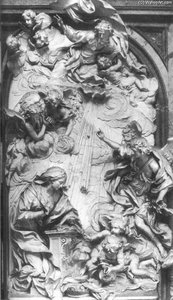
The trajectory of Cametti’s career was irrevocly altered by his connection to powerful patrons, most notably Cardinal Giovanni Francesco Albani, who would later ascend to the papacy as Clement XI. This relationship granted Cametti access to the most sacred and significant sites in Rome, allowing him to contribute to the architectural and decorative fabric of the city's most iconic basilicas. His early works, such as the marble relief depicting the Canonization of St. Ignatius for the Church of the Gesù, demonstrated an early mastery of narrative composition and a deep understanding of how sculpture could enhance the liturgical experience.
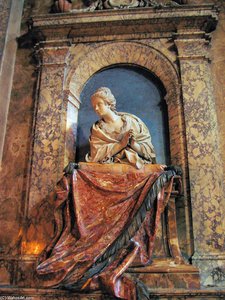
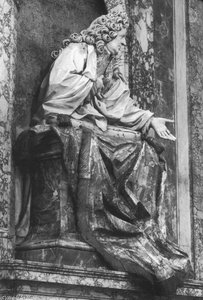
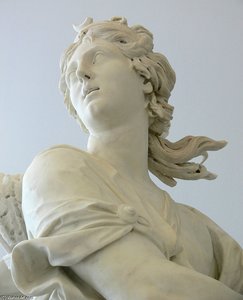
As his reputation grew, Cametti’s work became increasingly characterized by a remarkable blend of realism and emotional pathos. He possessed a singular ability to manipulate marble to convey the softness of flesh, the heavy drape of fabric, and the intense spiritual fervor of his subjects. His monumental projects, including the Monument to Count Vladislav Constantine Wasa and his contributions to the facade of the cathedral of Frascati, showcase a sculptor capable of managing both intimate detail and vast, architectural scale. In the great St. Peter’s Basilica, working alongside luminaries like Camillo Rusconi, he left an indelible mark through his work on the memorial monument for Gregory XIII, specifically through the intricate relief representing the Institution of the Gregorian Calendar.
Artistic Significance and Eternal Echoes
Beyond the physical permanence of his monuments, Cametti’s historical significance lies in his role as a bridge between the high Baroque and the evolving tastes of the early 18th century. He did not merely replicate the styles of his predecessors but infused them with a refined elegance and a nuanced psychological depth that spoke to the changing sensibilities of his time. His ability to secure commissions that spanned from the religious fervor of the Church to the secular prestige of the nobility—such as the Bust of Giovanni Andrea Muti—illustrates his versatility and command over the medium.
Today, the works of Bernardino Cametti stand as silent yet powerful witnesses to a golden age of Roman sculpture. Whether in the dramatic shadows of a side chapel or the sunlight-drenched facades of Roman churches, his sculptures continue to evoke the same sense of awe and movement that they did centuries ago. His legacy is etched into the very stone of Rome, a testament to a life dedicated to capturing the eternal within the ephemeral beauty of carved marble.
प्रश्न और उत्तर
Bernardino Cametti कहाँ के रहने वाले हैं?
Bernardino Cametti का जन्म Italy में हुआ था।
Bernardino Cametti का जन्मस्थान और जन्म वर्ष क्या है?
Bernardino Cametti का जन्म 1669 में Rome में हुआ था।