The Sublime and the Beautiful: Defining the Romantic Landscape
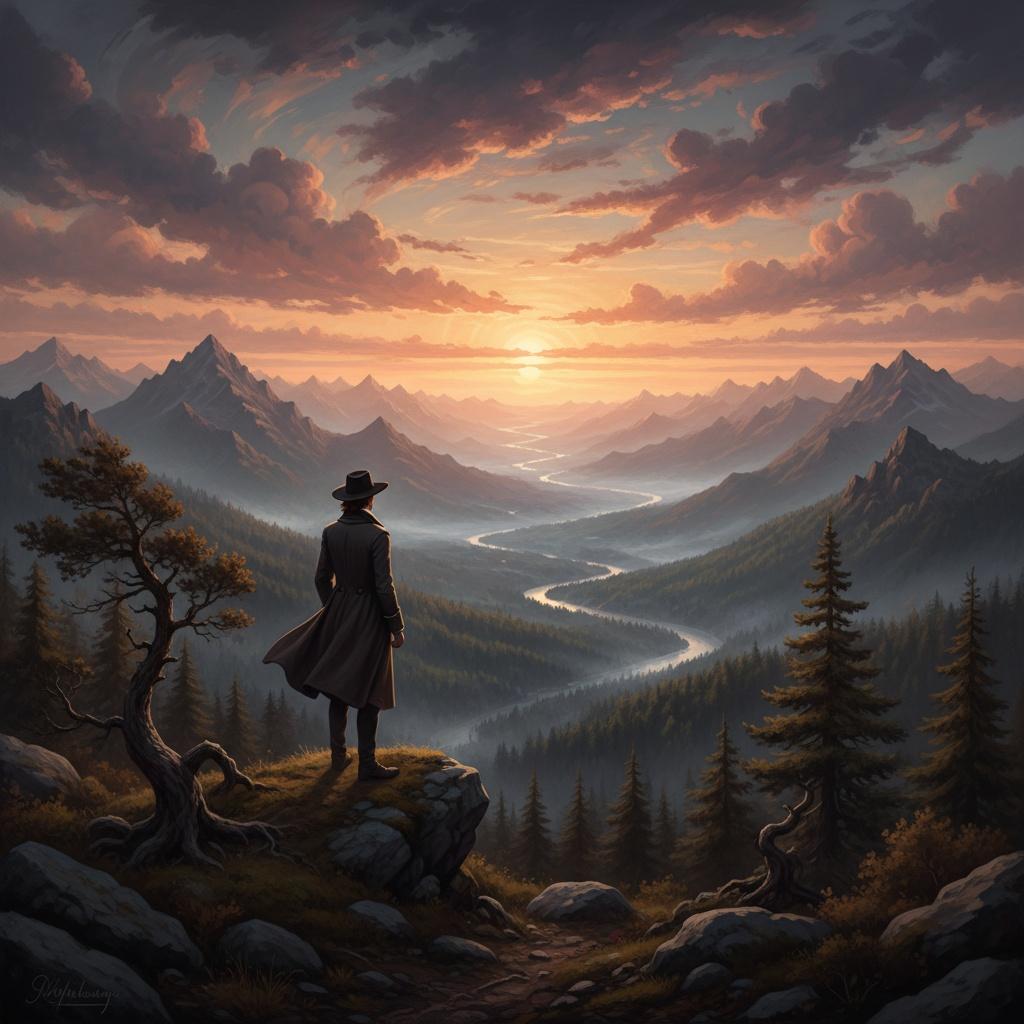
To gaze upon a Romantic landscape is to embark on a journey far beyond the mere observation of topography; it is an encounter with the profound. Emerging in the late 18th and early 19th centuries, the Romantic movement sought to transcend the rigid rationalism of the Enlightenment, turning its eyes instead toward the visceral power of the natural world. In this era, the landscape ceased to be a mere backdrop for human drama and became the protagonist itself—a vessel for the sublime and the beautiful.
The concept of the sublime, as articulated by philosophers like Edmund Burke, refers to that which is so vast, powerful, or even terrifying that it overwhelms the human senses. It is found in the churning depths of a storm-tossed sea or the dizzying heights of an inaccessible peak. Conversely, the beautiful offers a sense of harmony, grace, and serenity, found in a sun-drenched meadow or a tranquil woodland glade. Romantic painters mastered the delicate tension between these two states, using the canvas to explore the duality of human existence: our capacity for peaceful contemplation and our inherent vulnerability to the infinite forces of nature.
Through this lens, the landscape became a psychological map. Every crag, every cloud, and every bend in a river served as a metaphor for the internal landscapes of the human soul, inviting viewers to find their own reflections within the grandeur of the earth.
The Language of Light and Shadow: Atmospheric Techniques in Romanticism
The true magic of Romanticism lies in its technical mastery of atmosphere. To capture the ephemeral quality of a mist-covered valley or the dramatic onset of a tempest, artists developed a sophisticated language of light and shadow. This was not merely about visibility, but about evocation. The use of chiaroscute—the dramatic contrast between dark and light—allowed painters to create depth and a sense of mystery, pulling the viewer into the heart of the composition.
Consider the way light interacts with the elements. In the works of masters like Paul Huet, one can almost feel the dampness of the air in 'Cheval Normand', where the soft, diffused light suggests a world caught in a moment of transition. The technique of glazing—applying thin, translucent layers of oil paint—was essential to this effect. By layering pigments, artists could simulate the way sunlight filters through heavy clouds or reflects off a turbulent river, creating a luminous quality that feels alive.
Shadow, too, was used as a narrative tool. It was not merely an absence of light, but a presence in itself—a space for the unknown and the untamed. By manipulating these tonal ranges, Romantic painters could dictate the emotional temperature of a piece, guiding the viewer from the warmth of a setting sun to the chilling uncertainty of a twilight forest.
Nature as Mirror: The Emotional Resonance of Untamed Wilderness
In the Romantic tradition, nature is never passive. It is a mirror reflecting the turbulent emotions of the human spirit. This period saw a departure from the manicured, orderly gardens of previous centuries toward an appreciation for the wild, the rugged, and the uncultivated. The wilderness became a sanctuary for the soul, a place where the constraints of civilization fell away, leaving only the raw essence of being.
This emotional resonance is deeply embedded in the subject matter. When we look at the dramatic Alpine scenes of Johann Heinrich Wuest, such as his depictions of the 'Rhone Glacier', we are not just seeing ice and rock; we are experiencing the awe-inspiring scale of geological time and the insignificance of man. The ruggedness of the terrain mirrors the struggles of the human condition, while the vastness of the horizon suggests a longing for transcendence.
Even in more tranquil settings, such as the pastoral scenes found in the works of Ralph Earl, there is an underlying emotional current. A house fronting a green, as seen in 'Houses Fronting New Milford Green', evokes a sense of nostalgia and a yearning for a lost era of simplicity. In every brushstroke, the landscape serves to validate our deepest feelings—our fears, our triumphs, and our quietest moments of introspection.
Masters of the Infinite: From Alpine Grandeur to Misty Highlands
The breadth of the Romantic movement is perhaps best illustrated by the diverse geographies its practitioners explored. From the jagged peaks of the Swiss Alps to the ethereal, mist-shrouded highlands of Scotland, these artists sought to capture the unique character of different terrains, finding the infinite within each.
Artists like James Turpin Hart specialized in capturing the celestial and the atmospheric, bringing to life the haunting beauty of misty highlands and the rare brilliance of the aurora borealis. His work exemplifies the Romantic fascination with the boundary between the earthly and the divine. Similarly, the Dutch master Hendrik Pieter Koekkoek brought a sense of structured grandeur to his landscapes, utilizing the Kleve Romanticism style to captivate viewers with intricate detail and dramatic light.
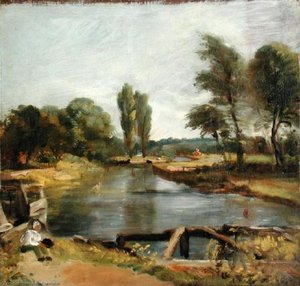
Even within more classical frameworks, such as the works of Sir Augustus Wall Callcott, we see the Romantic influence. In 'Landscape and Figures', the presence of a castle and a river provides a sense of historical continuity, yet the way the figures are dwarfed by the landscape reminds us of the enduring power of nature. Whether through the sweeping vistas of the mountains or the intimate details of a forest floor, these masters all shared a singular goal: to render the infinite visible on a finite canvas.
The Legacy of Emotion: Bringing Romantic Landscapes into the Modern Interior
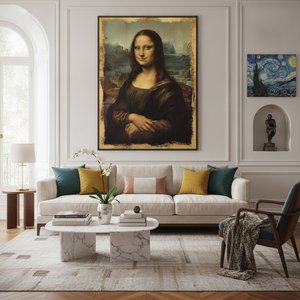
Though centuries have passed since the height of the Romantic era, its emotional potency remains undiminished. The desire to surround ourselves with beauty that speaks to the soul is a timeless human impulse. Today, integrating these classical masterpieces into a modern home offers more than just decoration; it provides an anchor of depth and history in an increasingly fast-paced world.
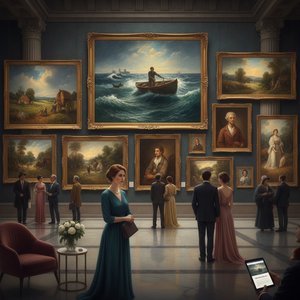
The beauty of Romantic landscapes lies in their versatility. A large-scale, multi-panel reproduction of a dramatic seascape can serve as a breathtaking focal point in a contemporary living space, while a smaller, more intimate landscape can add a layer of quiet contemplation to a study or library. The tactile nature of oil paintings—the visible brushstrokes and the rich texture of the impasto—brings a physical presence to a room that flat prints simply cannot replicate.
At Mus3ums.com, we believe in preserving this legacy of human creativity. We specialize in creating exquisite, hand-painted reproductions that honor the techniques of the Old Masters. From custom commissions that transform personal memories into the style of a Romantic legend to museum-quality Giclée prints designed for longevity, our mission is to make the profound beauty of art history accessible to collectors worldwide. Whether you are seeking a centerpiece for a grand hall or a subtle addition to a private collection, we invite you to rediscover the power and the passion of the Romantic landscape.